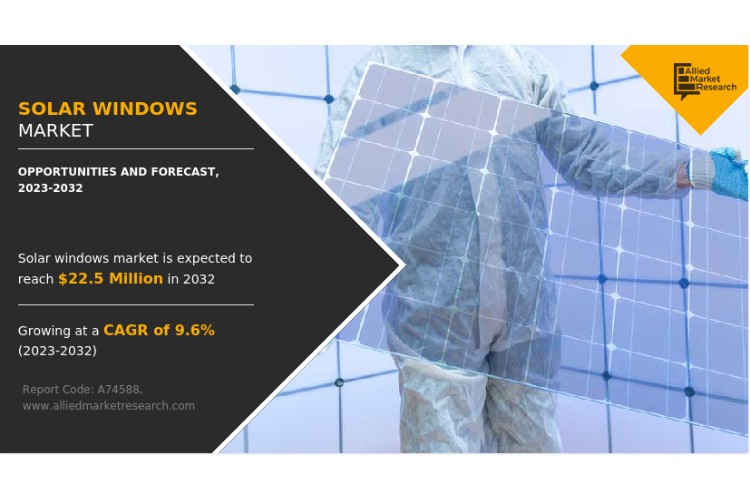
According to a new report published by Allied Market Research, the global solar windows market size was valued at $9.0 million in 2022 and is projected to reach $22.5 million by 2032, growing at a CAGR of 9.6% from 2023 to 2032. Rising demand for renewable energy solutions, energy-efficient buildings, and carbon reduction technologies is expected to drive significant expansion of the solar windows market over the coming decade.
Introduction
Solar windows are an innovative building technology designed to generate electricity from sunlight while functioning as conventional windows. These advanced windows incorporate transparent solar cells that convert solar radiation into electrical energy while still allowing visible light to pass through, maintaining indoor illumination and aesthetics.
Unlike traditional solar panels that are mounted on rooftops, solar windows integrate directly into building facades. This dual functionality makes them particularly attractive for modern architecture focused on sustainability and energy efficiency, thereby accelerating growth in the solar windows market worldwide.
Rising Demand for Clean Energy Solutions
The growing urgency to reduce greenhouse gas emissions and dependence on fossil fuels has accelerated adoption of renewable energy technologies. Governments, businesses, and homeowners are increasingly seeking sustainable solutions that can generate clean power without compromising design or space.
Solar windows provide a unique advantage by turning ordinary glass surfaces into energy-producing assets. This innovation allows buildings to produce electricity without requiring additional land or rooftop space, making them ideal for densely populated urban environments.
Countries such as Germany and France have been at the forefront of adopting energy-efficient building technologies, contributing to the strong growth of the solar windows market in Europe.
Commercial Sector Adoption
The commercial sector represents a major opportunity for the solar windows market. Office buildings, hotels, shopping malls, and institutional facilities consume large amounts of electricity for lighting, heating, cooling, and equipment operation.
By installing solar windows, commercial properties can reduce energy costs, lower carbon footprints, and improve sustainability ratings. In addition, energy-generating facades enhance corporate environmental responsibility and help organizations meet regulatory requirements for green buildings.
Large glass surfaces in skyscrapers and commercial complexes make these structures ideal candidates for solar window integration.
Residential Applications on the Rise
Demand in the residential sector is also increasing steadily. Homeowners are adopting solar windows as part of smart home and eco-friendly construction trends. These windows can be installed in houses, apartments, and condominiums, offering a seamless renewable energy solution without altering architectural aesthetics.
Solar windows allow residents to generate electricity while maintaining natural lighting and views. This feature is particularly appealing in urban areas where rooftop solar installations may be limited by space constraints or building regulations.
The residential segment accounted for a significant share of the solar windows market in 2022 and is expected to maintain strong growth throughout the forecast period.
Challenges Limiting Adoption
Despite promising growth prospects, several factors may hinder the rapid expansion of the solar windows market. One major challenge is the higher production cost compared to conventional solar panels. Manufacturing transparent photovoltaic glass involves complex processes and advanced materials, which increases overall costs.
Durability and performance also remain critical concerns. Solar windows must withstand environmental stress, temperature variations, and long-term exposure to sunlight while maintaining transparency and efficiency. Achieving this balance between aesthetics and durability can be technically challenging.
However, ongoing research and development efforts are focused on improving materials, enhancing efficiency, and reducing production costs, which is expected to make solar windows more competitive in the future.
Technological Advancements Driving Growth
Advances in materials science and manufacturing techniques are improving the longevity, efficiency, and affordability of solar windows. New generations of transparent solar cells offer better light transmission while capturing more solar energy.
As production scales up and technologies mature, costs are expected to decline significantly. These improvements will make solar windows an increasingly viable alternative to traditional solar installations, further boosting the solar windows market.
In addition, integration with smart building systems and energy storage solutions can maximize energy utilization, enhancing the overall value proposition for building owners.
Market Segmentation Overview
The solar windows market is segmented by solar cell type, transparency type, application, and region.
By cell type, thin-film photovoltaics dominated the market in 2022, accounting for more than two-fifths of the global share. Thin-film technology is well suited for transparent applications due to its flexibility and lightweight properties.
In terms of transparency, fully transparent solar windows held more than half of the market share. These products are highly desirable for architectural applications where maintaining natural light and visual clarity is essential.
Based on application, the residential sector emerged as the largest segment in 2022, representing about two-fifths of the market.
Regional Outlook
Regionally, Europe accounted for the largest share of the solar windows market in 2022. Strong environmental policies, ambitious renewable energy targets, and widespread adoption of green building standards have driven demand across the region.
The European Union has set aggressive goals to increase the share of renewable energy in its energy mix, further supporting market growth. Government incentives and subsidies for energy-efficient construction also encourage adoption.
Meanwhile, Asia-Pacific is expected to register the fastest growth, with a projected CAGR of 22.0% during the forecast period. Rapid urbanization, population growth, and rising energy demand are key drivers in countries such as China and India.
Large-scale infrastructure development and increasing focus on sustainable urban planning are expected to create significant opportunities for the solar windows market in this region.
Impact of COVID-19 and Geopolitical Factors
The COVID-19 pandemic caused short-term disruptions in construction activities and supply chains, slowing market growth temporarily. However, the crisis also highlighted the importance of sustainable infrastructure, leading to renewed investments in green technologies.
Ongoing geopolitical tensions, including the Russia–Ukraine War, have affected supply chains for solar components and created economic uncertainty. These factors have influenced investment decisions in renewable energy projects, including solar windows.
Nevertheless, long-term demand for clean energy solutions is expected to outweigh these challenges.
Competitive Landscape
The solar windows market includes several innovative companies focused on developing advanced transparent photovoltaic technologies. Key players include SolarWindow Technologies, Heliatek, Ubiquitous Energy, Onyx Solar, Polysolar, PHYSEE, Solaria Corporation, and EnergyGlass.
These companies are investing heavily in research, product innovation, and strategic partnerships to strengthen their positions in the rapidly evolving solar windows market.
Conclusion
In conclusion, the solar windows market represents a transformative innovation in renewable energy and sustainable construction. By converting building surfaces into power-generating elements, solar windows offer an efficient solution for reducing energy consumption and carbon emissions.
Although challenges related to cost, durability, and efficiency remain, technological advancements and increasing environmental awareness are expected to drive strong growth. As cities move toward greener infrastructure and net-zero energy goals, solar windows are poised to play a vital role in shaping the future of energy-efficient buildings.
Source: https://www.alliedmarketresearch.com/solar-windows-market-A74588