



As per our latest research, the global Hybrid Wind-Solar Microgrid Controller market size stood at USD 1.69 billion in 2025. The market is projected to expand at a robust CAGR of 14.8% from 2026 to 2034, reaching a forecasted valuation of USD 5.82 billion by 2034. The primary growth driver for this impressive trajectory is the accelerating global demand for reliable, clean, and decentralized energy solutions, particularly in regions with unreliable grid infrastructure and increasing renewable energy integration mandates. Governments worldwide have intensified commitments to net-zero pathways following updated nationally determined contributions, creating a structural tailwind for hybrid microgrid deployment through the entire forecast window.
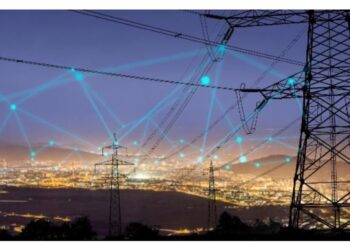
The Hybrid Wind-Solar Microgrid Controller Market is gaining importance as energy systems increasingly combine variable renewable generation with storage, intelligent power electronics, and flexible loads. Microgrid controllers coordinate distributed energy resources, monitor system conditions, manage power flows, and support transitions between grid-connected and islanded operation.
Key Drivers
Growing Integration of Wind and Solar Power
Wind and solar generation have different production profiles, creating an opportunity for hybrid systems to balance renewable availability across changing weather and operating conditions. A controller can coordinate generation, storage, loads, and grid interaction to improve overall system operation.
Research into hybrid microgrids increasingly emphasizes advanced control architectures that can maintain voltage and frequency while managing the variability of distributed energy resources. These requirements are particularly important for isolated and weak-grid applications.
Demand for Resilient Energy Infrastructure
Energy resilience is another factor supporting demand for hybrid microgrid controllers. Microgrids can continue supplying designated loads when the main grid experiences disruptions, provided that generation, storage, protection, and control systems are appropriately coordinated.
Modern controller technologies can support autonomous islanding, resource dispatch, power-quality management, and reconnection. Such capabilities are relevant for remote communities, industrial facilities, critical infrastructure, campuses, and other locations where continuity of electricity supply is important.
Role of Energy Storage and Intelligent Management
Energy storage is closely connected with hybrid wind-solar microgrid control because batteries can absorb excess renewable electricity and provide power when generation falls. Controllers determine how and when storage resources operate based on system conditions, load requirements, and operating objectives.
Artificial intelligence and machine learning are also being explored for renewable forecasting, optimization, fault management, and resilient microgrid operation. Recent research identifies forecasting and optimization as important applications while noting challenges involving real-time implementation, interoperability, and model generalization.
Technological Advancements in Controller Systems
Controller development is moving beyond conventional rule-based approaches toward distributed, predictive, adaptive, and intelligent control methods. Recent research highlights distributed control as a way to improve scalability and resilience in complex hybrid microgrid architectures. Communication delays, interoperability, and cybersecurity remain important technical considerations.
Grid-forming inverter technology is also becoming increasingly relevant. These systems can help establish and regulate voltage and frequency in inverter-dominated power networks, supporting the integration of solar, wind, batteries, and other power-electronic resources.
Challenges in the Market
A key challenge for the Hybrid Wind-Solar Microgrid Controller Market is the complexity of coordinating multiple distributed energy resources with different generation patterns. Wind and solar output can change rapidly because of weather conditions, creating difficulties in maintaining voltage, frequency, and power balance. Controllers must also coordinate battery storage, variable loads, inverters, and grid connections without introducing instability or communication delays.
Another challenge involves interoperability, cybersecurity, and deployment costs. Microgrids often incorporate equipment from different manufacturers, making standardized communication and seamless system integration difficult. Connected controllers can also increase exposure to cyber threats, requiring stronger authentication, monitoring, and protection mechanisms.
Opportunities Across Distributed Energy Applications
Opportunities are emerging across remote electrification, commercial facilities, industrial sites, telecommunications infrastructure, agricultural operations, and community-scale energy systems. Hybrid configurations can reduce dependence on a single generation source while giving operators greater flexibility in managing local electricity resources.
The increasing deployment of distributed energy resources is creating additional requirements for standardized interfaces and interoperable control platforms. Controller hardware-in-the-loop and power hardware-in-the-loop testing are being used to evaluate microgrid technologies before real-world deployment.