


According to our Growth Market Report, the global Smart City Street Patrol UAV market size reached USD 1.82 billion in 2024, reflecting robust growth in urban surveillance and public safety solutions. The market is expanding at a CAGR of 14.6% and is projected to attain a value of USD 5.41 billion by 2033. This growth is primarily driven by the rapid adoption of UAV technology in smart city initiatives, increasing urbanization, and the rising need for efficient, real-time monitoring and response systems in metropolitan environments. The demand for advanced UAVs in street patrol operations is being bolstered by technological advancements, regulatory support, and heightened emphasis on public safety and urban management.
Introduction: When Streets Learn to Watch Themselves
Modern cities are no longer passive landscapes of concrete and traffic signals. They are evolving into living systems—responsive, data-driven, and self-aware. At the heart of this transformation lies an emerging force: Street Patrol Unmanned Aerial Vehicles (UAVs). These intelligent aerial sentinels are quietly reshaping how cities monitor streets, manage public safety, and respond to urban challenges in real time. The Smart City Street Patrol UAV Market represents not just a new product category, but a fundamental shift in urban governance.
The Concept of Aerial Street Patrol: More Than Flying Cameras
Unlike conventional surveillance tools, street patrol UAVs are designed as autonomous decision-support assets. They do not merely record footage; they interpret situations. Equipped with AI-powered vision, edge analytics, and secure communication links, these UAVs can detect anomalies such as unusual crowd movement, traffic violations, abandoned objects, or emergency incidents—often before human operators are aware.
What makes this market distinctive is its integration-first philosophy. These UAVs function as extensions of smart traffic systems, emergency response platforms, and urban command centers rather than standalone devices.
Why Cities Are Turning Skyward
Urban Complexity Is Outpacing Ground-Based Monitoring
As cities expand vertically and horizontally, traditional patrol methods face limitations—blind spots, delayed response times, and escalating operational costs. UAV-based street patrols introduce three critical advantages:
- Perspective Advantage: Aerial visibility allows simultaneous monitoring of multiple city layers—roads, sidewalks, intersections, and public spaces.
- Speed of Response: UAVs can be deployed within seconds, bypassing traffic congestion and physical barriers.
- Scalable Coverage: A small fleet can dynamically patrol vast urban zones based on real-time risk assessment.
Core Technologies Powering the Market
1. Autonomous Navigation and Geo-Fencing
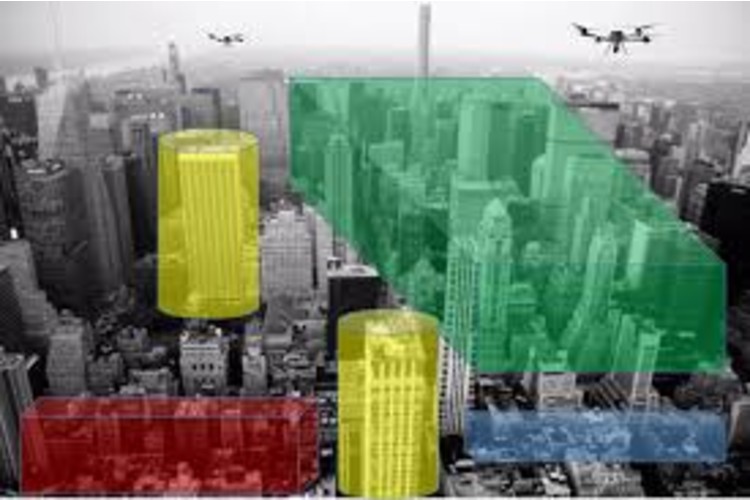
Advanced street patrol UAVs rely on high-precision mapping and geo-fenced flight corridors, enabling safe operation in dense urban environments without interfering with commercial air traffic or private property.
2. AI-Driven Urban Intelligence
Computer vision algorithms trained on city-specific datasets allow UAVs to distinguish between normal urban behavior and potential threats. This contextual intelligence reduces false alarms and increases trust in automated patrol systems.
3. Secure Urban Data Pipelines
Given the sensitivity of public safety data, encryption, edge processing, and sovereign cloud storage have become central differentiators within the market.
Use Cases Reshaping Urban Management
Traffic Oversight and Incident Detection
Street patrol UAVs can identify accidents, stalled vehicles, and congestion patterns, transmitting actionable data directly to traffic management centers for immediate intervention.
Crowd and Event Monitoring
During festivals, protests, or sports events, UAVs provide live aerial insights, enabling authorities to prevent overcrowding, manage evacuation routes, and ensure public safety without intrusive policing.
Rapid Emergency Assessment
In fire outbreaks, medical emergencies, or infrastructure failures, UAVs act as first visual responders—delivering situational awareness before ground teams arrive.
Market Evolution: From Surveillance to Civic Intelligence
The Smart City Street Patrol UAV Market is rapidly moving beyond surveillance. The next generation of systems emphasizes predictive urban intelligence—using historical data, weather inputs, and behavioral models to anticipate incidents rather than merely reacting to them.
This evolution is also shifting procurement patterns. Cities are no longer purchasing hardware alone; they are investing in long-term aerial intelligence ecosystems delivered through service-based models.
Ethical Design and Public Trust as Market Drivers
Public acceptance plays a decisive role in market growth. Leading solutions are embedding privacy-by-design principles, such as:
- Automatic face and license plate anonymization
- Mission-specific data retention policies
- Transparent governance dashboards accessible to city councils and citizens
These measures are transforming UAV patrols from symbols of surveillance into tools of collective safety.
Regional Adoption Dynamics
While technologically mature cities lead early adoption, emerging urban centers are proving equally important. Rapid urbanization, infrastructure gaps, and public safety challenges make UAV patrols an attractive leapfrog solution—allowing cities to deploy advanced monitoring without massive ground infrastructure investments.
Competitive Landscape
- DJI
- AeroVironment
- Parrot SA
- Lockheed Martin
- Elbit Systems
- Yuneec International
- Teledyne FLIR
- Leonardo S.p.A.
- Northrop Grumman
- Thales Group
- SZ DJI Technology Co., Ltd.
- Kespry
- Insitu Inc.
- Delair
- EHang
- Autel Robotics
- Microdrones
- IdeaForge
- Aeryon Labs
- Terra Drone Corporation
Future Outlook: A New Layer of Urban Consciousness
According to our Growth Market Report, The Smart City Street Patrol UAV Market is not just about drones in the sky. It represents the birth of an aerial nervous system for cities—one that senses, learns, and responds to the rhythms of urban life. For policymakers, technologists, and citizens alike, this market offers a glimpse into a future where safety is proactive, governance is informed, and cities truly understand themselves.