


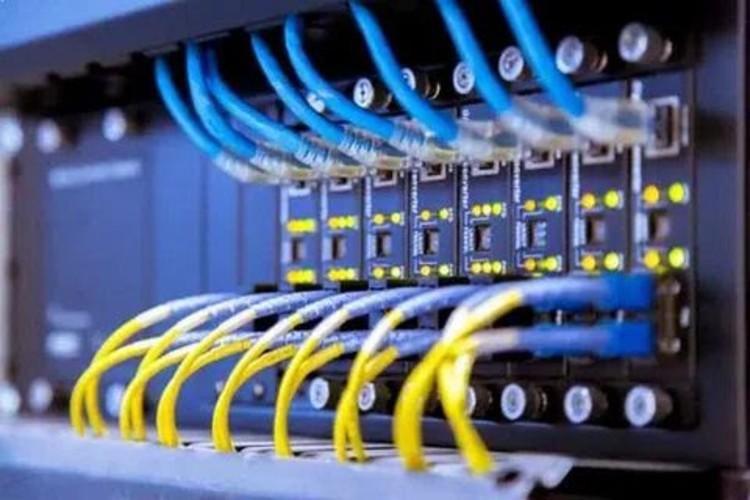
In the era of Industry 4.0, where digital transformation is reshaping industrial operations, Industrial Ethernet has emerged as the nervous system of connected factories. It provides the foundation for seamless communication between machines, sensors, controllers, and enterprise systems — transforming traditional manufacturing into a smart, data-driven ecosystem. As industries embrace automation, robotics, and predictive analytics, the Industrial Ethernet Market is experiencing rapid growth, enabling manufacturers to achieve real-time control, scalability, and interoperability across complex production lines.
The Backbone of Industry 4.0 Connectivity
Industrial Ethernet is not just an evolution of conventional Ethernet; it is a revolution designed for rugged, mission-critical industrial environments. Unlike office Ethernet systems, industrial-grade networks are built to withstand extreme temperatures, vibrations, electromagnetic interference, and long cable distances — ensuring continuous uptime in factory settings.
The Industrial Ethernet Market has gained momentum as manufacturers demand faster communication speeds, improved reliability, and integration with IoT platforms. It supports advanced automation protocols such as PROFINET, EtherCAT, Ethernet/IP, and Modbus TCP, allowing devices from different vendors to communicate effortlessly. This interoperability is crucial in the smart factory era, where multi-vendor equipment and systems must synchronize for efficient operations.
Accelerating the Shift Toward Smart Factories
The concept of smart manufacturing revolves around data — the collection, analysis, and application of real-time insights to improve decision-making. Industrial Ethernet acts as the bridge connecting operational technology (OT) and information technology (IT), creating a unified network for data exchange across all layers of production.
This integration allows manufacturers to monitor equipment performance, energy consumption, and production quality in real-time. It also enables predictive maintenance, reducing downtime and extending equipment life. With Ethernet-based communication, every sensor and actuator can be digitally monitored, creating a cyber-physical system where automation, analytics, and AI-driven decisions coexist.
Companies implementing Industrial Ethernet networks report up to 30% improvement in operational efficiency and significant reductions in unplanned maintenance costs. Such metrics underline how this technology is no longer optional but essential for factories aspiring to achieve smart manufacturing excellence.
Why Industrial Ethernet Outperforms Traditional Fieldbus Systems
Before the advent of Ethernet-based networks, fieldbus technologies dominated industrial communication. However, the limitations of low bandwidth, restricted scalability, and isolated data silos hindered their long-term effectiveness. Industrial Ethernet solves these challenges through high-speed data transmission, support for vast device networks, and compatibility with cloud and edge computing systems.
Fieldbus systems typically operate at kilobits per second, while modern Industrial Ethernet can achieve speeds of up to 10 Gbps or more, depending on the configuration. This performance boost allows factories to handle the immense data load generated by modern sensors, machine vision systems, and AI-driven applications.
Moreover, Ethernet networks support deterministic communication, essential for time-critical applications like robotics or process control. Technologies such as Time-Sensitive Networking (TSN) ensure that data packets reach their destination precisely when needed, enabling synchronized operations even in complex environments.
Driving Efficiency and Flexibility Through Automation
One of the biggest advantages of Industrial Ethernet is its ability to enhance automation and flexibility simultaneously. Modern production lines demand quick adaptability — whether it’s reconfiguring systems for a new product, adjusting processes for custom orders, or scaling operations based on demand. Ethernet-enabled networks simplify these transitions through plug-and-play connectivity and centralized management.
Automation systems powered by Industrial Ethernet can easily integrate with Programmable Logic Controllers (PLCs), Supervisory Control and Data Acquisition (SCADA) systems, and Manufacturing Execution Systems (MES). This interconnectedness ensures that every machine and process communicates efficiently, leading to higher throughput and reduced human error.
For instance, a manufacturing plant leveraging Industrial Ethernet can instantly adjust assembly line parameters in response to sensor data or AI recommendations — something that was difficult or impossible with legacy communication systems.
Cybersecurity Becomes a Critical Priority
As connectivity expands, so does the attack surface. With the rise of IIoT (Industrial Internet of Things), cybersecurity in Industrial Ethernet networks has become a top priority. Traditional industrial networks were once isolated, but smart manufacturing requires open communication between on-premises systems and the cloud.
To safeguard sensitive data and operations, companies are implementing network segmentation, firewalls, intrusion detection systems, and secure protocols such as OPC UA and TLS encryption. The goal is to create a multi-layered defense architecture where both IT and OT domains remain resilient against cyber threats.
Global initiatives such as IEC 62443 and NIST frameworks provide best practices for ensuring security in industrial networks. As a result, vendors in the Industrial Ethernet Market are increasingly embedding advanced security features into switches, routers, and gateways to help industries comply with these evolving standards.
Role of Edge Computing and Cloud Integration
Industrial Ethernet networks are also evolving alongside edge computing and cloud-based analytics. Real-time data processing at the edge allows industries to analyze and act on critical information without latency issues, while cloud platforms enable long-term data storage, AI modeling, and enterprise-level visibility.
For example, an industrial robot connected via Ethernet can analyze torque, vibration, and thermal data locally to predict mechanical wear. Simultaneously, cloud dashboards aggregate data from multiple sites to optimize global production efficiency.
Fairfield Market Research notes that edge-cloud hybrid models will play a defining role in shaping the future of smart manufacturing, with Ethernet serving as the secure and reliable conduit for data exchange across both layers.
Sustainability and Energy Efficiency Through Connectivity
Sustainability is becoming a central theme in industrial operations. Industrial Ethernet contributes significantly by enabling energy-efficient automation and resource optimization. Smart sensors can monitor power consumption, emissions, and material usage in real time, helping manufacturers minimize waste and meet sustainability goals.
For instance, connected drives and motion systems can adjust energy loads dynamically, while Ethernet-enabled monitoring helps identify inefficiencies in HVAC, lighting, and process equipment. By optimizing energy flow, companies reduce carbon footprints and align with ESG and net-zero initiatives.
Industrial Ethernet’s Expanding Role
The global Industrial Ethernet Market is poised for sustained growth as industries modernize their automation infrastructure. From automotive and oil & gas to pharmaceuticals and logistics, Ethernet-based networks are now central to digital transformation strategies.
With ongoing advancements in 5G, AI, and machine vision, the boundary between industrial and enterprise networks continues to blur. Hybrid solutions combining wired Ethernet with wireless technologies promise even greater flexibility for future factories.
As Fairfield Market Research highlights, the rise of intelligent manufacturing ecosystems will make Industrial Ethernet the de facto standard for industrial communication by the end of this decade. Its adaptability, reliability, and compatibility with emerging technologies position it as the cornerstone of global industrial automation.
Industrial Ethernet is far more than a communication protocol — it is the infrastructure powering the next generation of smart factories. By delivering high-speed connectivity, real-time data exchange, and seamless IT-OT integration, it enables manufacturers to achieve unprecedented efficiency, flexibility, and intelligence.
As industries move deeper into the digital era, the Industrial Ethernet Market will continue to expand, driving transformative change across every manufacturing sector. In essence, the future of smart manufacturing will be wired — and powered — by Industrial Ethernet.