
Urja Daily
No Result
View All Result
  • News
  • Renewable
    • Solar
    • Rooftop
    • Floating Solar
    • Module
    • Wind
    • Hydrogen
    • Biomass
    • Tenders
    • Sustainibility
  • Storage
  • E-Mobility
  • Battery
  • Smart City
  • Power
    • Smart Grid
    • Microgrid
    • Off-Grid
  • Editor’s Pick
    • Articles
    • In Talks
    • E-MAG
    • Market Research
  • On-demand Webinars
  • More
    • Events
    • Contact Us
    • Subscribe
No Result
View All Result
Urja Daily
No Result
View All Result
Home Renewable Solar

From Rising Power Costs to Energy Independence: Why Companies Are Accelerating Solar Adoption

Shreyas Gowda, SVP- Sales & Operations at Oorjan Cleantech

Palak by Palak
August 6, 2026
in Solar
Reading Time: 3 mins read
0
Share on FacebookShare on TwitterShare on Linkedin

For years, electricity was viewed as an unavoidable operating expense. Today, it has become a boardroom priority. Faced with rising energy costs, volatile power markets, and increasing sustainability commitments, businesses are fundamentally rethinking how they source and consume electricity. Increasingly, the goal is no longer just reducing utility bills, it is achieving long-term energy independence.

This transition comes at a time when India’s energy demand is expanding rapidly. According to the International Energy Agency (IEA), India is among the world’s fastest-growing electricity markets, with investment in the power sector increasingly shifting toward renewable energy to meet rising industrial and commercial demand. Solar alone now attracts the largest share of clean energy investments in the country.

RELATED POSTS

TNB and IOI partner for 500 MW solar project in Malaysia

Vikran Engineering Posts 25% YoY Revenue Growth in Q2 FY27, Expands Solar EPC and Power T&D Presence

The pace of adoption reflects this shift. According to Mercom India Research, India added a record 36.6 GW of solar capacity in 2025, a 43% increase over the previous year. Solar accounted for 68% of all new power capacity additions during the year, taking the country’s cumulative installed solar capacity to 136 GW. These figures highlight that solar is no longer an alternative source of energy it is becoming a cornerstone of India’s power infrastructure.

For commercial and industrial (C&I) consumers, the business case is compelling. Energy-intensive sectors such as manufacturing, logistics, pharmaceuticals, data centres, commercial real estate, and hospitality are facing mounting pressure from increasing electricity tariffs and tighter operating margins. Unlike conventional grid electricity, where prices remain vulnerable to fuel costs and regulatory revisions, solar offers predictable energy costs over an asset life of 25 years or more. This stability enables businesses to improve financial planning while reducing exposure to future tariff volatility.

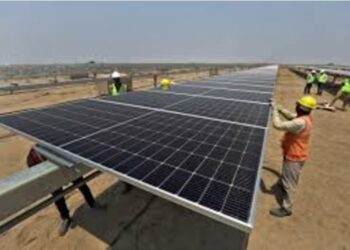
The rooftop solar segment is emerging as one of the strongest indicators of this transformation. India installed 7.1 GW of rooftop solar capacity in 2025, representing a remarkable 123% year-on-year increase. Cumulative rooftop installations have now crossed 20.8 GW, driven by growing adoption across commercial buildings, factories, warehouses, educational institutions, and healthcare facilities.

However, companies are not investing in solar solely for cost savings. Energy resilience has become equally important. Unexpected power disruptions can halt production lines, interrupt cold-chain operations, affect digital infrastructure, and reduce business productivity. Modern solar installations integrated with Battery Energy Storage Systems (BESS), AI-powered monitoring platforms, and Energy Management Systems (EMS) enable businesses to generate, store, and intelligently manage electricity, ensuring greater reliability while optimizing energy consumption in real time.

Policy support is also accelerating adoption. The implementation of the Green Energy Open Access Rules, 2022, has made it easier for commercial and industrial consumers to procure renewable energy directly. According to CRISIL Ratings, India’s commercial and industrial renewable energy capacity is expected to grow from around 40 GW in FY2026 to nearly 57 GW by FY2028. The report further estimates that renewable energy can reduce electricity costs by 25–30% compared to conventional grid power, making it an increasingly attractive proposition for businesses seeking long-term competitiveness.

Investor expectations are adding further momentum. Companies are now evaluated not only on financial performance but also on their environmental impact. Customers, global supply chains, and institutional investors increasingly expect measurable progress on carbon reduction and ESG performance. By generating clean electricity on-site, organizations can lower Scope 2 emissions, improve sustainability reporting, and strengthen their position in both domestic and international markets.

India has set an ambitious target of achieving 500 GW of non-fossil fuel power capacity by 2030, and the private sector will play a decisive role in achieving this milestone. As renewable technologies become more efficient, financing becomes more accessible, and digital energy management continues to evolve, businesses are shifting from being passive electricity consumers to active energy producers.Ultimately, the conversation has moved beyond installing solar panels. It is about building resilient enterprises that can control energy costs, reduce dependence on conventional power, and future-proof operations against an increasingly uncertain energy landscape. Companies that embrace solar today are not merely adopting a cleaner source of electricity—they are investing in long-term energy security, operational resilience, and sustainable growth.
Tags: Green EnergyIEAInvestmentpowerRooftop Solarsolar
ShareTweetShare
Palak

Palak

Related Posts

Solar

TNB and IOI partner for 500 MW solar project in Malaysia

by Urja Daily
November 12, 2026
0

Tenaga Nasional Bhd (TNB) plans to invest up to RM424.4 million in a joint venture (JV) with IOI Corp Bhd...

Vikran Engineering

Vikran Engineering Posts 25% YoY Revenue Growth in Q2 FY27, Expands Solar EPC and Power T&D Presence

by Urja Daily
November 6, 2026
0

Thane : Vikran Engineering Limited, one of India's fast-growing EPC companies with a diversified presence across Power Transmission & Distribution,...

Bluebird Solar

Bluebird Solar Expands BESS Solutions Across Industries

by Urja Daily
November 4, 2026
0

Bluebird Solar Private Limited has announced its entry into the Battery Energy Storage System (BESS) segment with a new portfolio...

ACME Solar

ACME Solar signs PPA with NTPC for 400 MW FDRE project

by Urja Daily
November 2, 2026
0

ACME Marigold Urja Private Limited, a wholly owned subsidiary of ACME Solar Holdings Limited, has signed a power purchase agreement...

Mr. Vinay Thadani - Director & CEO - GREW Solar

GREW Solar Receives ALMM List-II Approval for 2.4 GW N-Type TOPCon G12R Cell Manufacturing Capacity, Supporting India’s Solar Self-Reliance Vision

by Urja Daily
November 1, 2026
0

Mumbai / Ahmedabad : GREW Solar has received approval for the inclusion of its 2407 MW solar PV cell manufacturing capacity...

Next Post
CGSSC

CGSSC and Tata Consulting Engineers Launch Project UTKARSH to Build Manufacturing Industry-Ready Workforce

SECI Wind Power

SECI Invites EoI for Green Urea and Methanol Carbon Sources

Leave a Reply Cancel reply

Your email address will not be published. Required fields are marked *

RECOMMENDED

VAML Accelerates Low- Carbon Transition

VAML Accelerates Low-Carbon Transition with 63% Rise in Renewable Energy Use

November 20, 2026
Sharad

India’s Renewable Energy Paradox: More Solar Capacity, but Is There Enough Storage?

November 20, 2026

MOST VIEWED

  • Solar

    When the Sun Began Paying the Electricity Bills: The Story of PM Surya Ghar Muft Bijli Yojana

    0 shares
    Share 0 Tweet 0
  • India’s Emerging Polysilicon Manufacturing Ecosystem: Opportunities and Challenges

    0 shares
    Share 0 Tweet 0
  • Xpeng Selects u‑blox F9 Centimeter-level Multi-Band GNSS Technology for P7 Smart EV

    0 shares
    Share 0 Tweet 0
  • KP Group’s Listed Renewable Businesses Post Strong Multi-Year Growth as Portfolio Expands Beyond 9.2 GW

    0 shares
    Share 0 Tweet 0
  • How VpCI® Packaging Cuts Plant Energy Use and Carbon Emissions?

    0 shares
    Share 0 Tweet 0

VAML Accelerates Low-Carbon Transition with 63% Rise in Renewable Energy Use

India’s Renewable Energy Paradox: More Solar Capacity, but Is There Enough Storage?

GREW SOLAR MOVES CLOSER TO THE MARKET

Midwest Energy Receives LOI Under Centre’s ₹7,280 Crore Rare Earth Permanent Magnet Scheme

TrueRE Oriana Power to Set up Five CBG Projects Across Three States with 110 TPD Capacity; to Invest Rs. 750 Crores

Nepal to import 350 MW of electricity from India until July 2027

Latest Magazine

© 2016 – 2025 TechZone Print Media | All Rights Reserved

  • About Us
  • Contact Us
No Result
View All Result
  • News
  • Renewable
    • Solar
    • Rooftop
    • Floating Solar
    • Module
    • Wind
    • Hydrogen
    • Biomass
    • Tenders
    • Sustainibility
  • Storage
  • E-Mobility
  • Battery
  • Smart City
  • Power
    • Smart Grid
    • Microgrid
    • Off-Grid
  • Editor’s Pick
    • Articles
    • In Talks
    • E-MAG
    • Market Research
  • On-demand Webinars
  • More
    • Events
    • Contact Us
    • Subscribe

© 2016 - 2025 TechZone Print Media | All Rights Reserved