


The global shift toward sustainable mobility is no longer limited to road transportation—maritime ecosystems are now experiencing a rapid transformation as electric propulsion takes the center stage. Over the last few years, the Electric Boats & Ships Market has advanced from early adoption to accelerated commercial deployment across ferries, cargo vessels, passenger boats, defense crafts, and recreational marine fleets. Surprisingly, the pace of expansion is far greater than earlier industry projections, driven by technological breakthroughs, decarbonization mandates, and aggressive investment flows. This blog explores the underlying forces that have positioned electric vessels as a pivotal component of the future maritime landscape.
Growing Environmental Pressure and Global Emission Mandates
Stricter environmental regulations remain the single largest catalyst behind the exponential rise of the electric maritime segment. The International Maritime Organization (IMO) aims to cut greenhouse gas emissions significantly in the coming decades, pushing ports, shipbuilders, and fleet operators to transition toward cleaner propulsion systems. Conventional diesel-powered boats contribute heavily to coastal pollution, marine degradation, and carbon emissions, prompting governments and regulators to enforce cleaner marine mobility. These mandates have directly accelerated the adoption of electric propulsion, hybrid powertrains, and battery-based systems.
Countries across Europe, North America, and Asia Pacific are additionally offering subsidies, low-emission zone benefits, tax incentives, and port fee exemptions for operators who switch to electric vessels. These policies have created a favorable ecosystem in which electric boats and ships are emerging as an economically viable replacement for diesel-powered marine fleets.
Technological Advancements in Marine Batteries and Power Systems
A major reason why the Electric Boats & Ships Market is expanding faster than expected is the breakthrough advancement in battery technology. Earlier concerns regarding battery density, safety, reliability, and charging infrastructure were restricting mass adoption. However, marine-grade lithium-ion batteries, advanced solid-state architectures, and high-performance LFP chemistries have transformed the feasibility of long-distance and high-load marine operations.
Shipyards and propulsion technology providers are also investing in next-gen battery management systems, regenerative braking technologies for vessels, and hybrid-electric propulsion that can shift between battery and fuel cells. These innovations are not only extending vessel range and performance but also significantly lowering lifetime operating costs—an attractive commercial advantage for fleet operators trying to cut fuel and maintenance expenses.
Rapid Electrification of Ferries and Coastal Transport
One of the most significant shifts in the maritime industry is the rapid electrification of ferries, which account for millions of daily passenger movements across global coastal regions. Governments are increasingly prioritizing electric ferries due to their role in short-distance, high-frequency transport where emissions accumulate quickly. Scandinavian countries have already demonstrated the viability of all-electric ferries, setting global benchmarks for energy efficiency and clean mobility.
Coastal cities in Asia, Europe, and North America are replicating this model as part of their urban electrification strategy. This widespread replacement cycle is driving a significant demand surge, helping the Electric Boats & Ships Market grow at a pace that exceeds earlier expectations.
Rising Investments from Shipbuilders and Maritime OEMs
The maritime industry is undergoing a structural transformation fueled by record-level investments in electric vessel manufacturing. Global shipyards, OEMs, propulsion system manufacturers, and marine battery providers are actively collaborating to launch next-generation electric vessels capable of transporting passengers, goods, and heavy cargo with zero emissions.
Startups specializing in marine electrification have also attracted strong venture capital interest, further accelerating innovation cycles. Charging infrastructure developers are building fast-charging docks, smart energy storage systems, and grid-connected charging stations at ports, marinas, and marine tourism hubs. This ecosystem-level investment is significantly speeding up adoption across commercial, recreational, and military marine segments.
According to insights shared by Fairfield Market Research, the growing emphasis on decarbonized maritime supply chains is reshaping fleet replacement strategies, prompting port authorities and ship operators to accelerate electrification timelines. The momentum is now stronger than ever, with several nations planning full-scale electrification of inland waterways and coastal transport networks.
Shift Toward Cost-Efficient Marine Operations
Fuel is one of the largest operating expenses for marine fleets, contributing to fluctuating costs and financial uncertainties. Electric propulsion offers a fundamental solution by eliminating reliance on diesel, reducing fuel exposure, and improving energy efficiency. Over the vessel’s lifecycle, electric boats and ships offer 30–70% cost savings through lower fuel consumption, minimal mechanical wear, and fewer maintenance requirements due to simplified drivetrain designs.
These financial advantages are compelling for commercial fleet operators who are under pressure to remain cost-competitive while complying with stricter environmental requirements. Lower operating expenses, combined with subsidies and tax incentives, have significantly enhanced the commercial appeal of electric vessels.
Growing Demand for Silent, Low-Vibration Marine Tourism
Electric boats are increasingly preferred in tourism, leisure, and recreational activities due to their silent operation, low vibration, and environmentally friendly profile. Marine tourism destinations, including lakes, eco-reserves, island routes, and national parks, are shifting to electric boats to minimize ecological disruption. Wildlife-sensitive regions are especially embracing electric vessels, as they reduce water pollution and noise impact on marine species.
This surge in eco-tourism initiatives is supporting broader market expansion, encouraging hotels, tour operators, and water sports providers to replace their fleets with electric alternatives. The silent cruising experience also enhances passenger comfort, making electric vessels the preferred choice for premium tourism operators.
Port Electrification and Smart Maritime Infrastructure
A fast-growing trend accelerating market growth is the digital transformation of ports. Smart ports are integrating renewable energy grids, shore-to-ship power systems, and electric charging stations as part of their modernization strategy. With global focus shifting toward net-zero logistics, port authorities are implementing shore power solutions that enable ships to plug into electricity instead of using diesel engines while docked.
This move toward port electrification is creating a robust demand cycle where electric vessels and supportive infrastructure grow simultaneously, creating a reinforcing growth loop for the wider marine ecosystem.
A Market Growing Faster Than Predicted
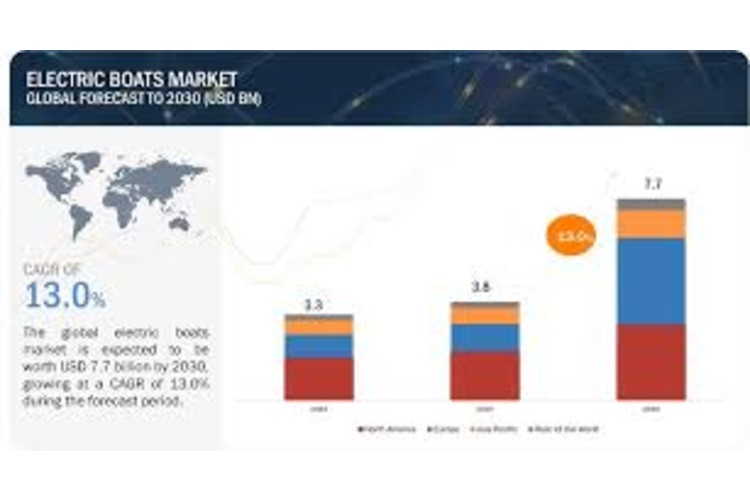
In conclusion, the Electric Boats & Ships Market is expanding at a much faster rate than initially forecasted. The combination of emission regulations, technological breakthroughs, rising investments, urban electrification, and changing operator economics has created a strong foundation for long-term growth. As highlighted by Fairfield Market Research, the shift toward carbon-neutral maritime transport is not a temporary trend—it is a global transition that is reshaping the future of marine mobility.
With escalating demand across passenger transport, cargo operations, tourism, and national defense fleets, the electric maritime revolution has already begun. The coming decade will define the next wave of innovations, bringing the marine industry closer to a cleaner, quieter, and more sustainable future.