



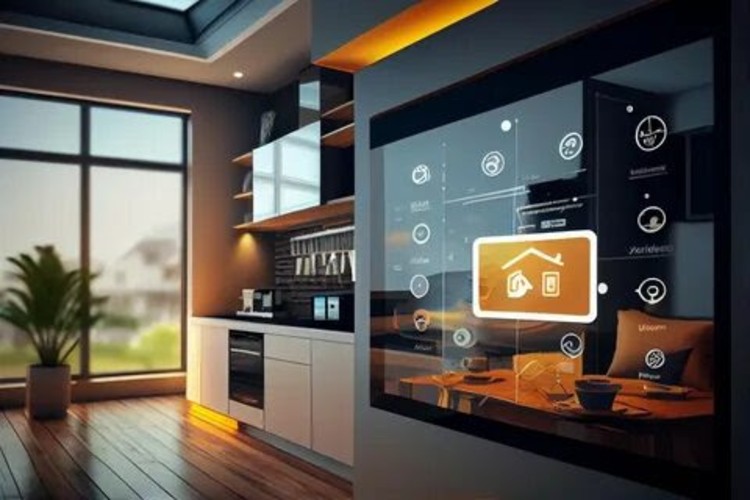
Smart homes have swiftly evolved from luxury novelties into everyday essentials. What started with simple automated lighting has now grown into a full-fledged ecosystem encompassing voice assistants, interconnected Internet of Things (IoT) devices, smart appliances, and intelligent energy management systems. As we move into a future powered by AI and data-driven technologies, the Smart Home Automation Market is poised for groundbreaking transformations.
According to Fairfield Market Research, the growing adoption of IoT and AI technologies, combined with increasing consumer interest in comfort, energy savings, and security, is significantly expanding the smart home ecosystem. But what lies ahead beyond voice assistants and basic IoT integration?
Let’s explore the most critical trends shaping the next chapter of smart home automation.
1. From Voice Control to Predictive Intelligence
While voice assistants like Alexa, Google Assistant, and Siri have been instrumental in driving consumer adoption of smart home appliances, the future is all about predictive and proactive automation.
Rather than relying solely on user prompts, smart homes are evolving to anticipate needs based on behavioral patterns, geolocation, and real-time data. For instance, your smart thermostat will not only adjust to your temperature preference but also factor in your commute, local weather conditions, and energy costs before making a change. Machine learning algorithms will drive this shift from reactive voice commands to intelligent automation.
The integration of context-aware computing and natural language processing (NLP) will also enhance the accuracy and adaptability of voice assistants, making interactions more natural and seamless.
2. The Rise of Interoperable and Unified Ecosystems
One of the biggest hurdles in smart home adoption has been the lack of interoperability across devices and platforms. Consumers often face compatibility issues when trying to integrate devices from different manufacturers.
Enter Matter, the new industry-standard protocol developed by tech giants like Apple, Google, Amazon, and the Connectivity Standards Alliance (CSA). Matter aims to unify device communication, enabling seamless control across ecosystems regardless of brand.
This open-source protocol will fuel rapid expansion in the Smart Home Automation Market, allowing consumers to mix and match devices without worrying about compatibility. This development also opens new doors for startups and smaller brands to innovate and compete on a level playing field.
3. Energy Management and Sustainability Become Central
Sustainability is no longer just a trend—it’s a necessity. Smart home technologies are increasingly being leveraged to reduce energy consumption, manage power loads, and integrate renewable energy sources.
Smart plugs, intelligent lighting, and AI-powered HVAC systems are helping homeowners minimize electricity usage without sacrificing comfort. Furthermore, solar panels and energy storage systems are now being tied into home automation platforms, giving users full control over generation and consumption.
Energy dashboards will become commonplace, offering real-time insights and recommendations for greener living. This green shift is accelerating market growth, particularly in regions focusing on carbon neutrality and sustainable urban development.
4. AI and Edge Computing Drive Real-Time Smart Decisions
The cloud has long been the backbone of smart home connectivity. But as security concerns and latency issues grow, edge computing is emerging as a game-changer.
Edge computing allows devices to process data locally rather than sending it to distant servers. This improves response times, enhances privacy, and reduces reliance on internet connectivity. When combined with artificial intelligence, it enables real-time automation, such as alerting homeowners about intrusions, adjusting air filters based on indoor pollution, or preventing water leaks before damage occurs.
These advancements will empower the Smart Home Automation Market to provide faster, safer, and more responsive solutions that meet user expectations for performance and privacy.
5. Smarter Security and Health Monitoring Systems
Security remains a top driver for smart home adoption. However, the scope is expanding beyond basic alarms and surveillance cameras. Emerging systems are equipped with facial recognition, motion tracking, and AI-enabled analytics, offering more intelligent threat detection.
On the health front, the pandemic has catalyzed demand for in-home wellness technologies. Smart air purifiers, sleep trackers, posture monitoring furniture, and even ambient temperature control for better sleep are increasingly being integrated.
Voice assistants are also being trained to detect abnormal speech patterns that could signal health emergencies like strokes or cognitive decline, marking a shift toward health-aware smart homes.
6. Robotics and Home Assistants Enter Mainstream
The next wave of smart home automation will see greater integration of robotic home assistants. Robots are being developed for tasks ranging from vacuuming and mopping to personal care and elder assistance.
Samsung’s Bot Handy and Amazon’s Astro are examples of robotic companions that go beyond cleaning, offering real-time communication, monitoring, and assistance. As AI models grow more advanced, expect smart homes to include robots that help with cooking, pet care, or even emotional companionship for the elderly.
This convergence of AI, robotics, and automation will dramatically reshape the Smart Home Automation Market, expanding its relevance across demographics and lifestyles.
7. Privacy and Cybersecurity Take Center Stage
As smart homes collect and process more personal data than ever, cybersecurity risks continue to mount. Hacked baby monitors, breached home cameras, and compromised voice assistants highlight the urgent need for robust data protection.
The industry is responding with blockchain-based device authentication, biometric encryption, and end-to-end secure protocols. Additionally, consumers are demanding transparency over data usage, prompting manufacturers to include better controls over data sharing and retention.
For sustained growth, companies will need to bake security into every layer of smart home architecture—hardware, software, and cloud.
A Smarter, Safer, and More Connected Tomorrow
The smart home of tomorrow is more than a collection of gadgets—it’s a dynamic, responsive, and intelligent environment that adapts to its occupants’ needs. Driven by breakthroughs in AI, IoT, robotics, and energy tech, the Smart Home Automation Market is entering its most transformative decade yet.
With support from standardization frameworks like Matter and insights from firms like Fairfield Market Research, manufacturers and innovators are poised to unlock the next wave of growth.
As homes become more predictive, personalized, and sustainable, one thing is clear: smart living is no longer futuristic—it’s the new standard.