

Urja Daily
No Result
View All Result
  • News
  • Renewable
    • Solar
    • Rooftop
    • Floating Solar
    • Module
    • Wind
    • Hydrogen
    • Biomass
    • Tenders
    • Sustainibility
  • Storage
  • E-Mobility
  • Battery
  • Smart City
  • Power
    • Smart Grid
    • Microgrid
    • Off-Grid
  • Editor’s Pick
    • Articles
    • In Talks
    • E-MAG
    • Market Research
  • On-demand Webinars
  • More
    • Events
    • Contact Us
    • Subscribe
  • News
  • Renewable
    • Solar
    • Rooftop
    • Floating Solar
    • Module
    • Wind
    • Hydrogen
    • Biomass
    • Tenders
    • Sustainibility
  • Storage
  • E-Mobility
  • Battery
  • Smart City
  • Power
    • Smart Grid
    • Microgrid
    • Off-Grid
  • Editor’s Pick
    • Articles
    • In Talks
    • E-MAG
    • Market Research
  • On-demand Webinars
  • More
    • Events
    • Contact Us
    • Subscribe
No Result
View All Result
Urja Daily
No Result
View All Result
Home Editor's Pick Market Research

South Korean Micromobility Market to Surpass $11,178.5 Million Revenue

Urja Daily by Urja Daily
September 30, 2021
in Market Research
Reading Time: 2 mins read
0
micromobility
Share on FacebookShare on TwitterShare on Linkedin

NEW YORK – The South Korean micromobility market value is predicted to increase to $11,178.5 million by 2030 from $120.3 million in 2020, at a 52.2% CAGR between 2021 and 2030. The key reasons behind the rising demand for such services are:

  • Worsening Air Quality: South Korea has the second-worst air quality among the developed Organisation for Economic Co-operation and Development (OECD) member countries. Hence, the focus on taking as many private vehicles off the roads as possible is rising. This, combined with the fact that much of the micromobility fleet is made up of electric vehicles, is boosting the demand for such shared mobility services in the country.
  • Need to Reduce Traffic Congestion: The South Korean micromobility market is also driven by the rising need to reduce urban traffic congestion. As one of the most-urbanized countries in the world, South Korea grapples with way more vehicles than its roads can handle. In this regard, the two-wheelers deployed in micromobility fleets provide a solution as they take less space on the roads and parking spaces.

The South Korean micromobility market has seen a positive impact of the COVID-19 pandemic as the lockdowns implemented to check the spread of the infection led to curtailed public transport services. Further, buses and metro trains are overcrowded, therefore a potential source of infection spread. As a result, people are now preferring micromobility, wherein they drive the two-wheeler themselves, which cuts down the chances of contracting the infection massively.

RELATED POSTS

Off-Grid Energy Storage Market to Hit $10.75 Billion by 2033

Solar Windows Market Growth Fueled by Renewable Energy Adoption

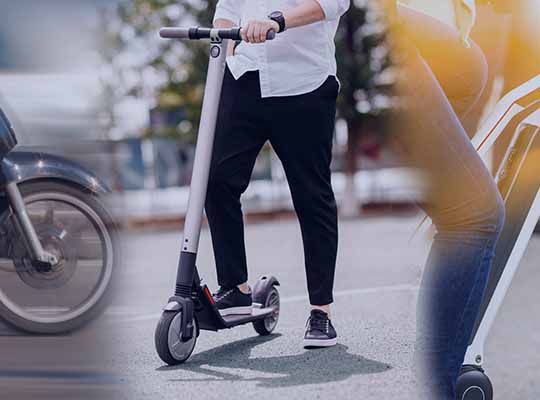
In the past, the South Korean micromobility market, on the basis of vehicle type, was led by the e-scooters category. Shared e-scooters are a good way to travel the first and last miles because of their affordability. Moreover, they do not release any operational emission, which is important to clean the country’s air.

The first- and last-mile bifurcation is predicted to witness the faster advance in the South Korean micromobility market in the coming years, based on model. As conventional shared mobility services, such as ride hailing and carsharing, are expensive when commuting between the office/home to bus stops and metro stations or the other way round, Koreans are utilizing micromobility for such purposes.

In the near future, the dockless bifurcation will dominate the South Korean micromobility market, under segmentation by sharing system. Such a system saves market players the trouble of establishing dedicated vehicle pickup and drop-off stations, which also makes the ride experience better for commuters.

Major firms in the South Korean micromobility market are Kakao Mobility Co. Ltd., Dart Sharing Co. Ltd., WIND Mobility Ltd., Dash Company Co. Ltd., Lime, Beam Mobility Holdings Pte. Ltd., Neuron Mobility Pte. Ltd., G Bike Co. Ltd., Olulo Co. Ltd., PUMP Co. Ltd., Niu Technologies, Gogoro Inc., Ningbo MYWAY Intelligent Technology Co. Ltd., Segway Inc., and Kwang Yang Motor Co. Ltd.

For more information, please visit : https://www.psmarketresearch.com/
Tags: micromobilitySouth Korean
ShareTweetShare
Urja Daily

Urja Daily

Related Posts

Offshore Wind

Off-Grid Energy Storage Market to Hit $10.75 Billion by 2033

by Palak
August 18, 2026
0

According to latest research by Growth Market Reports, the global off-grid energy storage system market size reached USD 4.85 billion in 2024, reflecting...

Solar Windows Market

Solar Windows Market Growth Fueled by Renewable Energy Adoption

by Palak
August 18, 2026
0

According to a new report published by Allied Market Research, the global solar windows market size was valued at $9.0 million...

Renewable Solar Thermochemical Fuel Market Set to Reach USD 6.45 Billion by 2034

by Palak
August 13, 2026
0

According to latest research by Growth Market Reports, the renewable solar thermochemical fuel market size reached USD 1.23 billion in 2025, establishing this...

Rooftop Equipment Fall Protection Market To Reach $4.8 billion by 2033

by Palak
August 12, 2026
0

According to Research intelo, the Global Rooftop Equipment Fall Protection market size was valued at $2.3 billion in 2024 and is projected to reach $4.8 billion by...

Hybrid Vehicles Gain Ground

Hybrid Vehicles Gain Ground as Automakers Rethink the All-Electric Roadmap

by Palak
August 10, 2026
0

For much of the past decade, the automotive industry's direction seemed straightforward: move from gasoline-powered vehicles toward fully electric cars....

Next Post
BluWave-ai-Dubai Taxi

Dubai Taxi and BluWave-ai Launched Innovative Partnership

sunpower

SunPower Launched 25X25 Initiative to Make Renewable Energy

Leave a Reply Cancel reply

Your email address will not be published. Required fields are marked *

RECOMMENDED

Beyond Installation: What Defines a Successful Industrial Solar Project?

August 22, 2026
Shweta Solar

Shweta Solar pushes for stronger storage and grid readiness as rooftop solar expands

August 22, 2026

MOST VIEWED

  • Solar

    When the Sun Began Paying the Electricity Bills: The Story of PM Surya Ghar Muft Bijli Yojana

    0 shares
    Share 0 Tweet 0
  • India’s Emerging Polysilicon Manufacturing Ecosystem: Opportunities and Challenges

    0 shares
    Share 0 Tweet 0
  • KP Group & PP Savani University Launches Urjanoor Scholarship

    0 shares
    Share 0 Tweet 0
  • StarlinePS Enterprises Invests ₹160 Crore in Celloraa Energy

    0 shares
    Share 0 Tweet 0
  • Business Delegation Signs 66 MoUs During Central Asia Visit to Boost Multi-Sector Collaboration

    0 shares
    Share 0 Tweet 0

Beyond Installation: What Defines a Successful Industrial Solar Project?

Shweta Solar pushes for stronger storage and grid readiness as rooftop solar expands

VinFast India Partners with Federal Bank to Strengthen Dealer Financing Ecosystem

MC²+ Ignite Selects 30 Energy Deep-Tech Startups for Funding

Servotech Renewable Launches New TVC for Solar Lithium Batteries Featuring Sonu Sood

Nuvoton Begins Production of 16-Cell Battery Monitoring ICs for AI Servers

Latest Magazine

© 2016 – 2025 TechZone Print Media | All Rights Reserved

  • About Us
  • Contact Us
No Result
View All Result
  • News
  • Renewable
    • Solar
    • Rooftop
    • Floating Solar
    • Module
    • Wind
    • Hydrogen
    • Biomass
    • Tenders
    • Sustainibility
  • Storage
  • E-Mobility
  • Battery
  • Smart City
  • Power
    • Smart Grid
    • Microgrid
    • Off-Grid
  • Editor’s Pick
    • Articles
    • In Talks
    • E-MAG
    • Market Research
  • On-demand Webinars
  • More
    • Events
    • Contact Us
    • Subscribe

© 2016 - 2025 TechZone Print Media | All Rights Reserved