


With rising concerns over food waste, energy costs, and climate change, solar-powered cold storage is emerging as a transformative solution. These systems integrate solar photovoltaic (PV) panels with thermal or battery storage to power refrigeration units, enabling off-grid or hybrid operations. By combining clean energy with essential cooling infrastructure, solar cold storage is helping bridge the gap between post-harvest preservation and sustainable development goals. Continue reading as we explore the fundamentals of solar powered cold storage and the key factors driving the solar powered cold storage market forward.
What Is Solar-Powered Cold Storage?
Solar-powered cold storage refers to temperature-controlled storage units that use solar energy to power refrigeration systems. These units are designed to preserve perishable goods such as fruits, vegetables, dairy, vaccines, and seafood. They maintain temperatures between 2°C and 8°C or in frozen states, depending on the application. Several solar-powered cold storage solutions are modular and mobile, making them ideal for rural farming communities, fishery hubs, and remote healthcare facilities. Some advanced units come equipped with phase-change materials (PCMs) or hybrid power integration to ensure consistent cooling even during low-sunlight periods or grid outages.
What Are the Key Benefits of Solar-Powered Cold Storage?
Here’s a look at some of the key benefits of solar-powered cold storage:
Reducing Post-Harvest Losses: A significant portion of agriculture produce in emerging economies is lost due to the absence of a proper cold chain infrastructure. Solar-powered units help extend shelf life and reduce spoilage. This directly benefits smallholder farmers and food distributors.
Energy Independence and Grid Resilience: Solar-powered cold storage operates independently or as hybrids, reducing reliance on an unstable power grid and eliminating the need for diesel generators. This ensures uninterrupted cooling, even in remote or disaster-prone areas.
Environmentally Friendly Operation: The use of solar power helps these systems reduce greenhouse gas emissions and decrease dependence on fossil fuels. This aligns with net-zero and green energy goals. Low-carbon cold chains also appeal to ESG-conscious investors and development organizations.
Long-Term Economic Savings: While the upfront costs of solar-powered cold storage systems may be higher, they eliminate recurring fuel expenses and benefit from low maintenance. This makes them cost-effective over the system’s lifespan.
What Are Major Market Metrics?
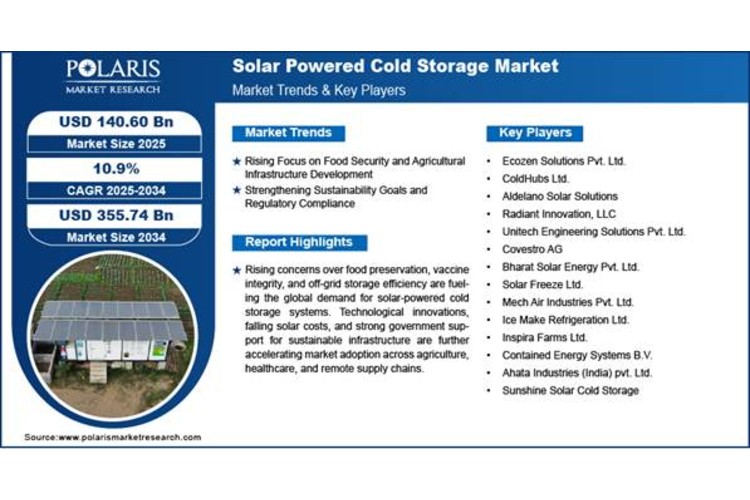
Polaris Market Research assesses the solar powered cold storage market to witness sustained growth in the coming years. The market was valued at USD 126.98 billion in 2024. With a CAGR of 10.9% between 2025 and 2034, the market is projected to reach USD 355.74 billion by 2034.
What’s Driving Market Forward?
Here’s a look at the key factors propelling the demand for solar powered cold storage solutions across developed and emerging regions:
Agricultural Modernization and Food Security
One of the key factors propelling the solar-powered cold storage adoption is the need to reduce post-harvest losses and ensure food security. In many developing region, a significant portion of fresh produce is wasted due to inadequate cold chain infrastructure. Governments and cooperatives are stepping in to modernize rural supply chains with energy-efficient cold storage that runs on solar power. These facilities allow farmers to store their harvests longer and access larger markets. With rising food demands due to expanding populations, these systems are proving vital in achieving year-round availability and supporting climate-resilient agriculture.
Vaccine Distribution and Medical Logistics
The pandemic underscored the critical need for reliable cold storage in remote healthcare settings. Solar-powered medical refrigerators and cold rooms provide a decentralized solution for last-mile delivery. The ability of these units to maintain WHO-recommended cold chain temperatures without relying on diesel generators or intermittent grid power has made them essential to public health campaigns. This shift continues post-pandemic, as countries expand immunization programs and prepare for future outbreaks.
What Are the Emerging Trends to Watch?
Below, we’ve given some of the key trends shaping the solar powered cold storage market landscape:
Integration of Battery and Thermal Storage: Manufacturers have introduced hybrid systems that combine lithium-ion batteries with thermal storage. These hybrid systems are improving system resilience and performance during nighttime or cloudy periods.
IoT-Enabled Monitoring: Remote temperature and energy monitoring via IoT is enabling predictive maintenance, real-time alerts, and performance analytics.
Modular and Mobile Cold Rooms: The advent of portable cold storage units on trailers and tuk-tuks is making last-mile cold chain delivery feasible in remote and underserved areas.
Public-Private Partnership Models: Public-private partnership models are supporting the deployment of solar cold storage through grants, leasing models, and build-operate-transfer programs across rural communities.
Conclusion
Solar-powered cold storage represents a vital intersection of lean energy and food security. Its role in enabling resilient agriculture, supporting rural economies, and strengthening healthcare logistics makes it a cornerstone of sustainable infrastructure. As technology matures and funding mechanisms become more inclusive, solar refrigeration systems are set to redefine how we store and transport perishables.