

Urja Daily
No Result
View All Result
  • News
  • Renewable
    • Solar
    • Rooftop
    • Floating Solar
    • Module
    • Wind
    • Hydrogen
    • Biomass
    • Tenders
    • Sustainibility
  • Storage
  • E-Mobility
  • Battery
  • Smart City
  • Power
    • Smart Grid
    • Microgrid
    • Off-Grid
  • Editor’s Pick
    • Articles
    • In Talks
    • E-MAG
    • Market Research
  • On-demand Webinars
  • More
    • Events
    • Contact Us
    • Subscribe
No Result
View All Result
Urja Daily
No Result
View All Result
Home Editor's Pick Articles

Future of EV charging: Trends and innovations

editor by editor
February 28, 2024
in Articles
Reading Time: 3 mins read
0
Mr. Ashish Deswal
Share on FacebookShare on TwitterShare on Linkedin

India, a rapidly growing automobile market, is expected to have 44 million electric vehicles (EVs) by 2030, making it the world’s third-largest EV market. Indian government has implemented tax incentives, subsidies for EV manufacturers and buyers, and the Faster Adoption and Manufacturing of Hybrid and Electric Vehicles (FAME) scheme to promote EV adoption. The International Energy Agency (IEA) reported a double-digit increase in global electric vehicle (EV) sales in 2021, reaching 16.5 million units worldwide.

Being the world’s third-largest oil importer, India has set a goal of EVs representing at least 30% of all road traffic by 2023. This ambitious adoption rate will have significant environmental and economic impacts. The country’s 1.4 billion population and rapidly growing economy make it an influential player in the global EV market. The transition to EVs will reduce India’s dependency on oil, disrupting global oil markets. India’s full adoption of electric vehicles will be a significant step towards sustainable development in global mobility. However, the adoption of EVs in India is still in its nascent stage, with EVs accounting for only 4.7 per cent of total vehicles sold in 2022; a key challenge that remains is the lack of an EV robust charging infrastructure.

RELATED POSTS

Fuel Shocks Make Farm Waste a Strategic Industrial Fuel for India, says Ankur Scientific as it Marks 40 Years of R&D

How India’s Next Solar Bottleneck May Not Be Land, Capital or Technology and Could be Skilled Manpower?

Need for a robust charging infrastructure

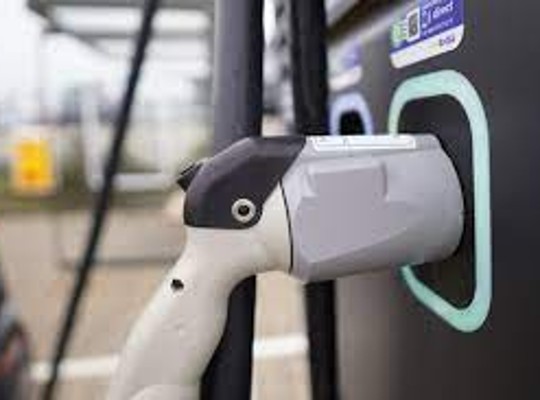
A well-developed charging infrastructure is crucial to encourage more people to adopt electric vehicles. Range anxiety, the fear of running out of battery power without a nearby charging option, is a significant barrier to EV adoption. A robust charging network alleviates this concern and increases consumer confidence in EVs. Developing an EV charging infrastructure can create new economic opportunities as it can lead to job creation in the manufacturing, installation, maintenance, and operation of charging stations. Additionally, it can stimulate the growth of the EV industry, attracting investments and technology development.

As the charging station market keeps evolving at a steady pace, several new innovative trends have been emerging in recent years.

Charging station operators and EV manufacturers partnerships

Partnerships between charging station operators and electric vehicle (EV) manufacturers are critical for the growth and success of the EV ecosystem. These collaborations offer several benefits to both parties and ultimately help promote the adoption of electric vehicles. In order to build charging infrastructure all around the nation, several charging station operators in India have joined up with EV manufacturers. EV manufacturers are collaborating with charging station operators to expand the charging infrastructure, ensuring that their customers have convenient access to charging facilities.

Renewable energy resources

Many owners of charging stations fuel their stations using sustainable energy sources, such as solar energy. In addition to lowering the carbon footprint of the charging stations, it also aids in resolving the problem of power shortages in some regions of the nation.

Expansion in public places

The installation of EV charging stations has been made mandatory in India for all public parking lots and gas stations with an area greater than 5,000 square metres, through which it is anticipated that there will be a major rise in charging stations around the nation.

Fast charging technology

Fast charging technology, which shortens the time it takes for EVs to charge, is being adopted by many charging station operators across the country. Fast charging infrastructure is critical for long-distance EV travel, enabling drivers to cover longer distances in a single day. This promotes the use of EVs for road trips and intercity travel.


Tags: ecosystemEVFAMEIEARenewable EnergyTechnology
ShareTweetShare
editor

editor

Related Posts

Ankur Jain

Fuel Shocks Make Farm Waste a Strategic Industrial Fuel for India, says Ankur Scientific as it Marks 40 Years of R&D

by Urja Daily
October 21, 2026
0

Vadodara : Wars and geopolitical conflicts in recent years have exposed the vulnerabilities of global energy supply chains, with disruptions increasingly...

Tanmoy Duari

How India’s Next Solar Bottleneck May Not Be Land, Capital or Technology and Could be Skilled Manpower?

by Urja Daily
October 21, 2026
0

As installations surge and manufacturing scales up, a shortage of skilled manpower is emerging as a critical bottleneck in the...

Mr. Madhvendra Singh

Embedded Technology: The Intelligence Behind Electronics and the Careers of Tomorrow

by Urja Daily
October 14, 2026
0

Much of the technology we rely on every day is powered by computing systems that most users never see. A...

Ravi Kumar

Managing Peak Power Demand: How BESS Can Help Commercial Establishments Optimise Energy Consumption

by Urja Daily
September 24, 2026
0

There is one line on every high-tension electricity bill in Maharashtra that businesses often treat as fixed: the demand charge. Unlike...

Dushyant Kumar, PV Quality Manager

The “Solar Shelf-Life” Problem and how today’s Best Module Become Obsolete Before Its 25-Year Warranty Ends?

by Urja Daily
September 23, 2026
0

India’s solar sector is confronting an unexpected shift: while photovoltaic modules are lasting longer than ever, they may be losing...

Next Post
Rightcharge Electric Fuel Card

Rightcharge flips the switch on its home charging payments solution, sparking savings and simplicity for fleets

Girish Pai - Chief Operations Officer

RCG Global Services Unveils New Digital Delivery Center in Chennai for Innovation, Growth

Leave a Reply Cancel reply

Your email address will not be published. Required fields are marked *

RECOMMENDED

Rahul Das, AVP

Why Should Large Industrial Entities Invest in BESS When They Have Already Invested in Solar?

October 23, 2026
Emmvee

Emmvee unveils India’s first Quarter-Cut Module with 4 Cut TOPCon Cell, delivering up to 30W higher power output 

October 23, 2026

MOST VIEWED

  • Solar

    When the Sun Began Paying the Electricity Bills: The Story of PM Surya Ghar Muft Bijli Yojana

    0 shares
    Share 0 Tweet 0
  • India’s Emerging Polysilicon Manufacturing Ecosystem: Opportunities and Challenges

    0 shares
    Share 0 Tweet 0
  • Xpeng Selects u‑blox F9 Centimeter-level Multi-Band GNSS Technology for P7 Smart EV

    0 shares
    Share 0 Tweet 0
  • KP Group’s Listed Renewable Businesses Post Strong Multi-Year Growth as Portfolio Expands Beyond 9.2 GW

    0 shares
    Share 0 Tweet 0
  • KP Group & PP Savani University Launches Urjanoor Scholarship

    0 shares
    Share 0 Tweet 0

Why Should Large Industrial Entities Invest in BESS When They Have Already Invested in Solar?

Emmvee unveils India’s first Quarter-Cut Module with 4 Cut TOPCon Cell, delivering up to 30W higher power output 

BL Agro Goes Global; Aims To Invest ₹7,000 Crore in Tanzania Across Edible Oil, Dairy, Agriculture and Manufacturing

Transformerless Solar Central Inverter Market to Reach USD 8.4 Billion by 2034

Fujiyama Power Systems Limited clarifying the potential impact of China’s proposed export restrictions on solar cell manufacturing technology and machinery

Yash Highvoltage® Delivers Robust H1 FY27 Growth with Revenue Up 95%, EBITDA Up 136% and PAT Up 165% YoY

Latest Magazine

© 2016 – 2025 TechZone Print Media | All Rights Reserved

  • About Us
  • Contact Us
No Result
View All Result
  • News
  • Renewable
    • Solar
    • Rooftop
    • Floating Solar
    • Module
    • Wind
    • Hydrogen
    • Biomass
    • Tenders
    • Sustainibility
  • Storage
  • E-Mobility
  • Battery
  • Smart City
  • Power
    • Smart Grid
    • Microgrid
    • Off-Grid
  • Editor’s Pick
    • Articles
    • In Talks
    • E-MAG
    • Market Research
  • On-demand Webinars
  • More
    • Events
    • Contact Us
    • Subscribe

© 2016 - 2025 TechZone Print Media | All Rights Reserved