

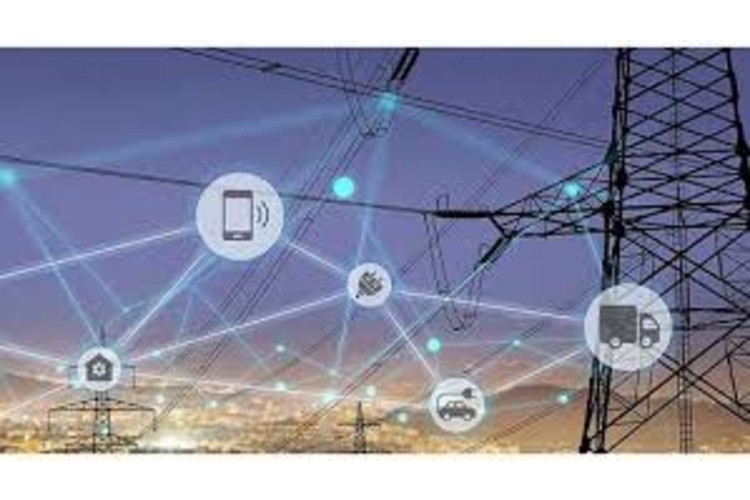
Imagine a tree falls on a line in a rural area. In a traditional grid, this might cause overloading on adjacent lines, leading to a city-wide blackout. In an ‘immune’ grid, sensors detect the anomaly, Quantum AI calculates the optimal containment strategy, and smart breakers isolate the fault to a single area, protecting the city.
The reliability of power systems is a cornerstone of modern infrastructure, yet the complexity of electricity grids makes them highly vulnerable to faults. Traditional detection systems rely on conventional algorithms that often lag behind real-time demands. Emerging technologies such as quantum artificial intelligence (QAI), combined with principles inspired by herd immunity, promise to transform how power faults are predicted, isolated, and corrected.
When One Fault Sparks a Domino Effect
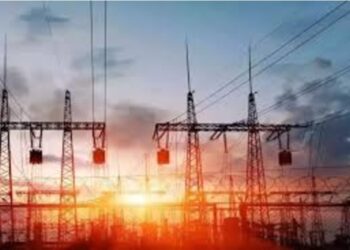
Cascading power failures happen when a single fault—such as a tripped line, equipment breakdown, or sudden imbalance—sets off a chain reaction across the grid. As electricity reroutes through alternate pathways, those lines quickly overload, causing protective devices to trip one after another. This domino effect can spread rapidly, destabilizing voltage, disconnecting generators, and plunging entire regions into blackout. Because these failures escalate in seconds, advanced monitoring and intelligent fault-control systems are essential to stop one spark from collapsing the whole grid.
Quantum AI in Power Systems
Quantum AI leverages the capabilities of quantum computing to process vast datasets in parallel, enabling unprecedented speed and accuracy in fault detection. Unlike classical machine learning models, QAI can simultaneously evaluate multiple possible fault scenarios across the grid. By harnessing quantum superposition and entanglement, QAI-based algorithms can detect subtle patterns in voltage fluctuations, frequency anomalies, or phase imbalances long before they escalate into system-wide blackouts.
For example, a QAI-enhanced smart grid could detect micro-faults in transformer windings, predict cascading failures in real-time, and recommend immediate corrective action, such as rerouting power flow or isolating the affected node.
Herd Immunity as a Design Philosophy
The concept of herd immunity, widely used in epidemiology, can be adapted as a metaphor for power grid resilience. In disease control, if a critical portion of the population is immune, the spread of infection slows and eventually halts. Similarly, in power systems, if a sufficient portion of the grid’s nodes (substations, smart meters, renewable energy inlets) are “immune” to faults—through redundancy, self-healing protocols, or localized protection mechanisms—the spread of cascading failures can be effectively contained.
Each “immune” node contributes to the stability of the entire system, reducing the probability that a single fault propagates unchecked. This distributed resilience mirrors herd immunity, where collective strength arises from localized safeguards.
PMUs and SCADA: The Eyes and Hands of the Power Grid
Phasor Measurement Units (PMUs) act as the real-time sensors of the power grid, delivering GPS-synchronized data on voltage, current, and phase angles across vast networks. This precise monitoring allows early detection of anomalies like short circuits, overloads, and oscillations before they cascade into widespread blackouts. On the other hand, Supervisory Control and Data Acquisition (SCADA) systems function as the control hub, gathering operational data from substations, issuing remote commands, and isolating faulted lines to keep the grid stable. Together, PMUs and SCADA create a powerful combination of awareness and action, ensuring that faults can be quickly detected, localized, and contained.
Quantum AI: Turning Fault Control into Smart Recovery
While PMUs and SCADA provide visibility and control, Quantum AI supercharges their effectiveness. By processing massive streams of PMU-SCADA data at quantum speeds, it predicts faults earlier, identifies subtle anomalies, and computes the optimal switching strategies to minimize outage zones. Quantum algorithms simulate complex fault scenarios, secure communication channels, and guide operators with real-time decision intelligence, transforming traditional response into proactive, intelligent recovery. In this way, PMUs and SCADA supply the raw power data, while Quantum AI transforms it into smart fault control for the grids of the future.
Integrating Quantum AI with Herd Immunity Models
By integrating herd immunity concepts with QAI-driven fault detection, we can envision a self-healing smart grid. QAI algorithms would not only predict where faults are most likely to occur but also determine which nodes must be fortified to achieve a threshold of immunity. For instance, if QAI simulations suggest that 70% of nodes with renewable energy inlets must have self-healing relays to prevent large-scale outages, grid operators can prioritize investments accordingly.
Furthermore, QAI could dynamically update immunity thresholds as grid topology changes due to seasonal demand, integration of electric vehicles, or fluctuations in renewable generation. This adaptive model ensures that the power grid is never static but continuously recalibrates its resilience level in real time.
Future Prospects
The fusion of quantum AI’s predictive power and herd immunity’s resilience strategy paves the way for robust, fault-tolerant energy infrastructures. As grids evolve to include decentralized renewable sources and demand-responsive technologies, maintaining stability will require more than traditional methods. A QAI-herd immunity framework offers a paradigm shift—from reactive fault repair to proactive immunity-driven prevention.
In the coming decade, such hybrid models could ensure uninterrupted energy supply for smart cities, critical industries, and households, making blackouts as rare as epidemics in immunized populations.