



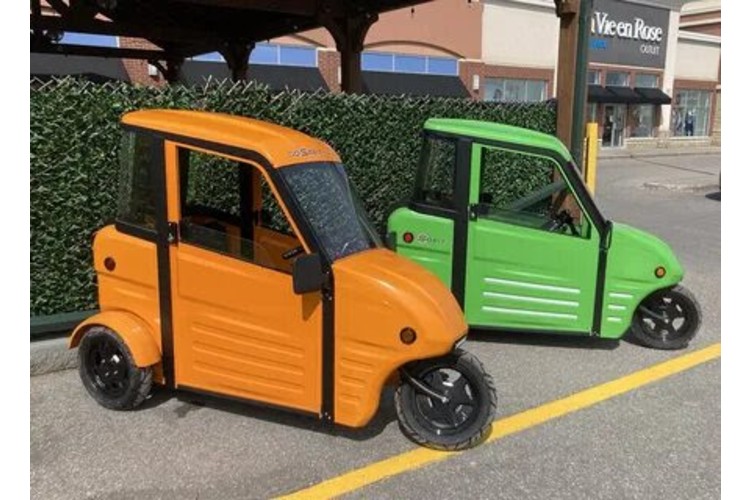
The global mobility industry is going through a period of rapid change. As urban populations continue to rise and issues such as traffic congestion, pollution, and high fuel costs worsen, people are searching for alternative ways to move around cities. In this context, micro electric vehicles (micro EVs) are gaining strong attention. These compact electric vehicles are designed to fit between e-bikes and passenger cars, offering the affordability and agility of two-wheelers alongside some of the comfort and convenience of cars. The question is, can micro EVs truly bridge this gap and become the perfect middle-ground solution for modern cities?
The Rise of Compact Urban Mobility
The need for compact transport has never been greater. Bicycles and e-bikes are widely used for short journeys, but they fall short in terms of weather protection and carrying capacity. Passenger cars, although comfortable and reliable, are expensive, take up more space on the road, and are difficult to park in crowded areas. Micro EVs have emerged to address these challenges by combining the benefits of both worlds. Their small design allows for easy movement in traffic, while their enclosed bodies provide shelter and security that bikes cannot. This rise in compact urban mobility is laying the foundation for the Micro EV Market to flourish in the coming years.
What Defines a Micro EV?
Micro EVs represent a special category of ultra-light electric vehicles. They usually weigh less than 600 kilograms and are specifically designed for short-distance urban travel. Unlike e-bikes, which are open and limited to one or two riders, micro EVs are available in two- to four-seater formats, offering better utility for families or small groups. They are not as large or powerful as passenger cars, but they offer a reasonable balance of speed, affordability, and sustainability. With a typical speed range between 25 and 80 km/h, they are tailored for city environments rather than highways. Their affordability compared to traditional cars also makes them highly attractive for urban middle-class households and small businesses.
Why the Micro EV Market Is Growing
The Micro EV Market is expanding quickly due to a number of important factors. Cities around the world are facing worsening congestion, and several governments are imposing restrictions on the use of large cars in city centers. This has created demand for smaller vehicles that take up less space. Environmental concerns are also pushing governments to encourage cleaner transportation, and micro EVs fit perfectly into those sustainability goals. Cost plays a major role too. Since they are less expensive than both traditional cars and most larger EVs, they appeal to budget-conscious consumers. Additionally, the rise of e-commerce has boosted their importance in last-mile delivery, as small EVs can complete deliveries faster and at lower costs. According to Fairfield Market Research, urbanization and environmental pressures will continue to drive strong demand in this market over the next decade.
Comparing Micro EVs with E-Bikes and Passenger Cars
To understand the value of micro EVs, it is necessary to compare them with e-bikes and cars. Against e-bikes, micro EVs provide safety, weather protection, and greater carrying capacity. They are better suited for families or individuals who need to transport goods and travel slightly longer distances. However, e-bikes still hold the advantage in terms of ultra-low cost and flexibility for very short trips. Compared with passenger cars, micro EVs stand out for being affordable, energy-efficient, and much easier to park. But they cannot match the higher speed, long-range travel, or luxury that cars offer. This comparison shows that micro EVs are not replacements for either category but rather serve as the middle bridge connecting both.
Micro EVs in Last-Mile Delivery
One of the strongest areas where micro EVs are proving their worth is last-mile delivery. With e-commerce expanding rapidly, logistics companies are under pressure to find cost-effective, reliable, and eco-friendly delivery solutions. Micro EVs are ideal for these roles, as they can move efficiently through narrow streets, carry moderate loads, and operate at much lower costs compared to vans. Cities in Asia and Europe are already adopting micro EVs for deliveries, and this segment could accelerate adoption faster than personal commuting. By becoming an essential part of delivery fleets, micro EVs demonstrate their capability to fill not only personal mobility gaps but also business needs.
Consumer Lifestyle Appeal
Consumer behavior is also shifting in favor of micro EVs. Younger generations, particularly millennials and Gen Z, are more willing to embrace compact, eco-friendly lifestyles. Many urban dwellers do not see the need for large vehicles and instead prefer affordable, sustainable, and practical solutions. Micro EVs are fitting well into this lifestyle by offering zero emissions, easy maneuverability in crowded neighborhoods, and significantly lower ownership costs. They also represent a modern, minimalist choice, appealing to consumers who want to balance convenience and environmental responsibility.
Challenges to Mainstream Adoption
Despite these benefits, micro EVs face several hurdles that need to be addressed. Their range is currently limited, with most models offering only 80 to 120 kilometers per charge, which restricts them to city use. Safety is another concern, as micro EVs do not provide the same level of crash protection as larger cars. Regulatory frameworks also pose challenges, as some countries do not have clear rules for micro EVs, making it difficult to promote or subsidize them. In addition, charging infrastructure is not yet developed for such small vehicles in many regions, which may discourage users. Overcoming these challenges will be crucial for the market to reach its full potential.
Global Trends Driving Growth
The adoption of micro EVs varies by region. Europe is at the forefront due to strict emission standards and initiatives to create car-free city zones. Asia-Pacific, led by China, India, and Japan, is investing heavily in micro EV technology to deal with high urban density and pollution. In North America, adoption is slower, but campuses, resorts, and delivery companies are beginning to adopt these vehicles for niche applications. This regional momentum suggests that micro EVs will continue to gain ground, especially in areas where congestion and sustainability are high priorities.
The future looks promising for micro EVs. They may not fully replace passenger cars or e-bikes, but they have the potential to act as a powerful bridge between them. Advances in battery technology will improve their range and reliability, while declining production costs will make them even more affordable. Experts from Fairfield Market Research highlight that as cities implement smart mobility plans, micro EVs will likely play a central role in shaping sustainable transport. Their contribution to reducing congestion, lowering emissions, and offering practical solutions positions them as more than just a niche—rather, as a mainstream component of future urban mobility.
Micro EVs are carving out a distinct space in the evolving transportation market. They are not designed to replace e-bikes or passenger cars but to fill the middle ground that both categories leave open. By offering affordability, safety, and practicality, they bring together the strengths of two-wheelers and cars in one solution. The Micro EV Market is expanding quickly, and as technology improves and infrastructure develops, micro EVs will become a common sight in cities worldwide. Their ability to bridge the gap between personal convenience and urban sustainability makes them one of the most exciting mobility innovations of the decade.