


The shift toward electric mobility is changing the transportation industry. As more consumers and businesses adopt electric vehicles (EVs), the need for convenient, reliable, and fast energy solutions is increasing. While conventional charging stations remain an important part of EV infrastructure, battery swapping is emerging as another approach to reducing charging downtime.
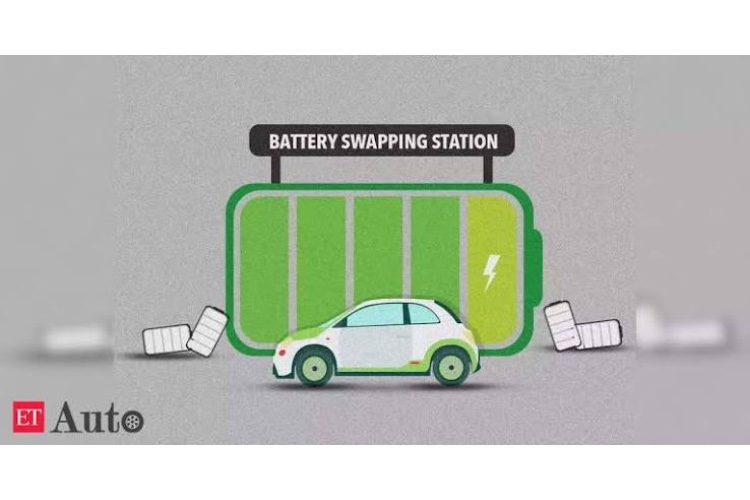
Battery swapping allows an electric vehicle user to replace a depleted battery with a fully charged one at a dedicated swapping station. Instead of waiting for a battery to recharge, drivers can exchange the battery within a few minutes and continue their journey. According to Polaris Market Research, the global battery swapping market was valued at USD 1.55 billion in 2025 and is projected to reach USD 18.49 billion by 2034, expanding at a CAGR of 31.67% from 2026 to 2034.
How Does Battery Swapping Work?
The concept is relatively straightforward. When an EV battery is running low, the vehicle is taken to a battery swapping station. The depleted battery is removed and replaced with a charged battery. The removed battery is then recharged at the station and made available for another user.
A typical swap can take around three to five minutes, making the technology particularly useful for vehicles that need to remain operational for long periods. This includes delivery scooters, electric rickshaws, taxis, shared-mobility vehicles, and commercial fleets.
Battery swapping can also be combined with Battery-as-a-Service (BaaS) models. Under this approach, customers may subscribe to battery services instead of purchasing the battery outright. This can lower the initial cost of an EV while shifting battery maintenance and management responsibilities to the service provider.
Why Is the Battery Swapping Market Growing?
One of the major factors supporting market growth is the increasing adoption of electric vehicles. As EV numbers increase, users are looking for solutions that reduce charging downtime and make electric mobility more practical.
Urban transportation is another important factor. Electric scooters and three-wheelers are widely used for commuting, delivery services, and short-distance transportation. These vehicles often operate for many hours each day, making lengthy charging periods less convenient. Battery swapping allows commercial users to replace batteries quickly and keep their vehicles in operation.
The growing electrification of commercial fleets is also creating opportunities. Logistics companies, ride-hailing services, and delivery businesses depend on high vehicle utilization. For these users, reducing downtime can be an important operational consideration.
Two-Wheelers Lead Adoption
Two-wheelers currently represent a major part of the battery swapping market. Polaris Market Research estimates that the segment accounted for 71.6% of the market in 2025. The popularity of electric scooters and motorcycles in urban areas, combined with their use in last-mile delivery, is supporting demand.
Three-wheelers are another important application. Electric rickshaws and commercial three-wheelers can benefit from rapid battery replacement because these vehicles frequently operate on fixed urban routes and may need multiple energy replenishments during a working day.
Four-wheelers are also being explored, although swapping for passenger cars involves additional requirements related to battery design, vehicle architecture, station infrastructure, and standardization.
Technology Is Making Swapping Smarter
Technology is playing an increasingly important role in modern battery swapping networks. Automated stations can reduce the time and human effort required to replace batteries. Polaris Market Research projects the automated station segment to grow at a 33.2% CAGR during the forecast period.
Artificial intelligence can further improve these systems. AI-based tools can monitor battery health, forecast demand, manage inventory, and help operators determine where additional swapping stations may be needed. Predictive analytics can also identify potential battery-performance issues before they become major problems.
Lithium-ion batteries currently dominate the market. They accounted for 87.3% of the market in 2025, supported by their energy density, performance, and suitability for electric vehicles.
Challenges Still Need to Be Addressed
Despite its potential, battery swapping faces several challenges. One of the biggest is the high cost of establishing swapping infrastructure. Operators need not only stations but also inventories of charged batteries, storage systems, software, and maintenance capabilities.
Battery standardization is another significant issue. Different EV manufacturers may use batteries with different dimensions, capacities, connectors, and designs. Without greater compatibility, a battery from one vehicle manufacturer may not work with another manufacturer’s vehicle.
Building common standards and interoperable systems could therefore play an important role in expanding the technology.
Asia Pacific Remains an Important Market
Asia Pacific accounted for 58.4% of the global battery swapping market in 2025, according to Polaris Market Research. Rapid EV adoption, urbanization, government support, and the region’s strong battery and EV manufacturing ecosystem are contributing to its market position.
India is also emerging as an important market for battery swapping, particularly because of the growing adoption of electric two-wheelers and three-wheelers. The technology can provide practical benefits for delivery riders and commercial operators that need to minimize vehicle downtime.
The Road Ahead for Battery Swapping
Battery swapping is not necessarily a replacement for conventional EV charging. Instead, the two technologies can serve different use cases. Plug-in charging can remain suitable for private vehicles and overnight charging, while battery swapping can be particularly useful for high-utilization vehicles, fleets, and urban two- and three-wheelers.
As EV adoption continues, improvements in battery technology, automation, digital platforms, standardization, and Battery-as-a-Service models could support further development of the industry.
The future of electric mobility is likely to involve multiple energy solutions rather than a single approach. Battery swapping has the potential to become an important part of that ecosystem by helping EV users spend less time waiting for energy and more time on the road.