



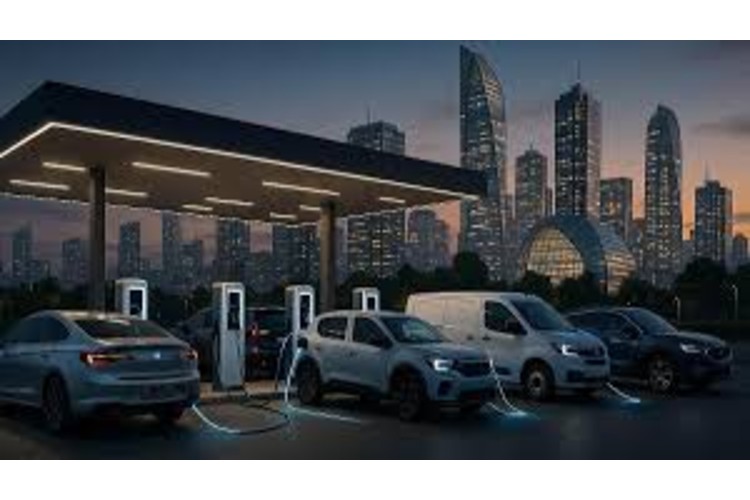
The global transportation sector is undergoing one of the most profound transformations in its history. Electric vehicles (EVs), once considered a niche alternative to conventional automobiles, are rapidly becoming central to the future of mobility. Over the past decade, technological breakthroughs, environmental imperatives, supportive policies, and changing consumer preferences have accelerated the shift from internal combustion engines (ICE) to electric mobility.
The numbers illustrate this dramatic shift. According to the International Energy Agency, global EV sales crossed 14 million units in 2023, accounting for nearly 18% of total car sales worldwide, up from just 4% in 2020. By 2030, EVs are projected to represent over 40–45% of global vehicle sales under current policy scenarios. The EV market itself is expected to reach a valuation of over $1 trillion by 2030, driven by declining battery costs, increasing consumer awareness, and aggressive government mandates.
India is also witnessing a rapid rise in EV adoption. According to data from the Society of Manufacturers of Electric Vehicles and the NITI Aayog, India recorded over 1.7 million EV sales in FY2024, with two-wheelers and three-wheelers dominating the segment. The Indian government aims for 30% EV penetration in private cars, 70% in commercial vehicles, and 80% in two- and three-wheelers by 2030. With initiatives like the FAME India Scheme and the Production Linked Incentive Scheme, the country is building a strong ecosystem for electric mobility.
As EV adoption accelerates worldwide, the future of the industry will be shaped by technological innovation, infrastructure expansion, policy support, and evolving business models. The coming decade will redefine not only how vehicles are powered but also how mobility systems operate.
The Driving Forces Behind EV Adoption
Climate and Sustainability Goals
One of the primary drivers of EV growth is the urgent need to reduce greenhouse gas emissions. The transport sector accounts for approximately 24% of global CO₂ emissions, according to the International Energy Agency. Electric vehicles produce zero tailpipe emissions, making them a critical tool for achieving global climate goals and carbon neutrality targets.
Countries around the world are implementing strict regulations to phase out internal combustion engines. For instance, the Ursula von der Leyen–led European Commission has proposed a ban on the sale of new petrol and diesel cars by 2035 across the European Union. Similarly, states such as California in the United States have adopted policies to transition entirely to zero-emission vehicle sales within the next decade.
These regulations are pushing automakers to accelerate their electrification strategies.
Rapid Advancements in Battery Technology
Battery technology remains the core of electric vehicle development. Over the past decade, the cost of lithium-ion batteries has fallen dramatically—from around $1,200 per kWh in 2010 to below $140 per kWh in 2024, according to research from BloombergNEF.
This sharp decline has made EVs increasingly price-competitive with traditional vehicles. Meanwhile, improvements in energy density are enabling longer driving ranges. Today, many electric vehicles can travel 400–600 km on a single charge, making them suitable for both urban and long-distance travel.
The next wave of innovation is expected to come from solid-state batteries, which promise faster charging, longer lifespans, and higher safety standards. Companies like Toyota, QuantumScape, and Samsung SDI are investing heavily in this technology, with commercialization expected in the latter part of this decade.
Expansion of Charging Infrastructure
One of the biggest barriers to EV adoption has historically been the lack of charging infrastructure. However, this challenge is being addressed rapidly as governments and private companies invest billions in charging networks.
Globally, there are now over 3 million public charging points, according to the International Energy Agency, and this number is expected to grow exponentially. Ultra-fast charging technologies are also emerging, capable of delivering 300–350 kW of power, enabling vehicles to charge up to 80% in less than 20 minutes.
Companies such as Tesla with its Supercharger network, ChargePoint, and ABB are playing a crucial role in building global charging infrastructure.
India is also witnessing rapid expansion in charging networks through collaborations between government agencies, oil marketing companies, and startups.
Ultra-Fast Charging and Battery Swapping
The future of EV charging will revolve around speed and convenience. Ultra-fast charging technology is evolving rapidly, reducing waiting times significantly. Charging systems capable of delivering 350 kW or more are already being deployed in several countries.
At the same time, battery swapping is emerging as an alternative solution, especially for two-wheelers, three-wheelers, and commercial fleets. Instead of waiting for a battery to charge, drivers can replace depleted batteries with fully charged ones within minutes.
In India, companies like Sun Mobility and Gogoro are pioneering battery-swapping ecosystems. This model is particularly promising for ride-hailing services, delivery fleets, and urban logistics.
Integration with Renewable Energy
Electric vehicles are not just vehicles; they are becoming part of a broader energy ecosystem. EVs can act as mobile energy storage units, interacting with renewable energy grids.
Technologies such as Vehicle-to-Grid (V2G) allow EV batteries to store excess renewable energy from solar or wind power and feed it back into the grid when demand increases. This helps stabilize electricity systems and improves energy efficiency.
Companies like Nissan have already experimented with V2G technology using the Nissan Leaf, demonstrating how EVs can support grid resilience and energy management.
Autonomous and Connected Electric Vehicles
The future of mobility lies at the intersection of electrification, connectivity, and automation. Electric vehicles are increasingly being designed as software-defined vehicles, integrating advanced sensors, artificial intelligence, and connectivity systems.
Automakers and technology companies are investing heavily in autonomous driving technologies. Firms like Waymo, Tesla, and Baidu are working to develop fully autonomous EVs that could transform transportation systems.
Autonomous electric vehicles could significantly reduce traffic accidents, optimize energy use, and enable new mobility services such as robotaxis and shared autonomous fleets.
Emerging EV Business Models
Electric mobility is also giving rise to new business models across the automotive ecosystem. Instead of simply selling vehicles, companies are increasingly offering Mobility-as-a-Service (MaaS) solutions.
Ride-hailing companies, delivery platforms, and logistics operators are transitioning to electric fleets to reduce operating costs and emissions. For example, companies like Uber and Ola Electric are investing heavily in electrification.
Subscription-based EV ownership models are also emerging, allowing consumers to use electric vehicles without the burden of full ownership. This approach can accelerate adoption among urban users who prioritize flexibility and convenience.
Challenges Facing the EV Industry
Despite the rapid progress, the EV industry still faces several challenges.
Raw Material Supply
Battery production relies on critical minerals such as lithium, cobalt, and nickel. Securing sustainable and ethical supply chains for these materials remains a key concern. Countries rich in these minerals, including the Chile and the Democratic Republic of the Congo, play a strategic role in the global EV ecosystem.
Recycling technologies are expected to become increasingly important in reducing dependency on new raw materials.
Grid Capacity and Power Demand
As EV adoption grows, electricity demand will increase significantly. Upgrading grid infrastructure and integrating renewable energy sources will be essential to support large-scale EV charging.
Smart charging systems, energy storage solutions, and distributed renewable generation will play a crucial role in managing power demand efficiently.
Cost and Consumer Awareness
Although EV prices are declining, upfront costs remain higher than conventional vehicles in many markets. Consumer awareness, charging accessibility, and financing options will continue to influence adoption rates.
Government incentives, tax benefits, and policy frameworks will therefore remain critical in accelerating the transition.
India’s EV Opportunity
India represents one of the most promising markets for electric mobility due to its large population, rising urbanization, and growing demand for sustainable transportation.
The government’s push toward localization of battery manufacturing through the Production Linked Incentive Scheme aims to reduce reliance on imports and strengthen domestic manufacturing capabilities.
Startups and established companies alike are contributing to the EV ecosystem. Firms such as Ather Energy, Tata Motors, and Mahindra Electric are leading the charge in the Indian EV market.
With strong policy support and increasing investment, India has the potential to become a global hub for electric mobility innovation and manufacturing.
Conclusion
Electric vehicles are no longer a futuristic concept—they are rapidly becoming the foundation of the global transportation system. With global EV sales already surpassing 14 million units annually and market penetration accelerating each year, the transition toward electrified mobility appears irreversible.
Advances in battery technology, ultra-fast charging infrastructure, renewable energy integration, and autonomous driving systems are transforming EVs into intelligent, connected mobility platforms. Governments worldwide are implementing aggressive policies to accelerate adoption, while automakers are committing billions of dollars to electrification strategies.
At the same time, challenges related to raw material supply, charging infrastructure, and grid capacity must be addressed to ensure a sustainable and scalable EV ecosystem. Collaboration between governments, technology providers, automakers, and energy companies will be essential in overcoming these barriers.
For emerging economies like India, the EV transition represents not only an environmental necessity but also a massive economic opportunity. By building domestic manufacturing capabilities, investing in innovation, and expanding infrastructure, the country can position itself as a global leader in electric mobility.Ultimately, the future of electric vehicles extends beyond replacing petrol and diesel engines. It represents a broader transformation of the mobility ecosystem—one that integrates clean energy, digital technologies, and smart infrastructure to create a more sustainable, efficient, and connected world. As the EV revolution accelerates, it will reshape industries, redefine urban mobility, and play a central role in achieving global climate goals.