



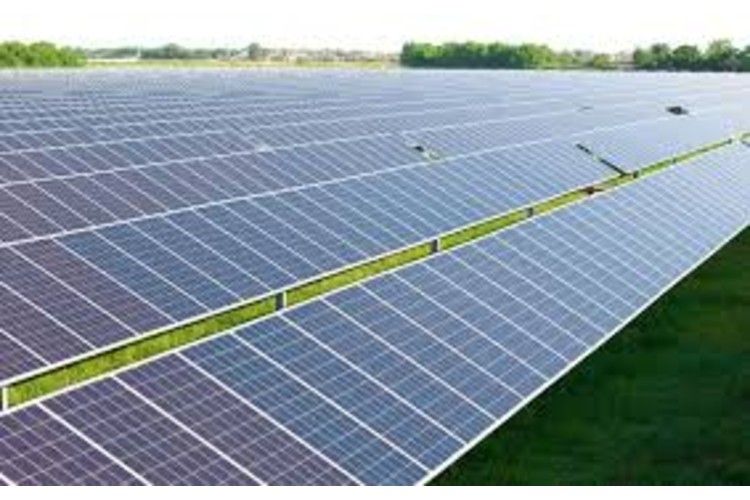
As of March 2026, India’s installed solar capacity stands at over 150 GW — a number that places this country firmly among the world’s top solar nations. But the question the industry is only beginning to ask is this: how much of what we have built will still be performing well in the next decade or more.
The last decade was about installation. Plants went up fast. Targets were met. Costs fell dramatically. All of that is real progress.
But the next decade will be about something harder. It will be about making that installed base last — and making sure the next wave of capacity is built to endure, not just to commission.
Equipment Built for Here, Not Adapted from Elsewhere
A lot of solar equipment operating in India today was not designed for India. It was built for milder climates, more stable grids, and less demanding environments. Then it was adapted — sometimes well, sometimes not.
The result is predictable. Equipment ages faster than projected. Harmonic distortions accumulate on industrial lines. Inverters underperform through summer peaks. None of this is unusual — it is what happens when specs do not match conditions.
The fix is not a better adaptation. It is designing from scratch for where the equipment will actually operate. At Delta, that is the starting point. Every product we bring to the energy infrastructure space is engineered for Indian grid conditions — the thermal loads, the voltage fluctuations, the dust cycles. Not as edge cases to accommodate, but as the design baseline.
Take utility-scale solar generation. Our central inverters — up to 4.4 MW — are built specifically for the demands of large solar farms in India. When a product is designed to operate reliably under local conditions, it simply lasts longer. That is the most direct path to sustainable infrastructure.
There is also the question of what happens when something goes wrong. Domestically manufactured equipment means spare parts are available, service teams are local, and downtime is shorter. Over a 25-year plant life, that difference compounds significantly.
For utility-scale solar projects, sustainability is increasingly linked to generation performance over the full project lifecycle. Small drops in efficiency or repeated equipment failures can translate into significant energy losses over 20–25 years. Longevity therefore is not simply about equipment survival; it is about preserving energy yield and protecting project economics.
The Cost of Fragmentation
Most energy companies specialize in one layer. Solar. Or storage. Or EV charging. That made sense when each technology was new and complex enough to demand full focus.
But when a solar plant’s generation, storage, power conversion, and monitoring systems come from four different suppliers, something gets lost. Integration gaps appear. Systems communicate imperfectly. Warranties overlap in confusing ways. Efficiency bleeds out between components that were optimised in isolation.
This fragmentation has a sustainability cost that rarely shows up in procurement decisions. But it shows up in plant performance — and in asset lifespans that fall short of projections.
Delta is one of the few companies in India delivering integrated capabilities across generation, storage, power conversion and intelligent monitoring under one ecosystem. That breadth is not about covering more market. It is about eliminating the gaps that fragmented supply chains create.
When the monitoring and control system is designed alongside the hardware it manages, operators get something genuinely useful: real-time visibility across generation output, storage state-of-charge, grid quality, and consumption — all in one place. That visibility is what makes early intervention possible. Identify and resolve performance deviations before they develop into operational failures. Extend the life of every asset in the system.
Integrated monitoring also enables predictive maintenance capabilities. Instead of responding after a fault occurs, operators can identify performance deviations early and take corrective action before they affect generation output.
Circularity Is an Engineering Decision, Not a Policy One
The first wave of utility-scale solar in India was built to generate. Not to last. Not to be repaired. Certainly not to be responsibly retired.
That bill is coming due.
Most of that hardware was never designed to be circular. It was designed to be installed. When it fails, the whole unit gets replaced. Not repaired. That is a waste problem baked into the original design.
The fix is straightforward in principle. Build things that can be taken apart. Use standard interfaces. Allow firmware to be updated remotely. Choose materials that can be recycled. Design the component to be swapped, not the whole system.
In practice, it requires a different engineering mindset from day one. At Delta, repairability is not an afterthought. It is a design requirement — whether we are building power conversion systems or power quality equipment for industrial lines.
The difference shows up over time. Equipment built for longevity runs for decades. Equipment built to a price point becomes expensive waste in ten years. That gap is an engineering decision, not a market outcome.
Policy is catching up. Domestic content norms are reshaping procurement. Producer responsibility frameworks for solar hardware are being drafted. The companies that have already made circularity a design value will be ready. The rest will be retrofitting — which, as we established, does not really work.
The Conversation Is Changing
The questions I get from developers and IPPs have changed over the last couple of years.
Earlier, it was straightforward. Cost per watt. Delivery timelines. Commissioning support. Tick the boxes, close the deal.
Now it is different. How does this equipment perform in year ten? What does maintenance actually cost over the plant’s lifetime? If something fails, how quickly can it be resolved — and by whom?
These are harder questions. And they reflect a simple reality: developers are now managing assets, not just building them. The focus has shifted from building solar assets to maximizing their lifetime value.
For suppliers, that shift matters. Spec sheets and price points are not enough anymore. What developers want to know is whether you will still be a reliable partner when the plant is seven years old and something is not working as expected.
That is a reasonable expectation. And it is pushing the industry in the right direction — toward longer commitments, better serviceability, and more honest conversations about total cost of ownership.
Looking Ahead
150 GW is a number worth pausing on. But it is a starting point, not a finish line.
The next phase is harder. It is not about adding capacity. It is about making sure what we have built keeps working — and that what we build next is designed to last.
That does not happen at the policy level. It happens in engineering rooms. In procurement decisions. In the choice between a supplier who will be around in year twelve and one who will not.
India cannot afford to build the same solar infrastructure twice. The next phase of growth will not be defined only by how much capacity gets installed, but by how reliably that capacity continues to generate power over decades.