


India’s renewable energy ambitions are among the most aggressive in the world. The country has already crossed 100 GW of installed solar capacity, positioning itself as one of the fastest-growing clean energy markets globally. Yet, despite the rapid rise of solar and wind power, one major challenge continues to shadow the energy transition — intermittency.
Solar power disappears after sunset. Wind generation fluctuates with weather patterns. Peak electricity demand often arrives when renewable generation is low. For a nation targeting 500 GW of non-fossil fuel energy capacity by 2030, solving this reliability challenge is no longer optional.
This is where solar plus storage hybrid systems are emerging as a game-changing solution.
Globally, energy storage installations are expected to surpass 1 terawatt-hour (TWh) by 2030, according to BloombergNEF. India itself could require over 200 gigawatt-hours (GWh) of battery storage by the end of this decade to support renewable integration, grid stability, and round-the-clock clean power delivery.
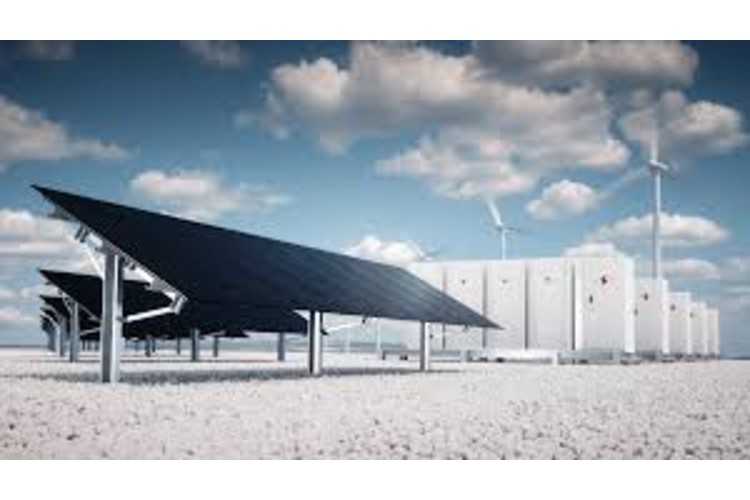
Solar plus storage systems combine solar energy generation with battery energy storage technologies, enabling electricity generated during the day to be stored and used later when demand rises or sunlight fades. The result is cleaner, more reliable, and increasingly cost-effective energy infrastructure.
For India, where electricity demand continues to rise alongside urbanisation, digitalisation, electric mobility, and industrial growth, solar-storage hybrids may become the backbone of the next-generation power ecosystem.
What is a Solar Plus Storage Hybrid System?
A solar plus storage hybrid system integrates solar photovoltaic (PV) panels with battery energy storage systems (BESS).
The solar panels generate electricity during daylight hours. Excess electricity that is not immediately consumed is stored in batteries instead of being wasted or curtailed. The stored power can then be discharged later during peak demand periods, power outages, or low renewable generation windows.
These systems can operate across multiple scales:
- Utility-scale solar farms with large battery storage
- Commercial and industrial captive power systems
- Residential rooftop solar with home batteries
- Microgrids for rural and remote areas
Battery technologies used in these systems include:
- Lithium-ion batteries
- Sodium-ion batteries
- Flow batteries
- Solid-state batteries (emerging)
- Thermal storage technologies
Among these, lithium-ion batteries currently dominate due to declining costs and high energy density.
Why India Needs Solar Plus Storage
1. Renewable Energy Reliability
India’s power demand peaks during evening hours when solar generation falls sharply. This mismatch creates operational stress on the grid and increases dependence on coal-based peaking power plants.
Storage systems solve this problem by shifting solar energy from daytime to evening consumption periods.
This process, known as “time shifting,” allows renewable power to behave more like conventional baseload electricity.
2. Reducing Renewable Curtailment
India frequently experiences renewable energy curtailment, especially in states with high solar penetration. During periods of excess generation, grids may be forced to shut down renewable supply due to balancing limitations.
Battery storage allows surplus solar power to be captured instead of wasted.
3. Supporting Grid Stability
As renewable penetration rises, maintaining grid frequency and voltage stability becomes more complex.
Battery storage systems respond within milliseconds, making them extremely effective for:
- Frequency regulation
- Peak load management
- Voltage support
- Grid balancing
- Black start capability during outages
4. Lower Dependence on Fossil Fuels
India still relies heavily on coal for electricity generation. Solar-storage hybrids can reduce the need for expensive and polluting peaking thermal plants.
This becomes especially important as India pursues decarbonisation and net-zero goals.
5. Energy Security
Battery-backed solar systems can provide resilience during power outages, transmission disruptions, or fuel supply shocks.
For industries, hospitals, airports, and data centers, energy continuity is becoming a strategic necessity.
India’s Growing Hybrid Energy Market
India has already begun witnessing rapid growth in solar-storage projects.
The Solar Energy Corporation of India (SECI) has launched several tenders for round-the-clock renewable energy supply and firm dispatchable renewable power (FDRE), encouraging developers to integrate storage into renewable projects.
States including Gujarat, Rajasthan, Tamil Nadu, Maharashtra, and Andhra Pradesh are emerging as major hybrid energy hubs.
Several large-scale projects are under development:
- NTPC’s renewable-plus-storage projects
- Tata Power’s utility-scale battery deployments
- Reliance Industries’ integrated energy storage ambitions
- Adani Green Energy’s hybrid renewable parks
- Greenko’s integrated storage and renewable platforms
India is also pushing domestic battery manufacturing through the Production Linked Incentive (PLI) scheme for Advanced Chemistry Cells (ACC).
This policy support could significantly reduce dependence on imported batteries over time.
The Economics Are Improving Rapidly
One of the biggest barriers to battery adoption historically has been cost.
However, global lithium-ion battery prices have fallen dramatically over the last decade. According to BloombergNEF, battery pack prices have declined by nearly 90% since 2010.
As battery prices continue to fall, solar-storage systems are becoming commercially competitive with conventional fossil fuel alternatives.
For commercial and industrial consumers in India, hybrid systems now offer several financial benefits:
- Reduced diesel generator usage
- Lower peak demand charges
- Improved power quality
- Backup power resilience
- Reduced exposure to rising electricity tariffs
Many Indian businesses are increasingly adopting hybrid systems as part of ESG and sustainability commitments.
Key Applications Across India
Utility-Scale Renewable Projects
Large solar farms integrated with storage can provide firm renewable power to utilities and distribution companies.
This is critical for replacing coal-based power over time.
Commercial & Industrial (C&I) Sector
Factories, IT parks, malls, warehouses, and commercial buildings are rapidly becoming major adopters of hybrid systems.
Industries with high electricity costs can achieve substantial savings through captive solar-storage infrastructure.
Data Centers
India’s booming data center sector requires uninterrupted power supply. Solar plus storage systems can support clean, reliable power for digital infrastructure.
Electric Vehicle Charging
Battery-backed solar charging stations can reduce stress on local grids while supporting EV ecosystem expansion.
Rural Electrification
Hybrid microgrids can deliver reliable electricity to villages and remote communities where grid connectivity remains unreliable.
This has significant implications for healthcare, education, agriculture, and local enterprise development.
Challenges Facing Solar Plus Storage Adoption
Despite strong momentum, several challenges remain.
High Initial Capital Costs
Although costs are falling, battery storage projects still require substantial upfront investment.
Financing large-scale deployments remains a challenge for many developers.
Supply Chain Dependence
India currently depends heavily on imported lithium cells and battery materials.
Geopolitical risks and supply chain disruptions can affect pricing and availability.
Recycling and Sustainability
Battery waste management and recycling infrastructure are still evolving in India.
As battery adoption grows, sustainable disposal and material recovery will become increasingly important.
Regulatory Complexity
Storage regulations, tariff structures, and grid integration policies are still developing.
Clearer market mechanisms will be necessary to encourage wider investment.
Land and Infrastructure Constraints
Large utility-scale hybrid projects require significant land, transmission infrastructure, and environmental clearances.
The Rise of New Technologies
While lithium-ion dominates today, several emerging technologies may shape the future of energy storage in India.
Sodium-Ion Batteries
India is actively exploring sodium-ion battery technologies due to the abundance of raw materials and lower cost potential.
Flow Batteries
Flow batteries offer longer-duration storage and improved safety for grid-scale applications.
Green Hydrogen Integration
Future hybrid systems may combine solar, storage, and green hydrogen for long-duration energy backup.
AI-Driven Energy Management
Artificial intelligence is increasingly being used to optimise battery charging cycles, predict demand patterns, and improve grid efficiency.
Policy Momentum and Government Push
India’s policy ecosystem is increasingly aligning toward storage deployment.
Key initiatives include:
- National Energy Storage Mission
- Production Linked Incentive (PLI) scheme for battery manufacturing
- SECI hybrid power tenders
- Renewable purchase obligations
- Green Open Access Rules
- Time-of-day electricity pricing frameworks
The government is also encouraging domestic manufacturing across the battery value chain, from cells and modules to recycling ecosystems.
Experts believe storage capacity additions will accelerate sharply after 2027 as economics improve further.
The Strategic Importance of Hybrid Energy
The future of energy is no longer simply about generating electricity. It is about generating, storing, managing, and dispatching power intelligently.
Solar plus storage systems represent this next evolution.
For India, hybrid systems can support:
- Energy independence
- Industrial competitiveness
- Grid resilience
- Decarbonisation
- Digital infrastructure growth
- Electric mobility
- Sustainable urbanisation
They may also play a crucial role in enabling India’s ambitions in green hydrogen, semiconductor manufacturing, AI infrastructure, and advanced manufacturing clusters.
Conclusion
India’s renewable energy transition is entering a new phase. The first chapter focused on adding solar and wind capacity at scale. The next chapter will focus on making renewable energy reliable, dispatchable, and available around the clock.
Solar plus storage hybrid systems are central to this transformation.
They offer a pathway to cleaner grids, lower emissions, greater energy security, and smarter power infrastructure. More importantly, they bridge the gap between renewable ambition and real-world energy reliability.
As battery costs continue to decline, policy frameworks mature, and domestic manufacturing expands, solar-storage hybrids are expected to become a foundational pillar of India’s future energy architecture.
The energy transition ahead will not be powered by solar panels alone. It will be powered by intelligent systems that can generate, store, and deliver clean energy whenever and wherever it is needed.
And in that future, solar plus storage may become one of the most defining technologies of India’s clean energy decade.