



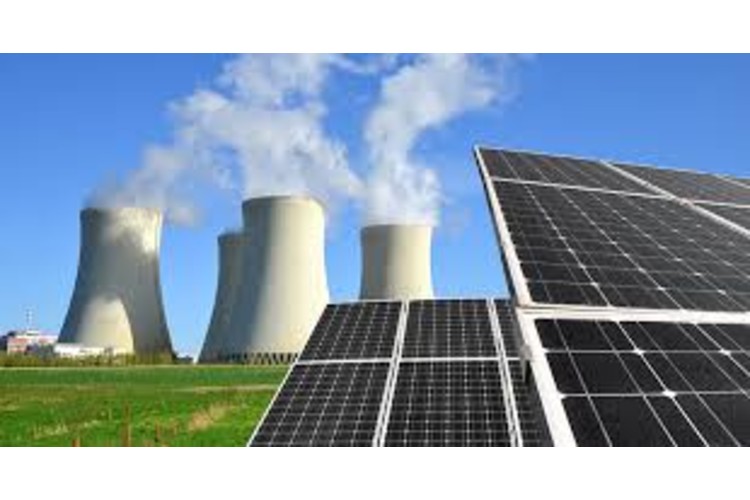
Washington DC – A review by the SUN DAY Campaign of data recently released by the U.S. Energy Information Administration (EIA) reveals that, during the first nine months of 2025 and for the past year, solar and battery storage have dominated growth among competing energy sources while fossil fuels and nuclear power have stagnated.
Solar electrical generation set new records in September and the first three-quarters of 2025:
EIA’s latest monthly “Electric Power Monthly” report (with data through September 30, 2025), once again confirms that solar is the fastest growing among the major sources of U.S. electricity.
In September alone, electrical generation by utility-scale solar (i.e., >1-megawatt (MW)) ballooned by well over one-third (36.1%) compared to September 2024 while “estimated” small-scale (e.g., rooftop) solar PV increased by 12.7%. Combined, they grew by 29.9% and provided nearly one-tenth (9.7%) of the nation’s electrical output during the month, up from 7.6% a year ago.
Moreover, utility-scale solar thermal and photovoltaic expanded by 35.8% while that from small-scale systems rose by 11.2% during the first nine months of 2025 compared to the same period in 2024. The combination of utility-scale and small-scale solar increased by almost a third (29.0%) and produced a bit over 9.0% (utility-scale: 6.85%; small-scale: 2.16%) of total U.S. electrical generation for January-September – up from 7.2% a year earlier.
Further, for the third consecutive month, utility-scale solar generated more electricity than the nation’s wind farms – by 4% in July, by 15% in August, and by 9% in September. Including small-scale systems, solar has out-produced wind five months in a row and by over 40% during September.
Similarly, solar-generated electricity year-to-date (YTD) easily surpassed – by almost 65% – the output of the nation’s hydropower plants (5.5% of total generation). In September alone, solar-generated electricity more than doubled the output of the nation’s hydropower plants. In fact, in both September and YTD, solar produced more electricity than hydropower, biomass, and geothermal combined.
Wind continues to hold the lead among renewables:
Wind turbines across the U.S. produced almost a tenth (9.8%) of U.S. electricity in the first nine months of 2025 – an increase of 1.3% compared to the same period a year earlier and 79% more than that produced by the nation’s hydropower plants.
Wind + solar are almost one-fifth of total U.S. electrical generation – a larger share than that provided by either coal or nuclear power:
During the first nine months of 2025, electrical generation by wind plus utility-scale and small-scale solar provided almost a fifth (18.8%) of the U.S. total, up from 17.1% during the first three-quarters of 2024.
Further, the combination of wind and solar provided 15.1% more electricity than did coal during the first nine months of this year, and 9.8% more than the nation’s nuclear power plants. In fact, as solar and wind expanded, nuclear-generated electricity dropped by 0.1%.
Electrical output YTD by the mix of all renewables was almost 26% of total U.S. generation:
The mix of all renewables (i.e., wind and solar plus hydropower, biomass and geothermal) produced 8.7% more electricity in January-September than they did a year ago and provided (25.6%) of total U.S. electricity production compared to 24.2% twelve months earlier.
Renewables’ share of electrical generation is now second to only that of natural gas whose electrical output actually dropped by 3.8% during the first nine months of 2025.
During the past year, solar and battery storage have dominated capacity additions, coupled with a strong showing by wind:
Between October 1, 2024 and September 30, 2025, utility-scale solar capacity grew by 31,619.5-MW while an additional 5,923.5-MW was provided by small-scale solar. EIA foresees continued strong solar growth, with even more utility-scale solar capacity – 35,210.9-MW – being added in the next twelve months.
Strong growth was also experienced by battery storage which grew by 59.4% during the past year and added 13,808.9-MW of new capacity. EIA also notes that planned battery capacity additions during the next year total 22,052.9-MW.
Wind also made a strong showing during the past twelve months, adding 4,843.2-MW, while planned capacity additions over the next year total 9,630.0-MW (on-shore) plus 800.0-MW (off-shore).
On the other hand, natural gas capacity increased by only 3,417.1-MW and nuclear power added a mere 46.0-MW. Meanwhile, coal capacity plummeted by 3,926.1-MW and petroleum-based capacity fell by an additional 606.6-MW.
Thus, during the past year, renewable energy capacity, including battery storage, small-scale solar, hydropower, geothermal, and biomass ballooned by 56,019.7-MW while that of all fossil fuels and nuclear power combined actually declined by 1,095.2-MW.
EIA sees that trend continuing and accelerating during the coming 12-month period. Utility-scale renewables plus battery storage are projected to increase by 67,806.1-MW (a forecast for small-scale solar is not provided). Meanwhile natural gas capacity will increase by only 3,835.8-MW while coal will drop by 5,857.0-MW and oil will decrease by 5.8-MW. EIA does not project any new growth for nuclear power in the coming year.
“The Trump Administration’s efforts to jump-start nuclear power and fossil fuels are not succeeding,” noted the SUN DAY Campaign’s executive director Ken Bossong. “Capacity additions by solar, wind, and battery storage continue to dramatically outpace gas, coal, and nuclear … and by growing margins.”