



Washington DC – New data recently released by the U.S. Energy Information Administration (EIA), and reviewed by the SUN DAY Campaign, reveals growth of more than 11% in electrical generation by renewable energy sources in the first quarter of 2026. Moreover, utility-scale solar, wind, and battery storage are projected to add more than 80.6 gigawatts (GW) of new generating capacity in the U.S. by March 31, 2027 while total fossil fuel and nuclear power capacity will fall by over 4.2-GW. In addition, multiple new studies by EIA and the Federal Energy Regulatory Commission (FERC) forecast continued strong growth by renewables and battery storage each year through 2030 and beyond.
Electrical generation by renewables sources grew over 11% and was nearly 29% of the U.S. total in the first quarter of 2026.
According to the EIA’s latest “Electric Power Monthly” report (with data through March 31, 2026), renewably-generated electricity during the first three months of 2026 was 11.1% greater than in the first quarter of 2025. The growth was led by utility-scale (i.e., >1 megawatt (MW)) solar (up 23.9%), hydropower (up 21.9%), small-scale solar (i.e., <1-MW) (up 11.9%), and wind (up 2.1%). [1]
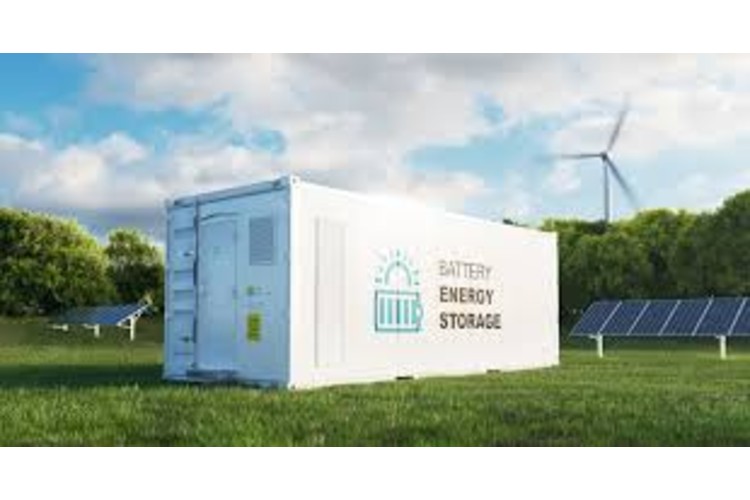
In addition, utility-scale battery energy storage capacity increased by 8.5%. [2]
By comparison, the electrical output of the nation’s coal plants fell by 11.4% while natural gas and nuclear both experienced weak growth – 1.1% and 0.9% respectively.
The mix of all renewables, including biomass and geothermal, accounted for over 28.6% of total U.S. electrical generation during the first quarter.
The combination of just wind and solar, including small-scale solar, provided over a fifth (20.3%) of domestic electrical production. Moreover, they out-produced nuclear power by 14.3% and coal by 31.1%. [3]
Renewable energy to add more than 57-GW of new capacity in the coming year.
As of April 1, 2026, renewable energy’s share of total U.S. utility-scale (i.e., >1-megawatt (MW)) generating capacity was 33.6%. EIA projects this to grow to 36.6% by March 31, 2027. Utility-scale solar will add 42,626.1-MW thereby expanding its share from 12.8% to 15.7% while wind will grow by 14,157.4-MW (including 4,155.0-MW of offshore wind), increasing from 13.0% to 13.6%. The mix of other renewables (i.e., hydropower, biomass, and geothermal) will add 297.1-MW.
The combined capacity growth of all utility-scale renewable energy sources for the 12-month period (57,080.6-MW) is almost double that added during the previous 12 months (30,843.5-MW) – i.e., an increase of 85.1%.
Meanwhile, EIA projects no new generating capacity by nuclear power and a net decline of 4,266.2-MW in fossil fuel capacity. [4]
With the inclusion of new small-scale solar, renewables’ capacity will surpass natural gas by early 2027 – or sooner.
The figures cited above do not include small-scale solar. [5] The capacity of small-scale solar systems grew by 6,358.2-MW during the last year, bringing its total to 60,978.4-MW. EIA does not provide a forecast for small-scale solar but the SUN DAY Campaign assumes it will roughly equal that of the past year (i.e., an additional 6,000-MW or more). [6]
If small-scale solar does add approximately 6,000-MW more by April 1, 2027, it will bring renewable energy’s installed capacity up to about 533,319.7-MW. By comparison, natural gas’ generating capacity would total 514,868.4-MW.
Solar power’s share alone will be almost one-fifth (19.9%) of total U.S. capacity.
Battery energy storage is projected to increase by over 50% by next spring:
Battery storage increased by 17,301.8-MW in the past 12 months and EIA foresees another 23,523.8-MW being added by April 1, 2027, bringing the total up to 69,971.1-MW – an increase of over 50%.
Thus, the combination of utility-scale renewable energy sources and battery energy storage will provide 80,604.4-MW of new clean energy capacity by early spring 2027. With the inclusion of small-scale solar, that figure could rise to close to 87,000-MW.
EIA forecasts continued strong solar, wind, and battery growth at least through the end of 2027.
In its latest “Short-Term Energy Outlook” report, EIA forecasts installed utility-scale solar capacity to rise 43.3% from 150 gigawatts (GW) at the end of 2025 to 215-GW by the end of 2027. Actual electrical generation would increase by a comparable amount (41.6%) – expanding from 0.293 billion kilowatt-hours (BkWh) to 0.415 BkWh.
Similarly, wind capacity would grow 12.6% from 159-GW to 179-GW while generation would increase by 12.5% from 0.464 BkWh to 0.522 BkWh.
The capacity of battery storage was 42-GW at the end of 2025 and is expected to double and reach 85-GW by the end of 2027.
FERC foresees rapidly growing renewable energy capacity at least through the end of 2028.
In its latest “Energy Infrastructure Update” report, FERC notes that between January 2026 and December 2028 (i.e., effectively the remainder of the Trump Administration’s term), net “high probability” additions of utility-scale solar could total 86,126-MW while those for wind might be 19,821-MW. The mix of hydropower, biomass, and geothermal could add another 540-MW.
Taken together, these additions would increase renewables’ share of installed utility-scale generating capacity from 33.0% at the end of 2025 to 38.8% by the end of 2028.
Meanwhile net natural gas additions during the three-year period would total only 8,154-MW. This would be more than offset by reductions in coal and oil capacities of 40,828-MW and 1,590-MW respectively. FERC does not foresee any new nuclear capacity during the period.
Renewable energy growth projected to continue through 2030 and beyond.
In its latest “Annual Energy Outlook” report, EIA expects utility-scale solar capacity to expand from 154.5-GW at the end of 2025 and to reach 257.7-GW by the end of 2030 – an increase of over two-thirds. Likewise, annual electrical generation would more than double from 275.3 BkWh to 578.7 BkWh during the five-year period.
Meanwhile, installed wind capacity would expand from 159.0-GW to 204.4-GW, including a nearly ten-fold increase in offshore wind capacity (i.e., from 1-GW to 9.7-GW). Annual electrical generation would rise from 463.9-BkWh to 662.8-BkWh by the end of 2030, with almost 5% coming from offshore turbines.
The total capacity of all utility-scale renewables would rise almost 40% from 400.2-GW to 559.4-GW. Combined, their actual generation would reach 1,564.0-BkWh, up from 1,118.8-BkWh at the end of 2025.
“The Trump Administration has now passed the one-third mark and largely failed to stop the clean energy transition,” noted the SUN DAY Campaign’s executive director Ken Bossong. “By a wide margin, renewables and battery storage will continue to dominate new growth in electrical capacity and generation.”