


Urja Daily
No Result
View All Result
  • News
  • Renewable
    • Solar
    • Rooftop
    • Floating Solar
    • Module
    • Wind
    • Hydrogen
    • Biomass
    • Tenders
    • Sustainibility
  • Storage
  • E-Mobility
  • Battery
  • Smart City
  • Power
    • Smart Grid
    • Microgrid
    • Off-Grid
  • Editor’s Pick
    • Articles
    • In Talks
    • E-MAG
    • Market Research
  • On-demand Webinars
  • More
    • Events
    • Contact Us
    • Subscribe
  • News
  • Renewable
    • Solar
    • Rooftop
    • Floating Solar
    • Module
    • Wind
    • Hydrogen
    • Biomass
    • Tenders
    • Sustainibility
  • Storage
  • E-Mobility
  • Battery
  • Smart City
  • Power
    • Smart Grid
    • Microgrid
    • Off-Grid
  • Editor’s Pick
    • Articles
    • In Talks
    • E-MAG
    • Market Research
  • On-demand Webinars
  • More
    • Events
    • Contact Us
    • Subscribe
No Result
View All Result
Urja Daily
No Result
View All Result
Home Editor's Pick Articles

Overview of Ground-Mount Systems

Urja Daily by Urja Daily
December 11, 2024
in Articles
Reading Time: 3 mins read
0
Shreyas Gowda, Senior Vice President, of Oorjan Cleantech
Share on FacebookShare on TwitterShare on Linkedin

A ground-mount project is a solar system installed on land rather than a rooftop, such as a concrete floor or a metal sheet. It comprises an array of photovoltaic modules supported by a module mounting structure (MMS). The panels convert sunlight into direct current (DC), the current is transferred to the inverter through wiring, and the inverter converts DC to AC (alternating current), which is the type of current usable by households.

The largest ground-mount project in India is also the third-largest in the world and is located in Rajasthan with a capacity of 2.5 GW.

RELATED POSTS

Sustainable Solar Infrastructure: Designing for Longevity and Circularity

Overcoming Transmission Bottlenecks: The Role of the Dynamic Line Rating IoT Market in Wind Energy Grid Integration

Installation Process
So what is the installation process of a ground-mount project? The plant is situated in an area with maximum solar incidence and minimal shading. A TS (total station) instrument is used for surveying and construction. TS marking is done for correct alignment and quality maintenance. After which a DTH (down the hole) piling machine is used to dig holes.

Holes are dug in the ground, and helical pipes are drilled in to form the structural foundation of the system. The depth and size of the hole depend on the soil conditions, and wind intensity of the location and the history of natural disasters like cyclones of the last 10 to 15 years.

The panels are installed on racking- metal racks, namely vertical poles, cross beams, and panel rails. Panels are tilted at an optimal angle for maximum absorption of sunlight, the angle being subjective to the location gradation of land. Solar panels are then fixed on the structure using nuts and bolts, which are usually SS (stainless steel) and GI (galvanised iron) and not MS (mild steel).

The array is connected using wiring housed in DWC (double wall corrugated) pipes. The radiation and wind sensors in the solar system are connected to the SCADA system. There is also scope for installing tracker devices, which change the orientation of panels and are used for maximum radiation absorption.

Ground-mount projects can also be arranged to look aesthetically pleasing; for example, the Walt Disney Park in the USA, sprawling over 270 acres, is a 50 MW solar plant- a step towards environmental stewardship.

Ground mount vs. rooftop solar
The cost of generation per unit is much less in a ground-mount project than in a rooftop setup. Maintenance is much easier in a ground-mount project. In smaller-size rooftop projects, the manpower requirement per kW for the installation process is significantly lesser.

However, land-mount projects are not found in cities due to a lack of space. They are built in remote locations, and the generated power is transferred to the utility grid, and the energy is traded in the open market. These are called open-access projects. Instead of relying on local DISCOMs’ power supply, buyers and sellers can operate in a free, open market. Such a setup results in fair pricing in power procurement and eventually leads to industrial growth on a macro level. To avoid losses, DISCOMs put a CSS (cross-subsidy charges) of Rs. 1 to 2 per kWh in an open-access setup on power purchasers.

Ground-mount projects are usually executed by signing a PPA (power purchase agreement) under which the project is owned by the solar developer and the client purchases electricity at a certain pre-decided rate.

Ground-mount projects make usage of barren and unused lands possible, moreover, such systems are resilient to harsh climates. Given the cost benefits and the energy generation feasible on a larger scale, we are witnessing an avalanche of such renewable projects lined up.


Tags: ElectricityMount SystempowerRooftop SolarStainless Steel
ShareTweetShare
Urja Daily

Urja Daily

Related Posts

GOLDBECK SOLAR

Sustainable Solar Infrastructure: Designing for Longevity and Circularity

by Palak
June 17, 2026
0

As of March 2026, India's installed solar capacity stands at over 150 GW — a number that places this country...

Overcoming Transmission Bottlenecks The Role of the Dynamic Line Rating IoT Market in Wind Energy Grid Integration

Overcoming Transmission Bottlenecks: The Role of the Dynamic Line Rating IoT Market in Wind Energy Grid Integration

by Palak
June 15, 2026
0

As India and other markets accelerate wind capacity additions, transmission bottlenecks increasingly limit how much renewable energy reaches demand centres....

EV Charging

Accelerating India’s E-Mobility Infrastructure through the Solar Powered EV Charger Market Evolution

by Palak
June 15, 2026
0

IntroductionIndia’s emobility transition depends as much on charging infrastructure as on vehicle adoption. Solarpowered EV chargers—combining photovoltaic (PV) generation, battery...

biogas upgrading system market

Navigating Evolving Grid Frameworks: Insights from the Global Biogas Upgrading System Market

by Palak
June 15, 2026
0

The global biogas upgrading system market is entering a more mature and strategic phase. What was once seen mainly as...

Graphite Sheet

Innovations in the Graphite Sheet for EV Battery Thermal Management Market to Enhance Cell Safety

by Palak
June 24, 2026
0

Digital twins—high fidelity virtual replicas of physical assets and processes—are reshaping energy operations by enabling realtime simulation, predictive control and...

Next Post
ASDC and Steinbeis

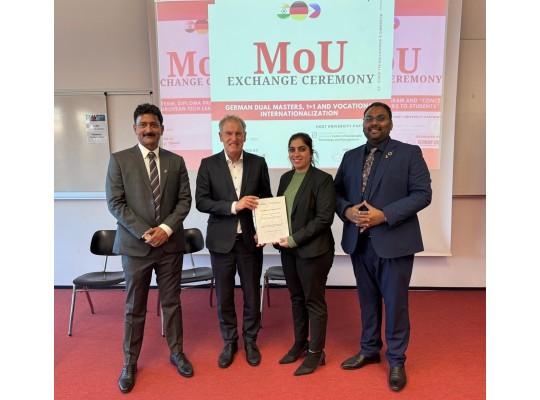
Partnership Between ASDC and Steinbeis University

Kishan Karunakaran, CEO of Buyofuel

Harnessing Food Waste for Bio-CNG Innovation

Leave a Reply Cancel reply

Your email address will not be published. Required fields are marked *

RECOMMENDED

FPT TUVSUDV

FPT Enters The Top Three of Europe’s Certified High-Voltage Battery Producers With TÜV SÜD Recognition 

June 23, 2026
FPT

FPT And Green Power Systems Help Boost Algeria’s Powdered Milk Production

June 23, 2026

MOST VIEWED

  • Solar

    When the Sun Began Paying the Electricity Bills: The Story of PM Surya Ghar Muft Bijli Yojana

    0 shares
    Share 0 Tweet 0
  • India’s Emerging Polysilicon Manufacturing Ecosystem: Opportunities and Challenges

    0 shares
    Share 0 Tweet 0
  • KP Group & PP Savani University Launches Urjanoor Scholarship

    0 shares
    Share 0 Tweet 0
  • Xpeng Selects u‑blox F9 Centimeter-level Multi-Band GNSS Technology for P7 Smart EV

    0 shares
    Share 0 Tweet 0
  • How proper refurbishment can extend life of pre-owned bikes in India?

    0 shares
    Share 0 Tweet 0

FPT Enters The Top Three of Europe’s Certified High-Voltage Battery Producers With TÜV SÜD Recognition 

FPT And Green Power Systems Help Boost Algeria’s Powdered Milk Production

Gruner’s CBG Plant Sets Asia Record with 23.5 TPD Output, Achieves 120% of Design Capacity at Satna

Integrals Power Validates Sustainably Produced Iron Phosphate Precursor and LFP Cathode Material in Cell Level at University of St Andrews

Power Transmission is the Foundation of Economic Growth

VinFast India, Tata Capital Join Hands for Dealer Financing

Latest Magazine

© 2016 – 2025 TechZone Print Media | All Rights Reserved

  • About Us
  • Contact Us
No Result
View All Result
  • News
  • Renewable
    • Solar
    • Rooftop
    • Floating Solar
    • Module
    • Wind
    • Hydrogen
    • Biomass
    • Tenders
    • Sustainibility
  • Storage
  • E-Mobility
  • Battery
  • Smart City
  • Power
    • Smart Grid
    • Microgrid
    • Off-Grid
  • Editor’s Pick
    • Articles
    • In Talks
    • E-MAG
    • Market Research
  • On-demand Webinars
  • More
    • Events
    • Contact Us
    • Subscribe

© 2016 - 2025 TechZone Print Media | All Rights Reserved