


Lead-acid batteries have long been the cornerstone of power storage systems, from automotive applications to renewable energy solutions. Despite the growing popularity of newer battery technologies like lithium-ion, the lead-acid battery market remains a significant player in the global energy landscape. Innovations in this field continue to improve efficiency, lifespan, and sustainability, contributing to the increasing demand for lead-acid batteries worldwide.
The Growth of the Lead-Acid Battery Market
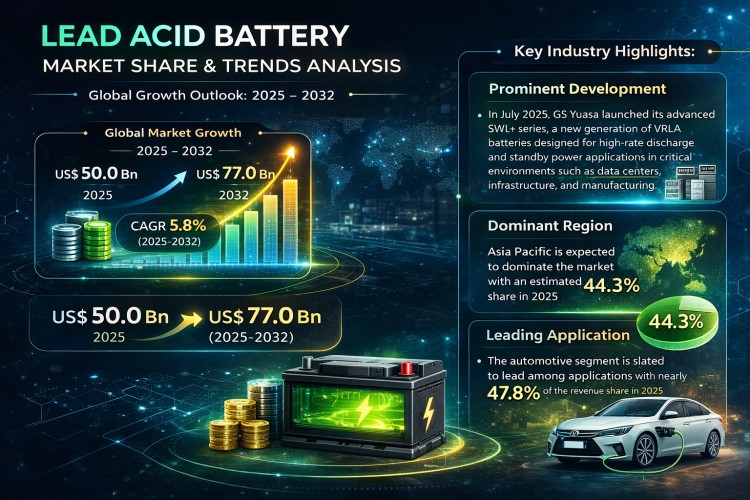
Recent studies show a promising outlook for lead-acid batteries. According to the latest report by Persistence Market Research, the global lead-acid battery market is projected to be valued at US$50.0 billion in 2025, with expectations to reach US$77.0 billion by 2032, growing at a CAGR of 5.8% from 2025 to 2032. This growth is driven by several factors, including the increasing demand for energy storage systems, the expansion of the electric vehicle (EV) market, and the continued use of lead-acid batteries in backup power systems and automotive applications.
Key Innovations Shaping the Lead-Acid Battery Industry
While lead-acid batteries have been around for over 150 years, recent technological advancements have significantly enhanced their performance. Some of the latest innovations include:
1. Enhanced Energy Density
Energy density is a critical factor in any battery technology. One of the most significant innovations in recent years is the improvement in the energy density of lead-acid batteries. Through advanced lead alloy formulations and optimized design, modern lead-acid batteries can store more energy in the same physical space. This is particularly important for automotive and backup power applications, where space and weight limitations are a concern.
2. Recycling and Sustainability Improvements
The sustainability of lead-acid batteries has always been a point of contention due to concerns over the environmental impact of lead. However, innovations in battery recycling processes have significantly reduced this issue. Companies are developing more efficient and cleaner methods for recycling lead, which not only reduces waste but also lowers the environmental footprint of manufacturing new batteries. This is crucial as the global demand for lead-acid batteries rises, especially in the growing automotive sector with the expansion of electric vehicles (EVs) and their reliance on lead-acid-based starter batteries.
3. Advanced Manufacturing Techniques
Advances in manufacturing techniques, including the use of thin plate pure lead (TPPL) and calcium-based alloys, have resulted in batteries that last longer and charge faster. TPPL batteries, in particular, have become popular for high-performance applications, offering a longer lifespan and higher charge retention compared to traditional flooded lead-acid batteries. These innovations improve the reliability and efficiency of lead-acid batteries, making them more competitive with newer technologies.
4. Smarter Battery Management Systems (BMS)
The development of smarter Battery Management Systems (BMS) has transformed lead-acid battery performance. These systems are designed to monitor and control the various parameters of a battery’s operation, such as charge levels, temperature, and health status. This helps extend the battery’s lifespan and ensures optimal performance over time. By providing real-time data, these BMS solutions allow for predictive maintenance, reducing downtime and improving the efficiency of lead-acid batteries in industries like telecommunications, grid storage, and automotive.
5. Integration with Renewable Energy
Another exciting development is the integration of lead-acid batteries with renewable energy sources like solar and wind. Lead-acid batteries are increasingly being used in off-grid systems for energy storage, providing a cost-effective solution for households and industries looking to harness solar energy. As renewable energy adoption grows, lead-acid batteries are being optimized to store excess energy generated during peak production times, ensuring a reliable power supply even when the sun isn’t shining or the wind isn’t blowing.
6. Carbon Foam Technology
Innovative carbon foam technology has emerged as a game-changer for lead-acid batteries. The use of carbon foam in the positive grid of the battery has shown significant improvements in charge acceptance, reducing sulfation (a major cause of lead-acid battery failure). Carbon foam technology helps lead-acid batteries charge more efficiently and improves their cycle life, making them more suitable for deep cycle applications such as renewable energy storage and electric vehicles.
7. Gel and AGM (Absorbent Glass Mat) Technologies
Gel and AGM technologies are transforming the performance characteristics of lead-acid batteries, especially in applications requiring higher efficiency, maintenance-free operation, and enhanced safety. Gel batteries use a silica gel electrolyte, making them more resistant to spills and leaks, while AGM batteries use fiberglass mats to absorb the electrolyte, improving their performance in both high and low-temperature environments. These innovations offer increased safety, durability, and versatility for lead-acid batteries used in critical applications like medical devices, telecommunication backup, and electric vehicles.
The Road Ahead for Lead-Acid Batteries
Despite the emergence of new technologies like lithium-ion, lead-acid batteries will remain a crucial part of the global energy landscape. The increasing demand for affordable and reliable energy storage solutions, especially in developing countries and industries with established lead-acid infrastructure, will continue to fuel the growth of this market.
As the industry evolves, the next few years will likely see even more advancements in lead-acid battery technology, including breakthroughs in efficiency, environmental sustainability, and integration with smart grids. While lithium-ion batteries may dominate the electric vehicle market in the long term, lead-acid batteries will continue to play an essential role in applications where cost-effectiveness, durability, and widespread availability are key considerations.
The lead-acid battery market is poised for steady growth, driven by a combination of innovations aimed at improving battery performance, sustainability, and cost-effectiveness. From advancements in energy density and manufacturing techniques to smarter management systems and integration with renewable energy, the future of lead-acid batteries looks promising. As the market is expected to reach US$77.0 billion by 2032, lead-acid batteries will remain a critical component of the global energy storage ecosystem, complementing newer technologies and serving a broad range of industries for years to come.