


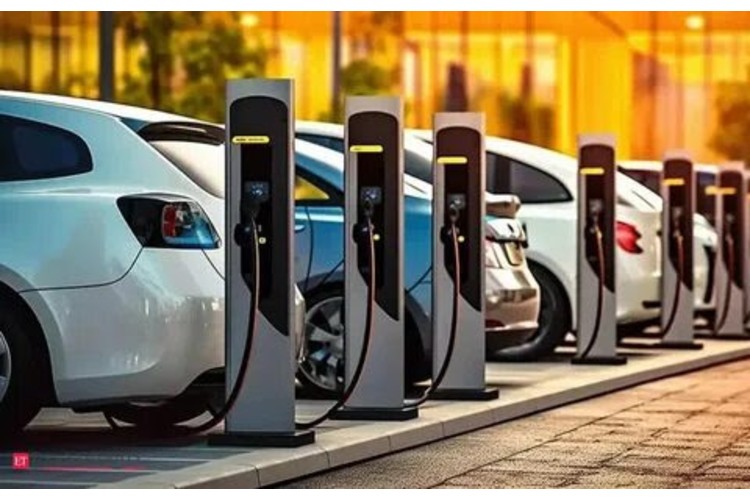
As electric vehicles (EVs) move from niche to mainstream, the global automotive ecosystem is undergoing a historic shift. But this transition brings an urgent challenge into sharp focus: the EV charging infrastructure market must keep pace with the rapidly increasing demand for electric mobility. From metropolitan hubs to remote highways, ensuring accessible and efficient EV charging options is key to achieving net-zero ambitions and consumer trust in electric vehicles.
Why EV Charging Infrastructure Is Central to the EV Revolution
The electrification of transport is one of the pillars of the global clean energy transition. Governments and automakers alike have announced ambitious goals to phase out internal combustion engines in favor of EVs. However, no matter how advanced or affordable electric cars become, their success hinges largely on the availability and reliability of charging infrastructure.
Today, inconsistent charger availability, long wait times, and range anxiety continue to deter potential EV buyers. The EV Charging Infrastructure Market plays a critical role in addressing these roadblocks, acting as the backbone of a sustainable transport ecosystem. A well-developed charging network not only boosts user convenience but also stimulates market confidence and long-term adoption.
Surging EV Adoption vs. Lagging Infrastructure
While EV sales are growing exponentially—projected to account for over 50% of new car sales by 2030 in some markets—the growth of charging infrastructure remains uneven. According to Persistence Market Research, the EV Charging Infrastructure Market is expanding at a promising pace, yet significant gaps remain between developed urban areas and less-connected regions.
Many developed countries are rapidly installing high-speed DC fast chargers and public stations in cities, but rural regions and emerging economies still face barriers such as lack of investment, weak grid infrastructure, and policy uncertainty. The result is a fragmented ecosystem where charging access is far from equitable.
Global Investment Landscape: Who’s Leading?
Governments across the globe are pumping billions into the development of EV infrastructure. Europe remains a frontrunner, with countries like Norway, the Netherlands, and Germany deploying nationwide charging networks powered by renewables. The European Union’s “Fit for 55” initiative has set binding targets for EV infrastructure expansion.
The U.S. is also stepping up, with the Bipartisan Infrastructure Law allocating $7.5 billion specifically for EV chargers. Meanwhile, in Asia, China is leading the charge (literally), accounting for over 60% of the world’s public EV chargers. India, South Korea, and Japan are also scaling up investments as they push toward e-mobility targets.
Despite these strides, developing nations are still grappling with financing gaps, land acquisition issues, and utility readiness, making international cooperation and private sector involvement more crucial than ever.
Private Sector Innovation: Fast Charging, Smart Solutions, and Battery Swapping
Beyond public investment, private companies are transforming the EV Charging Infrastructure Market with innovation. Companies like Tesla, ABB, ChargePoint, and Shell Recharge are rolling out fast-charging stations that reduce charging time from hours to minutes. Smart charging systems, integrated with IoT and AI, optimize energy use, manage demand response, and even provide grid support.
Battery swapping charging is also gaining traction, especially in markets like China and India. Companies like NIO and Gogoro are leading this model, offering a quick, convenient solution for users and reducing pressure on charging stations during peak times.
Moreover, home charging is emerging as a convenient option for EV owners, especially in suburban markets. Smart home chargers now enable scheduled charging, solar integration, and load balancing, further enhancing user experience.
Key Challenges to Infrastructure Development
While momentum is building, several key challenges still hinder the global rollout of EV infrastructure:
- High Upfront Costs: Setting up fast-charging stations involves significant capital, land, and grid integration expenses.
- Power Grid Limitations: In many regions, outdated power grids struggle to support the additional load from high-volume EV charging.
- Regulatory Inconsistencies: Varying standards across regions affect charger compatibility and user convenience.
- Range Anxiety and Urban Bias: Limited rural infrastructure and lack of uniform station density perpetuate consumer concerns about range.
These obstacles make it clear that developing a globally cohesive EV infrastructure strategy requires more than funding—it demands cross-sector collaboration and long-term vision.
Closing the Gap: Pathways to Scalable Infrastructure
To close the widening demand-supply gap in EV charging, several strategic actions are needed:
- Public-Private Partnerships (PPP): Governments must collaborate with private players to co-fund and co-develop infrastructure projects, especially in underserved areas.
- Standardization: Harmonizing charging standards (e.g., CCS, CHAdeMO) across countries can improve interoperability and ease user adoption.
- Grid Modernization: Investment in smart grids, renewable energy integration, and battery storage can ensure stable, scalable power delivery to chargers.
- Zoning and Urban Planning: Cities need to include EV infrastructure in building codes, parking zones, and public transit hubs.
- Consumer Incentives: Subsidies for home chargers, tax rebates, and parking privileges can spur residential adoption.
The Road Ahead: What’s Next for the EV Charging Infrastructure Market?
As EV penetration deepens across global markets, the EV Charging Infrastructure Market is poised for exponential growth. Emerging trends such as vehicle-to-grid (V2G) technology, ultra-fast charging, and subscription-based charging models are redefining how drivers interact with their vehicles and the grid.
Persistence Market Research anticipates that continuous innovation, combined with strategic policy reforms and infrastructure funding, will drive long-term market acceleration. If the current momentum sustains and barriers are addressed proactively, the world could witness a seamless EV transition in the next decade.
The worldwide EV revolution cannot succeed without a parallel evolution in charging infrastructure. Bridging the demand-supply gap is not just a technical challenge—it’s a socioeconomic imperative that demands coordinated action from policymakers, industry stakeholders, and consumers alike.
By investing in smart, inclusive, and resilient charging solutions today, we can accelerate the transition to electric mobility tomorrow—ensuring a cleaner, greener, and more connected future for all.