


India’s electric mobility journey stands at a defining inflection point, where localisation is no longer optional but central to long-term competitiveness and aligned with the vision of Atmanirbhar Bharat. Over the past decade, Indian industry has made significant strides in localising key EV components such as motors, battery systems, and power electronics. However, the next phase of growth will depend on strengthening capabilities in advanced manufacturing technologies, machine tools, and precision engineering—areas that are critical to building true technological self-reliance.
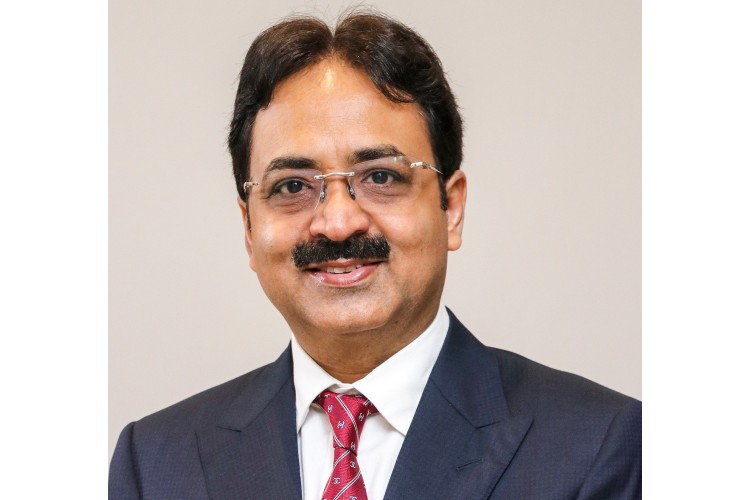
Vinkesh Gulati, Chairperson of Automotive Skills Development Council (ASDC), underscores that the road ahead for EVs will be shaped by three defining factors—skilled talent, resilient supply chains, and deeper industry collaboration. He emphasises that as India accelerates its transition, the convergence of skills, technology, and manufacturing excellence will be key. If aligned effectively, India will not just catch up with global benchmarks but has the potential to lead the global EV transformation. Excerpts:
Q1. India’s EV ecosystem is undergoing rapid transformation. From an industry perspective, how do you view the localisation push in EV manufacturing?
Ans.: India’s EV ecosystem is rapidly transitioning from import dependency to building strong indigenous capabilities, deeply aligned with the vision of Atmanirbhar Bharat. What we are witnessing today is not just an industrial shift, but a strategic national movement to make India a global manufacturing hub for clean mobility technologies.
Earlier, critical components such as battery packs, motors, controllers, and power electronics were largely imported. Today, there is a decisive push toward designing, engineering, and manufacturing these components domestically. Under the Atmanirbhar Bharat framework, initiatives such as Production Linked Incentive (PLI) schemes, phased manufacturing programmes, and localisation targets are accelerating investments across the EV value chain—from cell manufacturing to semiconductors and power electronics.
Atmanirbhar Bharat is also fostering a strong domestic innovation ecosystem. Start-ups, MSMEs, and established OEMs are increasingly collaborating on R&D, advanced chemistry cells, and next-generation mobility solutions. This is helping India not only reduce import dependence but also build intellectual property and technological leadership within the country.s
Q2. India still depends heavily on imported machine tools and manufacturing equipment. How does this impact the EV ecosystem?
Ans.: Dependence on imported manufacturing technology limits both scale and innovation. Many critical machines—battery assembly systems, robotics, precision measurement equipment, and forming technologies—are still sourced from global suppliers. If India wants to become a global EV manufacturing hub, we must build domestic capabilities in machine tools, tooling, and automation systems. Owning manufacturing technology ensures faster innovation cycles, lower costs, and stronger supply chain control.
Q3. What role can the Indian machine tool and tooling industry play in the EV transition?
Ans.: The EV transition is creating massive demand for precision manufacturing. Technologies like precision stamping, deep drawing, fine blanking, hydroforming, and advanced casting will become increasingly important. The machine tool industry will play a foundational role by enabling production of battery components, motor assemblies, magnet systems, and power electronics. As EV adoption accelerates, energy storage and industrial automation will also become major demand drivers for this sector.
Q4. How important is supply chain resilience and technology sovereignty for India’s EV future?
Ans.: Supply chain resilience has become a strategic priority. Recent global disruptions have highlighted the risks of overdependence on external ecosystems. India must develop strong domestic supplier networks that go beyond manufacturing to include design, engineering, and R&D. Technology sovereignty—especially in tooling, machines, and manufacturing processes—will determine how competitive India becomes in the EV space. Collaboration between OEMs, suppliers, and technology providers is essential to build this ecosystem.
Q5. Where does India stand today in terms of EV-ready skilled workforce?
Ans.: India’s EV manufacturing workforce faces acute skills gaps in battery management systems (BMS), power electronics, battery technology, software integration for EVs, thermal management, charging infrastructure, and advanced manufacturing like precision machining and robotics. Less than 3% of the 19 million automotive workers have EV exposure, with only 20-25% possessing relevant expertise.
By 2030, the sector needs 10 million+ skilled workers, including 500,000 EV-specific roles growing at 25% CAGR, and up to 200,000 for battery production alone. A 40-45% talent deficit persists, with 70% of graduates requiring upskilling due to outdated curricula focused on ICE vehicles. ASDC targets training thousands of youth via vocational programs to bridge this.
Q6. How is ASDC addressing these skill requirements for the evolving automotive and EV sector?
Ans.: ASDC’s mandate is to create an industry-aligned skilled workforce for the automotive and mobility sector. With the EV transition, we are updating qualification packs, introducing new courses, and aligning training with industry demand. We have developed job roles with consultation of OEMs, suppliers, training partners, and academic institutions to build EV-focused curriculum, including battery technology, EV service, manufacturing automation, and diagnostics. The objective is to ensure that skill development keeps pace with technology evolution.
Q7. What should be the focus areas for industry, government, and skill bodies going forward?
Ans.: The EV transition is creating a completely new skill architecture. Traditional automotive skills alone are not sufficient. The industry now requires expertise in battery systems, power electronics, embedded software, mechatronics, and advanced manufacturing. This shift aligns closely with India’s broader vision of Atmanirbhar Bharat, where building domestic capability across technology and talent becomes critical.
The focus should be on three pillars: localisation, technology capability, and skill readiness. India has the opportunity to build a globally competitive EV manufacturing ecosystem, but it will require coordinated efforts. Industry must invest in R&D and domestic supply chains, the government must continue policy support, and skill bodies like ASDC must ensure availability of trained manpower. Together, these elements will determine India’s leadership in the global EV landscape.