


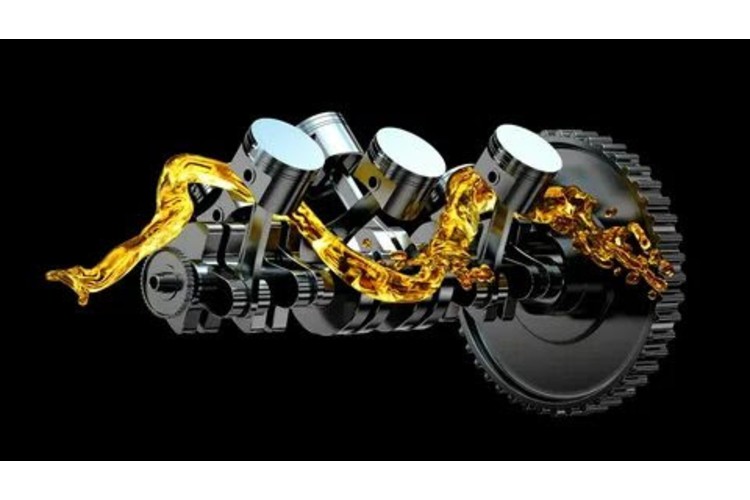
The Automotive Lubricants Market is undergoing a dynamic transformation and nowhere is this shift more evident than in the Asia-Pacific region. Over the past decade, Asia-Pacific has rapidly evolved from being a consumption hub to a powerhouse of production, innovation, and export in the global automotive industry. According to Fairfield Market Research, the region’s dominance is driven by robust vehicle production, expanding road networks, rising disposable incomes, and accelerated industrialization. As demand for mobility and performance efficiency surges, Asia-Pacific has become the focal point for global lubricant manufacturers looking to capture long-term growth.
Expanding Vehicle Fleet: The Core Demand Driver
One of the primary reasons for Asia-Pacific’s ascendancy in the Automotive Lubricants Market is the explosive growth of its vehicle population. China, India, Japan, South Korea, and ASEAN nations together account for nearly two-thirds of the world’s vehicle sales. Rising middle-class populations and improved access to financing have accelerated passenger car ownership, while expanding logistics and e-commerce sectors continue to push demand for commercial vehicles.
Fairfield Market Research reports that India alone witnesses over 20 million new vehicle registrations annually, with corresponding growth in aftermarket services and lubricant replacements. In China, the expanding hybrid and electric vehicle segments are spurring innovation in specialized lubricants engineered for high-performance efficiency and thermal management. This expanding base of vehicles—spanning cars, two-wheelers, trucks, and buses—forms the bedrock for sustained lubricant demand across the region.
Manufacturing Hubs Powering Global Supply Chains
Asia-Pacific is home to some of the world’s largest automotive manufacturing centers. Global OEMs and lubricant companies have established deep-rooted production bases in China, Japan, Thailand, Indonesia, and India to cater to both domestic and export markets. The availability of low-cost labor, abundant raw materials, and supportive trade policies has positioned the region as a strategic manufacturing corridor.
According to Fairfield Market Research, the strong presence of automotive clusters in regions like Guangzhou (China), Pune (India), and Chonburi (Thailand) has led to a growing network of lubricant blending plants and R&D facilities. Multinational giants such as Shell, ExxonMobil, and TotalEnergies are continuously expanding their regional operations to meet the evolving performance requirements of both internal combustion and electric vehicle technologies.
Rising Awareness of Preventive Maintenance
Consumer behavior in Asia-Pacific is undergoing a major transformation, especially in urban centers where vehicle maintenance awareness is on the rise. Workshops and service centers are increasingly promoting high-quality lubricants that extend engine life and improve fuel efficiency.
With climate conditions varying widely—from tropical humidity to high-altitude cold—vehicle owners are becoming more conscious of using region-specific lubricants. Fairfield Market Research highlights that this awareness has driven demand for synthetic and semi-synthetic engine oils, which offer superior protection under extreme temperature conditions and longer drain intervals. The growing consumer preference for branded, high-performance lubricants is reshaping both retail and aftermarket channels across the region.
Government Policies Encouraging Cleaner Mobility
Governments across Asia-Pacific are enacting stringent emission regulations, encouraging the development of eco-friendly and low-viscosity lubricants. China’s VI emission standards, India’s Bharat Stage VI norms, and Japan’s energy efficiency mandates are all pushing manufacturers to adopt formulations that improve fuel economy and reduce emissions.
As per Fairfield Market Research, lubricant companies are investing heavily in R&D to create products compatible with next-generation engines that meet regulatory benchmarks. Bio-based and biodegradable lubricants are gaining traction, particularly in environmentally sensitive markets such as Japan and South Korea. These developments align with the global transition toward sustainability while creating new opportunities for local suppliers.
Two-Wheeler and Electric Vehicle Boom
Asia-Pacific leads the world in two-wheeler adoption, especially in countries like India, Vietnam, and Indonesia, where motorcycles are the most common mode of personal transport. This segment represents a massive recurring demand for lubricants, particularly engine oils and greases designed for high temperatures and frequent use.
Additionally, the electric vehicle (EV) revolution is opening a new frontier. Although EVs consume fewer lubricants than conventional vehicles, they require specialized fluids for battery cooling, transmission, and thermal stability. Fairfield Market Research observes that lubricant manufacturers are diversifying into EV-compatible formulations, targeting OEMs that are rapidly scaling up production. This synergy between traditional and new-age mobility forms a crucial growth layer for the Automotive Lubricants Market in Asia-Pacific.
Expanding Aftermarket Ecosystem and E-Commerce Integration
The aftermarket sector in Asia-Pacific has witnessed a major digital transformation. E-commerce platforms now facilitate online lubricant sales, offering convenience and accessibility to both consumers and service providers. Companies are partnering with e-commerce giants such as Alibaba and Flipkart to reach a wider customer base, while independent garages are adopting digital procurement systems for timely lubricant restocking.
Fairfield Market Research notes that the rise of online distribution is enabling smaller lubricant brands to compete with established players, fostering price competition and innovation. Moreover, regional distributors are adopting omni-channel strategies to combine physical and digital sales, ensuring consistent supply even in remote areas.
Strategic Investments by Global and Local Players
The Automotive Lubricants Market in Asia-Pacific is witnessing heightened merger, acquisition, and partnership activity. Global oil majors are collaborating with regional firms to leverage distribution strength and market reach. For instance, joint ventures between Indian Oil Corporation and foreign players have boosted domestic blending capacity and technology sharing.
Simultaneously, local manufacturers are strengthening their brand identity through premium product launches and localized marketing campaigns. Strategic R&D investments are also being directed toward developing lubricants optimized for hybrid and alternative fuel vehicles. These initiatives underline the strategic importance of Asia-Pacific as the fastest-growing and most competitive hub in the global lubricants landscape.
Emerging Opportunities Across Industrial and Marine Segments
Beyond automotive applications, Asia-Pacific’s industrial and marine lubricant markets are expanding in parallel. Rapid infrastructure development, manufacturing growth, and the expansion of shipping routes across Southeast Asia are increasing lubricant demand in auxiliary sectors. Countries like Singapore and Malaysia serve as regional bunkering hubs, fueling the marine lubricants trade.
This intersectoral growth creates synergy across multiple value chains, enabling lubricant producers to diversify their portfolios and mitigate automotive market volatility. It also reinforces the region’s strategic position in global supply networks, ensuring long-term resilience and profitability.
Asia-Pacific Leading the Next Wave of Growth
In summary, Asia-Pacific’s ascendancy in the Automotive Lubricants Market is driven by a confluence of factors—massive vehicle ownership, advanced manufacturing ecosystems, policy-driven sustainability, and evolving consumer preferences. The region’s unique blend of traditional automotive demand and future-focused innovation is setting new industry benchmarks.
According to Fairfield Market Research, Asia-Pacific will continue to be the new growth engine, not just due to its scale, but because of its agility in adopting cleaner technologies and digital transformation. As global players expand their footprint and local manufacturers elevate their competitiveness, the region’s leadership in automotive lubricants is expected to solidify further—powering mobility, performance, and sustainability for decades to come.