Urja Daily
No Result
View All Result
  • News
  • Renewable
    • Solar
    • Rooftop
    • Floating Solar
    • Module
    • Wind
    • Hydrogen
    • Biomass
    • Tenders
    • Sustainibility
  • Storage
  • E-Mobility
  • Battery
  • Smart City
  • Power
    • Smart Grid
    • Microgrid
    • Off-Grid
  • Editor’s Pick
    • Articles
    • In Talks
    • E-MAG
    • Market Research
  • On-demand Webinars
  • More
    • Events
    • Contact Us
    • Subscribe
  • News
  • Renewable
    • Solar
    • Rooftop
    • Floating Solar
    • Module
    • Wind
    • Hydrogen
    • Biomass
    • Tenders
    • Sustainibility
  • Storage
  • E-Mobility
  • Battery
  • Smart City
  • Power
    • Smart Grid
    • Microgrid
    • Off-Grid
  • Editor’s Pick
    • Articles
    • In Talks
    • E-MAG
    • Market Research
  • On-demand Webinars
  • More
    • Events
    • Contact Us
    • Subscribe
No Result
View All Result
Urja Daily
No Result
View All Result
Home Editor's Pick Articles

Vision of Electric Vehicle Industry by 2030

Urja Daily by Urja Daily
October 10, 2022
in Articles
Reading Time: 4 mins read
0
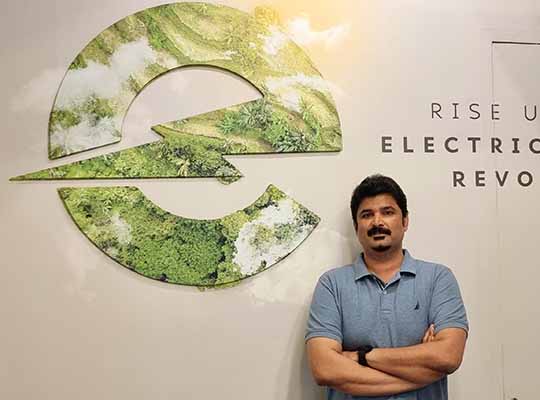
Dr. Irfan Khan, Founder & CEO, eBikeGo
Share on FacebookShare on TwitterShare on Linkedin

The Government wants India to be a 100%, electric vehicle nation by the year 2030.  Under the new plan of the government, every car which will get sold in India from 2030 will be electric. Due to the competitive environment in the market, India’s auto industry has become one of the largest in the world. As per the Review Report of Automotive Mission Plan 2016, the turnover of the auto industry is equivalent to 7.1%. The government of India approved the National Mission on Electric Mobility in 2011 and subsequently National Electric Mobility Mission Plan (NEMMP) 2020 which was unveiled in 2013. Department of Heavy Industry has formulated a scheme namely FAME – India (Faster Adoption and Manufacturing of (Hybrid &) Electric Vehicles in India) for implementation with effect from 1st April 2015, which therefore was part of the mission.

India’s national mission for electric mobility and faster adoption and manufacturing of electric vehicles (EVs) looks to have received its much-required shot in the arm. Thanks to a few key amendments established by the Department of Heavy Industry (DHI) in June 2021 to the FAME-II Scheme, the EV momentum saw a notable revival and gained pace, especially in the wake of the remarkable slowdown experienced due to the ongoing COVID-19 pandemic.

RELATED POSTS

Sustainable Solar Infrastructure: Designing for Longevity and Circularity

Overcoming Transmission Bottlenecks: The Role of the Dynamic Line Rating IoT Market in Wind Energy Grid Integration

The overall scheme is proposed to be executed over a period of 6 years, till 2020, wherein it is intended to carry the hybrid/electric vehicles market development and its manufacturing eco-system to achieve self-sustenance at the end of the stipulated period. The scheme has 4 focus areas i.e. Demand Creation, Charging Infrastructure, Technology Development, and Pilot Projects.

An electric car uses alternate fuel electricity in place of petrol or diesel. There is a developing acceptance for hybrid and electric cars in the country and more and more manufacturers are going for this niche segment with an express objective of lowering the import bill of fuel and running cost of vehicles. Conversion of vehicles to electric vehicles can save fossil fuels worth about $100 bn per year, which in turn prevents the dependence on imported petroleum products which would save the country precious foreign exchange and will also reduce the pollution in cities by 80-90%.

The government’s ambition is to have EV sales accounting for 30% of private cars, 70% for commercial vehicles and 80% for two- and three-wheelers by 2030 as there is an instant need to decarbonise the transport sector. If electric vehicles expand to 40% in the car segments and two-wheeler, and close to 100% for buses by 2030, India would be able to cut crude oil consumption by 156 million tonnes which is worth ₹3.5 lakh crore.

The government introduced the second phase of the Faster Adoption and Manufacturing of Hybrid and Electric Vehicles (FAME 2) scheme, with an expenditure of INR 10K Cr. It aims to give the required push to EVs to curb pollution afflicting major cities and cut down oil imports. FAME has put a healthy number of electric buses, 2W, 3W, and some BEV and mild hybrid cars on Indian roads. In FY 2019, more than 750K EVs were sold with a total of 7, 59,600 units which include electric passenger vehicles (3,600, electric three-wheelers (6,30K), and electric two-wheelers (126K).

By 2030 the government plans to have EV sales penetration of 40% for buses, 30% for private cars, 70% for commercial vehicles, and 80% for two- and three-wheelers. The Road Transport and Highways Minister pointed out that NITI Aayog has inspired 25 States to come up with EV policies, out of which 15 have already announced State EV policies in the EV mission.

The study by Arthur D Little, titled ‘Unlocking India’s electric mobility potential’ anticipates that by the year 2030 more than 30 percent of vehicles in India will be electric. The study also highlights that by 2030 the EV industry will cross 10 million vehicles with an adoption rate of 30 percent across categories. However, the study also emphasises that passenger cars will only amount to 5 percent of total EV sales.

Disclosing more details, the study suggests that by 2030 India will require approximately 800 GWh of batteries to be able to attain 30% EV adoption. To achieve this the country is accelerating the plans to manufacture lithium-ion cells, anticipating more than 7.5 billion USD in investment potential and USD 2.3 billion in government subsidies.

The EV industry illured $6 billion in investment in 2021, this could grow to $20 billion by 2030. In a sign it looks like the EV market is drawing the attention of private equity/venture capital investors in India, such funding is estimated to grow from $181 million to $1,718 million during the same period – an annual growth rate of 849%. So far This (PE/VC investment) has reached about $666 million in 2022.

About The Author :

Dr. Irfan Khan

The author is the Founder & CEO of eBikeGo (https://ebikego.com ), a sustainable mobility company aims to make world-class electric mobility solutions that transform how people move. Mobility must transform if people are to thrive; but the industry’s emphasis is on economy & efficiency, not excellence. eBikeGo is driven towards creating a suite of customer-centric electric mobility solutions empowering people to seize not just the moment, but the future.


Tags: AutomotiveElectric Mobilityelectric vehicleEV
ShareTweetShare
Urja Daily

Urja Daily

Related Posts

GOLDBECK SOLAR

Sustainable Solar Infrastructure: Designing for Longevity and Circularity

by Palak
June 17, 2026
0

As of March 2026, India's installed solar capacity stands at over 150 GW — a number that places this country...

Overcoming Transmission Bottlenecks The Role of the Dynamic Line Rating IoT Market in Wind Energy Grid Integration

Overcoming Transmission Bottlenecks: The Role of the Dynamic Line Rating IoT Market in Wind Energy Grid Integration

by Palak
June 15, 2026
0

As India and other markets accelerate wind capacity additions, transmission bottlenecks increasingly limit how much renewable energy reaches demand centres....

EV Charging

Accelerating India’s E-Mobility Infrastructure through the Solar Powered EV Charger Market Evolution

by Palak
June 15, 2026
0

IntroductionIndia’s emobility transition depends as much on charging infrastructure as on vehicle adoption. Solarpowered EV chargers—combining photovoltaic (PV) generation, battery...

biogas upgrading system market

Navigating Evolving Grid Frameworks: Insights from the Global Biogas Upgrading System Market

by Palak
June 15, 2026
0

The global biogas upgrading system market is entering a more mature and strategic phase. What was once seen mainly as...

Graphite Sheet

Innovations in the Graphite Sheet for EV Battery Thermal Management Market to Enhance Cell Safety

by Palak
June 15, 2026
0

Digital twins—high fidelity virtual replicas of physical assets and processes—are reshaping energy operations by enabling realtime simulation, predictive control and...

Next Post
sunpower

SunPower Announced Eileen Evans as its New Chief Legal Officer

StoreDot pouch cells

Storedot Achieved 1000 Cycles Of Extreme Fast Charging Battery Cells

Leave a Reply Cancel reply

Your email address will not be published. Required fields are marked *

RECOMMENDED

FPT TUVSUDV

FPT Enters The Top Three of Europe’s Certified High-Voltage Battery Producers With TÜV SÜD Recognition 

June 23, 2026
FPT

FPT And Green Power Systems Help Boost Algeria’s Powdered Milk Production

June 23, 2026

MOST VIEWED

  • Solar

    When the Sun Began Paying the Electricity Bills: The Story of PM Surya Ghar Muft Bijli Yojana

    0 shares
    Share 0 Tweet 0
  • India’s Emerging Polysilicon Manufacturing Ecosystem: Opportunities and Challenges

    0 shares
    Share 0 Tweet 0
  • KP Group & PP Savani University Launches Urjanoor Scholarship

    0 shares
    Share 0 Tweet 0
  • Xpeng Selects u‑blox F9 Centimeter-level Multi-Band GNSS Technology for P7 Smart EV

    0 shares
    Share 0 Tweet 0
  • How proper refurbishment can extend life of pre-owned bikes in India?

    0 shares
    Share 0 Tweet 0

FPT Enters The Top Three of Europe’s Certified High-Voltage Battery Producers With TÜV SÜD Recognition 

FPT And Green Power Systems Help Boost Algeria’s Powdered Milk Production

Gruner’s CBG Plant Sets Asia Record with 23.5 TPD Output, Achieves 120% of Design Capacity at Satna

Integrals Power Validates Sustainably Produced Iron Phosphate Precursor and LFP Cathode Material in Cell Level at University of St Andrews

Power Transmission is the Foundation of Economic Growth

VinFast India, Tata Capital Join Hands for Dealer Financing

Latest Magazine

© 2016 – 2025 TechZone Print Media | All Rights Reserved

  • About Us
  • Contact Us
No Result
View All Result
  • News
  • Renewable
    • Solar
    • Rooftop
    • Floating Solar
    • Module
    • Wind
    • Hydrogen
    • Biomass
    • Tenders
    • Sustainibility
  • Storage
  • E-Mobility
  • Battery
  • Smart City
  • Power
    • Smart Grid
    • Microgrid
    • Off-Grid
  • Editor’s Pick
    • Articles
    • In Talks
    • E-MAG
    • Market Research
  • On-demand Webinars
  • More
    • Events
    • Contact Us
    • Subscribe

© 2016 - 2025 TechZone Print Media | All Rights Reserved