



The year 2024 was a landmark period for India in science and technology, with achievements spanning diverse fields such as space exploration, renewable energy, healthcare, and artificial intelligence. These accomplishments not only showcased India’s technical prowess but also underscored its commitment to addressing global challenges through innovation.
As India strides confidently into 2025, the nation’s aspirations in science and technology are defined by its growing ambition to lead the world in innovation, sustainability, and equitable growth. With a population exceeding 1.4 billion and a burgeoning economy, India’s scientific and technological expectations are intertwined with its developmental goals and global responsibilities.
Driving Self-Reliance through Innovation
India’s ‘Atmanirbhar Bharat’ (self-reliant India) initiative has set the tone for technological self-sufficiency. By 2025, the country expects significant progress in sectors like advanced manufacturing, artificial intelligence (AI), quantum computing, and robotics. These technologies are poised to reduce dependence on imports, boost local industries, and position India as a global manufacturing hub.
Government-led initiatives such as the Production Linked Incentive (PLI) schemes and investments in start-ups are catalyzing this transformation. By fostering innovation ecosystems and nurturing homegrown talent, India hopes to emerge as a technology exporter rather than a consumer.
Digital India: Bridging the Divide
The ‘Digital India’ campaign continues to shape the nation’s future, aiming to bridge the digital divide by ensuring internet access and digital literacy for all. Expectations for 2025 include universal 5G penetration and foundational work for 6G deployment, enabling smart cities, precision agriculture, and enhanced healthcare delivery.
Moreover, digital platforms in education, telemedicine, and governance are expected to mature, leveraging AI and big data analytics to provide personalized services. Cybersecurity and data privacy, however, will require parallel advancements to safeguard citizens and institutions. The National Mission on Artificial Intelligence (AI) is an initiative led by the Government of India to leverage the transformative potential of AI for economic and social development. Spearheaded by the NITI Aayog, the mission focuses on adopting and advancing AI technologies across various sectors like healthcare, education, agriculture, smart cities and infrastructure, including smart mobility and transportation.
Sustainability through Green Technology
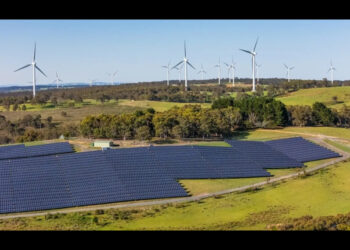
India’s commitment to achieving net-zero carbon emissions by 2070 underscores its emphasis on green technology. By 2025, the country aims to make significant strides in renewable energy, particularly solar and wind, alongside advancements in energy storage technologies like lithium-ion and sodium-ion batteries. The National Green Hydrogen Mission represents India’s ambition to emerge as a global leader in the production and export of green hydrogen. Initiated by the Union Cabinet on January 4, 2022, this mission aims to achieve a targeted production capacity of 5 million tonnes per annum of Green Hydrogen by 2030.
The transition to electric vehicles (EVs) is another key expectation, supported by policies promoting EV manufacturing, battery recycling, and charging infrastructure development. Additionally, research into sustainable agriculture, bioenergy, and waste-to-energy technologies is anticipated to address environmental challenges while ensuring food and energy security.
Space Exploration and National Security
In 2024, the Indian Space Research Organisation (ISRO) achieved several significant milestones, reinforcing India’s status as a leading space-faring nation. Apart from successful Chandrayaan-3 and Aditya-L1 missions, ISRO signed off 2024 with its first space docking mission, SpaDeX, using a PSLV rocket from the Satish Dhawan Space Centre. This mission deployed two 220-kilogram spacecraft into a 470-km circular orbit, demonstrating critical space docking and power transfer technologies essential for future endeavours like satellite servicing and the planned space station.
By 2025, missions such as Gaganyaan, India’s first human spaceflight program, and advancements in satellite technology are expected to elevate India’s status as a spacefaring nation.NASA and the Indian Space Research Organisation (ISRO) are aiming for a possible launch of the NISAR satellite in March 2025. As part of this exciting collaboration, NISAR( NASA-ISRO Synthetic Aperture Radar ) will scan nearly all of Earth’s land and ice surfaces every 12 days. It will help us monitor changes in ecosystems, land and sea ice, and the solid Earth.
In parallel, the development of defence technologies-including indigenous weapon systems, cyber defence, and artificial intelligence in military applications-is critical for ensuring national security amid evolving geopolitical landscapes.
Advancing Health and Biotechnology
The COVID-19 pandemic highlighted the importance of robust healthcare infrastructure and biotechnology capabilities. India’s expectations for 2025 include breakthroughs in vaccine development, genome editing, and personalized medicine. Strengthening research on diseases prevalent in India, such as diabetes and tuberculosis, remains a priority.
Furthermore, initiatives like the ‘Ayushman Bharat Digital Mission’ aim to integrate healthcare services through digital platforms, ensuring accessibility and affordability for all citizens.
Harnessing Traditional Knowledge Systems
India’s rich heritage in traditional knowledge systems, from Ayurveda to sustainable architecture, offers a unique opportunity to integrate ancient wisdom with modern science. By 2025, India aspires to systematically document, validate, and commercialize these systems, aligning them with global standards and fostering their adoption worldwide. Our traditional knowledge system is so unique that it has solutions to most of humanity’s problems.
Fostering Global Collaborations
India’s scientific aspirations are not limited to its borders. Strengthening collaborations with global institutions in areas like climate change, infectious disease control, and AI ethics is vital. By 2025, India envisions itself as a leader in shaping international policies on emerging technologies and sustainability.
To effectively shape a sustainable and innovative future, governments must prioritize several key areas in Science and Technology (S&T) in 2025. An emphasis on STEM education is critical to building a skilled workforce capable of addressing complex challenges. While the country boasts a growing number of engineering graduates and IT professionals, the foundational disciplines of physics, chemistry, mathematics, and biology are struggling to attract and retain talent. Basic sciences form the bedrock of technological advancement and innovation. Breakthroughs in applied sciences, engineering, and medicine often emerge from discoveries in fundamental research. Despite the having prestigious institutions like the Indian Institutes of Science Education and Research (IISERs), Indian Institute of Science , Tata Institute of Fundamental Research (TIFR), that give impetus to basic science education and research ,India’s basic science ecosystem is plagued by systemic issues. India’s ambition to emerge as a global innovation hub hinges on its ability to strengthen the foundations of its scientific community. Investing in basic sciences is not just a necessity but an imperative for long-term progress. Policymakers, educators, and industry leaders must collaborate to ensure that India’s best minds are inspired to explore the wonders of basic sciences, laying the groundwork for a future driven by knowledge and discovery.