

Urja Daily
No Result
View All Result
  • News
  • Renewable
    • Solar
    • Rooftop
    • Floating Solar
    • Module
    • Wind
    • Hydrogen
    • Biomass
    • Tenders
    • Sustainibility
  • Storage
  • E-Mobility
  • Battery
  • Smart City
  • Power
    • Smart Grid
    • Microgrid
    • Off-Grid
  • Editor’s Pick
    • Articles
    • In Talks
    • E-MAG
    • Market Research
  • On-demand Webinars
  • More
    • Events
    • Contact Us
    • Subscribe
  • News
  • Renewable
    • Solar
    • Rooftop
    • Floating Solar
    • Module
    • Wind
    • Hydrogen
    • Biomass
    • Tenders
    • Sustainibility
  • Storage
  • E-Mobility
  • Battery
  • Smart City
  • Power
    • Smart Grid
    • Microgrid
    • Off-Grid
  • Editor’s Pick
    • Articles
    • In Talks
    • E-MAG
    • Market Research
  • On-demand Webinars
  • More
    • Events
    • Contact Us
    • Subscribe
No Result
View All Result
Urja Daily
No Result
View All Result
Home Editor's Pick Articles

Trending Features of Modern-Day Smart Cars in India

Urja Daily by Urja Daily
September 1, 2022
in Articles
Reading Time: 4 mins read
0
Top-Features for smart cars
Share on FacebookShare on TwitterShare on Linkedin

Steady advancements in connected technologies and the rising demand for clean and green electric mobility has driven a speedy transition in the automotive industry across the globe. In India, there had been a renewed focus on the internet-connected cars and the vehicles running on green energy, with the role of Internet of Things (IoT) expected to shape the future of mobility in the country. While US electric vehicle giant Tesla Inc has been the leading manufacturer of tech-intensive vehicles in the world, Indian brands like Tata Motors, Mahindra and Maruti Suzuki has also been focusing on the use of IoT to make cars smarter.

With the increasing application of cutting-edge technologies in car making, the market size of the Indian connected cars is projected to grow at a compound annual growth rate (CAGR) of around over 22 per cent during 2019 to 2025, reaching $ 32.5 billion by 2025 from an estimate of around $ 9.8 billion in 2019. Some of the key drivers behind this exponential growth can be the increasing demand for fuel efficient vehicles, advanced connected features made available by automobile manufacturers in economy models, and government mandates regarding connected technology in passenger cars.

RELATED POSTS

Beyond Installation: What Defines a Successful Industrial Solar Project?

Agrivoltaics: Building the Future of Farming and Clean Energy Together

Here are some of the key features that have been transforming smart mobility in the country:

Connected apps

From 3D downloadable maps to notifications on vehicle maintenance, the modern day smart cars come with a series of functionalities that can be operated through mobile applications. Drivers of the internet-connected cars have the feature to lock or unlock the car or even stop or start the engine from any remote locations. Also, the AC temperature can be adjusted even while outside the car.

Smart communications

Automobile manufacturers have been leveraging cutting-edge technologies to enable real-time information flow to make the smart cars even smarter. Technological innovations have now made possible communication between nearby vehicles, thereby creating a connected infrastructure. The advanced features in the smart vehicles can now capture real-time traffic flow statistics, maps, infotainment, remote access to emergency services within seconds, detect potholes and speed bumps, heavy rain, fog, slippery roads and communicate these messages to cars within a radius of three kilometers.

Safety

The smart cars are connected not only with the internet but also other vehicles through continuous exchange of data. The short-range communications and peer-to-peer exchanges enables the vehicles to sense what other vehicles and walkers are doing; thereby detect potential threats. Communication between nearby vehicles is one of the major safety feature enabled by IoT, through which cars get alerted about speed, direction, road condition, traffic and pedestrian information. The modern-day smart cars also come with advanced preventive measures like timely automated brakes and driver alerts to avoid crashes. There are also vehicle to infrastructure (V2I) in the connected cars which help drivers get updates on the road situation ahead. The smart cars also have other advanced features like SOS call facilities, roadside assistance, real-time location sharing, etc.

Voice assistance

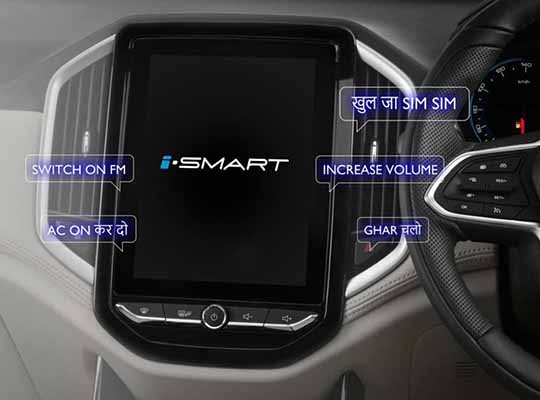
Like Alexa and Siri, smart car manufacturers have introduced customized voice-based assistance features to make the driving experiences better. Through this, basic activities within the car like adjust AC temperature, opening or closing sunroofs, setting navigation, starting or stopping engines, etc., can be managed through voice commands.

Infotainment Basically a blend of information and entertainment, infotainment systems in smart cars are designed to deliver information and entertainment through touch screen displays, button panels, and audio/video interfaces. Pairing the infotainment system also provides drivers with the hands-free access to e-mails and messages and also makes hands-free calls.

About The Author :

Mr. Gaurav Kulshrestha, Head Marketing and Product Management, Pioneer India

Experienced executive with a demonstrated performance in consumer electronics industry, insurance sector and manufacturing industry. His major skill sets include company management, business planning, business alliances, new business development, and marketing management, market planning market analysis, strategic partnerships and pricing strategy. He is a strong business development professional with an educational qualification focused in risk management and IT from BIMTECH. He has a rich work experience of 24 years history in various leading brands. Some of the leading companies he has worked with are Carrion Aircon Ltd., ICICI Prudential Life Insurance, LG Electronics India, Electrolux, OSRAM and currently in Pioneer India Electronics. Mr Gaurav also has an expertise in Philately, Photography and Numismatics. 

Tags: Automotiveconnected technologiesElectric Mobilityelectric vehicleGreen EnergyInternet of ThingsIoT
ShareTweetShare
Urja Daily

Urja Daily

Related Posts

Beyond Installation: What Defines a Successful Industrial Solar Project?

by Palak
August 22, 2026
0

India's industrial solar market has evolved significantly over the last decade. The conversation is no longer confined to how much...

Dr. Sunder Raju, Chairman, Atria Group

Agrivoltaics: Building the Future of Farming and Clean Energy Together

by Palak
August 17, 2026
0

India's renewable energy journey has been one of remarkable scale and ambition. Over the last decade, solar power has emerged...

Powering Electric Vehicles

Off-Grid EV Solar Charger Market: Powering Electric Vehicles Beyond the Grid

by Palak
August 17, 2026
0

As electric vehicle ownership climbs and climate-driven power outages become more common, a quieter but fast-growing corner of the clean-energy...

Kaustubh Dhonde, Founder & CEO, AutoNXT

From Diesel to Electric: How EV Tractors Are Reshaping Sustainable Agriculture

by Palak
August 14, 2026
0

Agriculture has always evolved alongside technological innovation. From the introduction of mechanised farming equipment to precision agriculture powered by artificial...

Solid-State Battery Market: Next-Generation Energy Storage Transforming Electric Mobility

by Palak
August 14, 2026
0

With global automotive manufacturers continuing their move towards more environmentally friendly, safe and energy-efficient sources of power, the solid-state battery...

Next Post
Duke Energy

Duke Energy Commitment To Provide 700 MW of Clean Energy in Florida

Solar Home System

USD 1.39 billion Growth in Solar Home Systems Market Size

Leave a Reply Cancel reply

Your email address will not be published. Required fields are marked *

RECOMMENDED

Beyond Installation: What Defines a Successful Industrial Solar Project?

August 22, 2026
Shweta Solar

Shweta Solar pushes for stronger storage and grid readiness as rooftop solar expands

August 22, 2026

MOST VIEWED

  • Solar

    When the Sun Began Paying the Electricity Bills: The Story of PM Surya Ghar Muft Bijli Yojana

    0 shares
    Share 0 Tweet 0
  • India’s Emerging Polysilicon Manufacturing Ecosystem: Opportunities and Challenges

    0 shares
    Share 0 Tweet 0
  • KP Group & PP Savani University Launches Urjanoor Scholarship

    0 shares
    Share 0 Tweet 0
  • StarlinePS Enterprises Invests ₹160 Crore in Celloraa Energy

    0 shares
    Share 0 Tweet 0
  • Business Delegation Signs 66 MoUs During Central Asia Visit to Boost Multi-Sector Collaboration

    0 shares
    Share 0 Tweet 0

Beyond Installation: What Defines a Successful Industrial Solar Project?

Shweta Solar pushes for stronger storage and grid readiness as rooftop solar expands

VinFast India Partners with Federal Bank to Strengthen Dealer Financing Ecosystem

MC²+ Ignite Selects 30 Energy Deep-Tech Startups for Funding

Servotech Renewable Launches New TVC for Solar Lithium Batteries Featuring Sonu Sood

Nuvoton Begins Production of 16-Cell Battery Monitoring ICs for AI Servers

Latest Magazine

© 2016 – 2025 TechZone Print Media | All Rights Reserved

  • About Us
  • Contact Us
No Result
View All Result
  • News
  • Renewable
    • Solar
    • Rooftop
    • Floating Solar
    • Module
    • Wind
    • Hydrogen
    • Biomass
    • Tenders
    • Sustainibility
  • Storage
  • E-Mobility
  • Battery
  • Smart City
  • Power
    • Smart Grid
    • Microgrid
    • Off-Grid
  • Editor’s Pick
    • Articles
    • In Talks
    • E-MAG
    • Market Research
  • On-demand Webinars
  • More
    • Events
    • Contact Us
    • Subscribe

© 2016 - 2025 TechZone Print Media | All Rights Reserved