



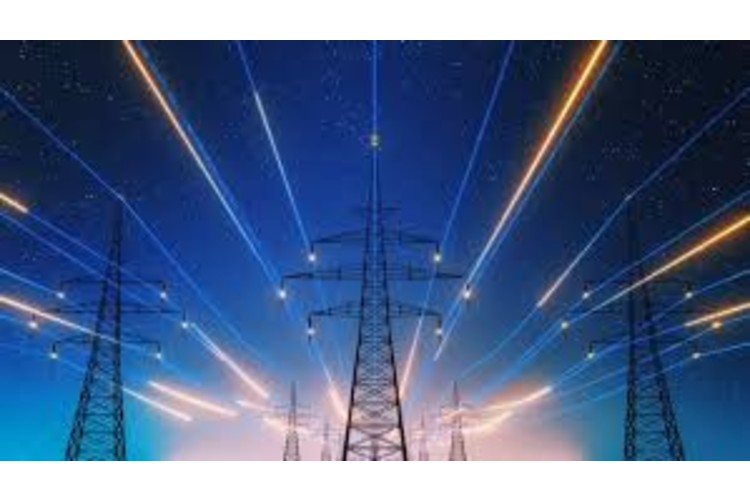
As India moves rapidly toward energy security and a greener future, transmission lines have quietly become one of the country’s most important assets. These steel structures stretching across deserts, rivers, towns, and forests are doing much more than carrying electricity — they’re powering progress and fundamentally electrifying our nation. For landowners, understanding these vital arteries is key, as they represent not just infrastructure, but often, potential land use considerations and opportunities that contribute to this grand narrative of nation-building.
From harnessing solar energy in Rajasthan to lighting up remote villages in the Northeast, transmission lines are the invisible backbone of our energy revolution, bringing light and opportunity to every corner of India. Yet despite their vital role, these lines often face public resistance, mostly because of fear and misinformation. Many people worry about health risks, forest loss, and impact on agricultural land. But are those fears justified when we consider the larger picture of national development and a brighter future?
Let’s look at the most common myths about transmission lines — and what science and experience have to say about them, reinforcing why this infrastructure is crucial for lighting up and electrifying India.
Myth 1: Living Near Power Lines Causes Cancer
Fact: There is no conclusive scientific evidence linking power lines to cancer.
The concern often stems from electromagnetic fields (EMF) emitted by high-voltage lines. However, global health authorities such as the World Health Organization (WHO) and the International Commission on Non-Ionizing Radiation Protection (ICNIRP) have clearly stated that EMF from power lines at public exposure levels does not cause cancer.
“Current evidence does not confirm the existence of any health consequences from exposure to low-level electromagnetic fields.” — WHO Fact Sheet No. 322
India follows stringent EMF norms regulated by the Central Electricity Authority (CEA) — more conservative than many international standards. Moreover, EMF levels fall sharply with distance and are often lower than those produced by household appliances like microwave ovens and Wi-Fi routers. For landowners, this means that the presence of transmission lines on or near their property does not pose a scientifically proven health risk from EMF exposure, ensuring that the march of progress and the spread of electrification across the country is not hindered by unfounded fears.
Myth 2: Transmission Projects Always Destroy Forests and Make Land Unusable
Fact: Transmission routes are carefully planned to minimize ecological disruption and often allow for continued land use, supporting both environmental stewardship and national electrification.
While transmission lines may require some tree clearance, the environmental impact is far less than that of roads or buildings. Detailed surveys, GIS mapping, and wildlife clearances are mandatory, and compensatory afforestation is a legal requirement under the Forest Conservation Act. This careful planning ensures that while we build the infrastructure to electrify the nation, we do so responsibly.
A 2020 World Bank report on India’s energy infrastructure highlights how modern planning methods have significantly reduced forest impact. In the Northeast, the NER Power System Improvement Project used satellite data and drone technology to reduce tree felling by 40% compared to traditional routes. Underground cabling is also used in urban and eco-sensitive zones, further reducing environmental intrusion, and this technology is being explored more broadly for its potential benefits in densely populated areas, allowing for uninterrupted power supply even in sensitive regions.
Regarding land use for landowners: A common misconception is that land directly under transmission lines becomes unusable. While large structures are in place, the land between and around the tower bases can often still be utilized. Farming, grazing, and even certain types of low-height cultivation can continue under transmission lines, provided they adhere to the mandated safety clearance distances. This “farming under the lines” is a practical reality in many areas, allowing landowners to continue productive use of their property while coexisting with essential infrastructure that is directly contributing to India’s journey of electrification and nation-building. Specific guidelines on permissible activities are provided by local authorities and utility companies.
Myth 2: Transmission Lines Can Electrocute You from a Distance
Fact: Transmission lines are engineered with multiple layers of safety and pose no danger unless tampered with. Electricity cannot leap through air without a conductor. Unless someone climbs a tower or comes dangerously close with a tall object, electrocution is virtually impossible.
Importantly, the Indian Electricity Rules, 1956 mandate strict minimum clearance heights for transmission lines over roads, buildings, railways, and agricultural land. These clearances range from 5.5 meters to over 15 meters, depending on the voltage level and type of area, ensuring people, vehicles, and everyday activities remain safely out of reach.
The Indian Electricity Rules mandate specific minimum clearance distances for transmission lines over homes, roads, and farmland. These are rigorously enforced during construction. For landowners, this means that proper clearances are maintained to ensure the safety of people and agricultural activities, allowing for safe coexistence with the infrastructure that is literally lighting up and electrifying communities. Public awareness and fencing around critical installations have further enhanced safety.
Powering and Lighting Up India
Transmission lines are essential to India’s progress — enabling renewable integration, reducing regional disparities in power supply, and supporting schemes like Saubhagya, Deen Dayal Upadhyaya Gram Jyoti Yojana, and PM-KUSUM. These initiatives are not just about electricity; they are about lighting up homes, empowering industries, and electrifying rural areas, all of which are foundational to nation-building. For landowners, these lines represent a critical component of national development, often traversing their properties.
Misinformation should not become a roadblock to sustainable development.
Transmission networks are safe, scientifically governed, and vital to India’s clean energy future. Landowners play a crucial role in supporting these projects by understanding the facts, advocating for informed energy decisions, and building trust in infrastructure that powers every corner of our country, brings light to every household, and electrifies India towards a prosperous future.
References
- WHO Fact Sheet No. 322, “Electromagnetic Fields and Public Health”, 2007
- ICNIRP Guidelines, 2020
- Central Electricity Authority (CEA), Safety Regulations, 2023
- World Bank Report – India Transmission Sector Modernization, 2020
- Ministry of Power – Saubhagya, DDUGJY Reports
- Ministry of New and Renewable Energy (MNRE) – PM-KUSUM Scheme Guidelines