

Urja Daily
No Result
View All Result
  • News
  • Renewable
    • Solar
    • Rooftop
    • Floating Solar
    • Module
    • Wind
    • Hydrogen
    • Biomass
    • Tenders
    • Sustainibility
  • Storage
  • E-Mobility
  • Battery
  • Smart City
  • Power
    • Smart Grid
    • Microgrid
    • Off-Grid
  • Editor’s Pick
    • Articles
    • In Talks
    • E-MAG
    • Market Research
  • On-demand Webinars
  • More
    • Events
    • Contact Us
    • Subscribe
  • News
  • Renewable
    • Solar
    • Rooftop
    • Floating Solar
    • Module
    • Wind
    • Hydrogen
    • Biomass
    • Tenders
    • Sustainibility
  • Storage
  • E-Mobility
  • Battery
  • Smart City
  • Power
    • Smart Grid
    • Microgrid
    • Off-Grid
  • Editor’s Pick
    • Articles
    • In Talks
    • E-MAG
    • Market Research
  • On-demand Webinars
  • More
    • Events
    • Contact Us
    • Subscribe
No Result
View All Result
Urja Daily
No Result
View All Result
Home Editor's Pick Articles

The Impact of Automation on the Future of the Combined Heat and Power Industry

editor by editor
June 28, 2024
in Articles
Reading Time: 3 mins read
0
Impact of Automation
Share on FacebookShare on TwitterShare on Linkedin

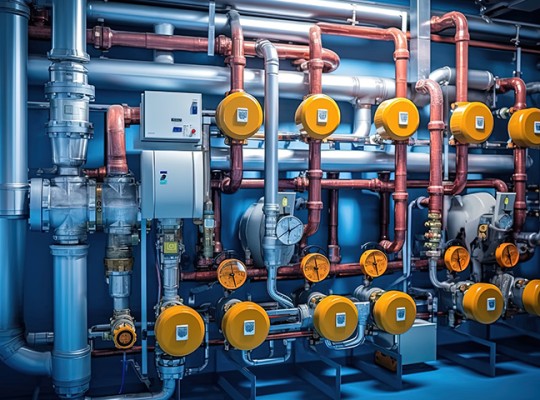
The combined heat and power (CHP) industry is experiencing a remarkable transformation by integrating advanced automation technologies. This shift is expected to improve efficiency, reliability, and sustainability in energy production. Automation in combined heat and power systems involves utilizing advanced control mechanisms, real-time monitoring, and predictive maintenance to improve performance and reduce operational costs. Using smart sensors and data analytics, CHP systems can seamlessly adapt to fluctuating energy demands and environmental conditions, resulting in increased energy output and decreased waste and emissions.

The rise of automation in the combined heat and power sector indicates a major transition toward smart energy solutions that support global sustainability goals. As industries and public services adopt these innovations, the potential for a robust and eco-friendly energy infrastructure becomes more achievable. This showcases the beginning of a new era in power generation and management. According to a recent report published by Allied Market Research, the automation in combined heat and power market is predicted to showcase a notable CAGR of 7.1% throughout the forecast period.

RELATED POSTS

The next phase of EV evolution in India

How the Digital Twin in Energy Market Leverages IIoT for Real Time Efficiency and Emission Controls?

Automation enhancing efficiency and sustainability in combined heat and power (CHP) systems
The use of automation in combined heat and power (CHP) systems improves productivity, reliability, and flexibility in power generation. CHP systems generate electricity and thermal energy from the same fuel source simultaneously, maximizing energy utilization. Automation integrates advanced control systems, sensors, and data analysis to improve operations and decrease human intervention. For example, Siemens’ SPPA-T3000 control system for CHP plants utilizes real-time data to adjust power generation and heat distribution based on demand, ensuring high performance and minimal waste.
This automated method enhances fuel efficiency, reduces emissions, and lowers operational costs. Automated CHP systems can also quickly adapt to grid requirements, helping to maintain grid stability and support the integration of renewable energy sources. Thus, automation in CHP systems represents a notable advancement in sustainable and efficient energy generation, meeting contemporary energy demands and environmental goals.

Innovations in automation technology for CHP
Integration of IoT
CHP systems are increasingly integrating IoT devices and sensors, which provide detailed information on system performance. This data is used to streamline processes and enhance efficiency. For example, ABB’s Ability™ Smart Sensor technology converts standard equipment into smart devices, enabling better monitoring and control.

AI and machine learning
AI and ML are being used to improve the predictive abilities of CHP systems. These technologies analyze historical and real-time data to predict energy demand and optimize the operation of CHP units. According to recent research conducted by the National Renewable Energy Laboratory (NREL), AI algorithms have the potential to improve the efficiency of CHP systems by up to 15%.

Blockchain technology
Blockchain technology is being investigated for its ability to enhance transparency and security in combined heat and power (CHP) operations. It can streamline transactions and establish unbreakable records of energy generation and consumption. An experimental initiative in Brooklyn, New York, is utilizing blockchain to facilitate peer-to-peer energy trading among CHP users, thus promoting local energy resilience.

DS Smith and E.ON opened an advanced combined heat and power plant
On May 3, 2023, DS Smith and E.ON introduced an advanced combined heat and power (CHP) plant at DS Smith’s Kemsley Paper Mill in Kent. This cutting-edge facility, operational since 2022, is expected to set new benchmarks in efficiency, sustainability, and reliability. The plant is designed to reduce CO2 emissions by 36,000 tons annually, has a remarkable electrical capacity of 73MW, and can produce 830,000 tons of recycled paper per year.

DS Smith aims to achieve a 46% reduction in greenhouse gas emissions by 2030 compared to 2019, with a commitment to achieving Net Zero emissions by 2050. E.ON’s innovative energy solution, E.ON IQ Energy, features automated, self-controlled power plants and AI optimization to ensure energy efficiency for DS Smith’s operations. This collaboration represents a significant advancement toward decarbonizing industrial production processes across Europe.

To conclude, the integration of automation in combined heat and power systems marks a significant advancement in sustainable energy solutions. This advancement improves efficiency, reliability, and environmental responsibility, showcasing the beginning of a new era in energy generation that supports global sustainability goals and offers new opportunities for industry growth in the coming years.


Tags: automationCHPEco-friendlyemissionheatpower
ShareTweetShare
editor

editor

Related Posts

Nagesh Basvanhalli

The next phase of EV evolution in India

by Palak
June 29, 2026
0

India has largely answered one important question: can electric vehicles scale in a price-sensitive and highly competitive mobility market? The...

Digital twin

How the Digital Twin in Energy Market Leverages IIoT for Real Time Efficiency and Emission Controls?

by Palak
June 26, 2026
0

Digital twins—highfidelity virtual replicas of physical assets and processes—are reshaping energy operations by enabling realtime simulation, predictive control and emissionsaware...

GOLDBECK SOLAR

Sustainable Solar Infrastructure: Designing for Longevity and Circularity

by Palak
June 17, 2026
0

As of March 2026, India's installed solar capacity stands at over 150 GW — a number that places this country...

Overcoming Transmission Bottlenecks The Role of the Dynamic Line Rating IoT Market in Wind Energy Grid Integration

Overcoming Transmission Bottlenecks: The Role of the Dynamic Line Rating IoT Market in Wind Energy Grid Integration

by Palak
June 15, 2026
0

As India and other markets accelerate wind capacity additions, transmission bottlenecks increasingly limit how much renewable energy reaches demand centres....

EV Charging

Accelerating India’s E-Mobility Infrastructure through the Solar Powered EV Charger Market Evolution

by Palak
June 15, 2026
0

IntroductionIndia’s emobility transition depends as much on charging infrastructure as on vehicle adoption. Solarpowered EV chargers—combining photovoltaic (PV) generation, battery...

Next Post
U.S. Electrical Generation

Renewables Achieve Over 30% of U.S. Electrical Generation for the First Time

Yard Force

Yard Force Launches 100W Portable Solar Panel LX SPP10

Leave a Reply Cancel reply

Your email address will not be published. Required fields are marked *

RECOMMENDED

SAEL

SAEL bags solar module supply order from NTPC REL

July 14, 2026
Thailand

Thailand Approves $1.99 Billion Investment in AI, Data Centres and Clean Energy

July 14, 2026

MOST VIEWED

  • Solar

    When the Sun Began Paying the Electricity Bills: The Story of PM Surya Ghar Muft Bijli Yojana

    0 shares
    Share 0 Tweet 0
  • India’s Emerging Polysilicon Manufacturing Ecosystem: Opportunities and Challenges

    0 shares
    Share 0 Tweet 0
  • KP Group & PP Savani University Launches Urjanoor Scholarship

    0 shares
    Share 0 Tweet 0
  • StarlinePS Enterprises Invests ₹160 Crore in Celloraa Energy

    0 shares
    Share 0 Tweet 0
  • Xpeng Selects u‑blox F9 Centimeter-level Multi-Band GNSS Technology for P7 Smart EV

    0 shares
    Share 0 Tweet 0

SAEL bags solar module supply order from NTPC REL

Thailand Approves $1.99 Billion Investment in AI, Data Centres and Clean Energy

Havells partners with Pixii AS to enter battery energy storage segment

SAEL Industries Limited Bags Solar Module Supply Order from NTPC Renewable Energy Limited

Power Grid Corporation of India Limited Secures LoI for ISTS Augmentation Project Under TBCB

Gujarat Urja Vikas Nigam Limited Announces Winners of 250 MW Wind Power Auction

Latest Magazine

© 2016 – 2025 TechZone Print Media | All Rights Reserved

  • About Us
  • Contact Us
No Result
View All Result
  • News
  • Renewable
    • Solar
    • Rooftop
    • Floating Solar
    • Module
    • Wind
    • Hydrogen
    • Biomass
    • Tenders
    • Sustainibility
  • Storage
  • E-Mobility
  • Battery
  • Smart City
  • Power
    • Smart Grid
    • Microgrid
    • Off-Grid
  • Editor’s Pick
    • Articles
    • In Talks
    • E-MAG
    • Market Research
  • On-demand Webinars
  • More
    • Events
    • Contact Us
    • Subscribe

© 2016 - 2025 TechZone Print Media | All Rights Reserved