


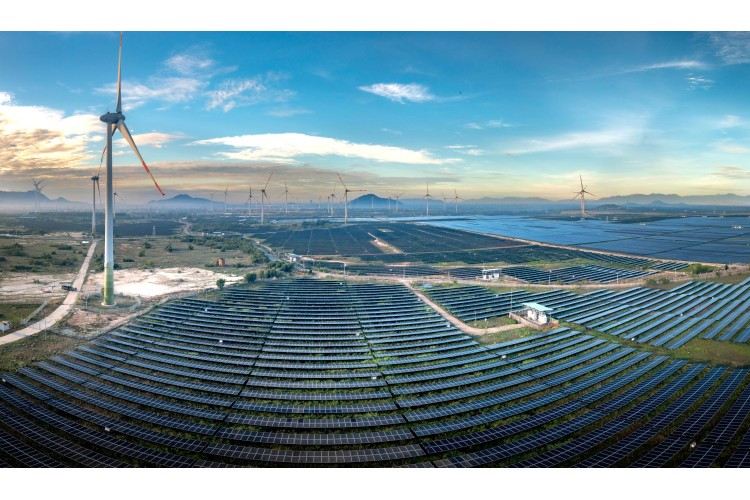
‘We can choose to lead, or be led to ruin,’ declared UN Secretary-General António Guterres, addressing delegates at COP30 in the rainforest city of Belém, Brazil. As the world pushes to triple renewable power capacity by 2030, attention is shifting from adding generation to preparing grids for the change. In light of COP30, Mike Torbitt, managing director of resistor manufacturer Cressall Resistors, examines the growing pressure on electricity networks and the role of grid stability technology as renewable deployment accelerates.
The world has recently seen record growth in renewable energy, with solar and wind forming the backbone of global decarbonisation efforts. Yet, despite that, COP30 delivered a clear message: the pace must quicken if we are to meet targets for 2030. Analysis from the Climate Action Tracker coalition, released at COP30, shows that “sticking to key climate pledges — tripling renewable energy, doubling energy efficiency and cutting methane emissions — could avoid nearly 1°C of global heating and significantly slow the rate of warming this century.”
Expanding renewable capacity at the pace needed to meet climate goals will demand unprecedented investment, infrastructure expansion and system upgrades. But increasing generation alone won’t be enough — the real challenge lies in ensuring that grids can handle the variable, fast-responding energy these new sources provide. Integrating that power reliably into networks that were not designed for variable energy sources is becoming the defining task of the energy transition.
The grid challenge behind rapid renewable growth
Renewable growth is radically changing the way in which electricity systems function. Solar and wind generation follow weather patterns, leading to steep rises and falls in generation that must be balanced in real time. As installations expand, these variations become more extreme, placing new stresses on equipment and system operators alike.
Today’s renewable output is constrained by congestion and capacity limits in transmission and distribution systems, limiting how efficiently the power is delivered to consumers. Storage capacity is expanding but remains far below what is required to balance supply and demand across all regions.
Without the right stability and protection technologies, high-renewable grids risk greater levels of curtailment, decreased asset lifetimes and reduced system reliability. As inverter-based generation becomes the dominant form of new capacity, networks are also losing the inherent stability once provided by conventional rotating machines. This shift makes grids more sensitive to faults, fluctuations and power disturbances, increasing the importance of technologies that can absorb, dissipate or smooth unexpected energy spikes.
Technology that makes high-renewable grids possible
This is where resistor technology becomes essential to keeping systems stable. Dynamic braking resistors (DBRs) offer a proven method for managing rapid changes in power flow, especially in systems where renewable output can increase or decrease quickly. By safely converting excess energy into heat, DBRs prevent over speeding in rotating equipment or instability in inverter-driven systems.
For wind turbines, DBRs are essential to managing sudden gusts or rapid changes in mechanical load. For solar, they support stability during cloud transients or fast inverter cycling and in storage and hybrid systems, they help maintain smooth operation during transitions or when switching between energy sources. At commissioning stage, DBRs also support system testing to ensure equipment performs safely before going live.
Cressall has decades of experience across renewable generation, grid infrastructure and transport applications, supplying DBRs engineered for long-term reliability, safety and demanding environmental conditions. As grids continue to evolve, this technology will continue to support the safe integration of new renewable capacity, especially in a future where inverter-based systems take on an increasingly large share of total generation.
What COP30 signals for the future
One of the key messages emerging from COP30 is that renewable growth must be matched by investment in modern, stable and flexible grids. The International Renewable Agency’s (IRENA) analysis reinforces this point, stating that “power system infrastructure and flexibility must expand at a much faster rate to accommodate rising shares of variable renewables”.
According to IRENA, at COP30 the Utilities for Net Zero Alliance (UNEZA) announced investment plans totalling over USD 1 trillion by 2030, with a significant emphasis on strengthening power grids and networks. This commitment from the world’s leading utilities demonstrates the scale of infrastructure transformation needed to support renewable expansion.
This has significant implications for grid operators, developers and technology suppliers. As renewables are installed more rapidly, system stress will rise and there will be greater need for proven solutions that ensure stability.
Digitalisation will play a growing role in improving forecasting and control, but physical safeguards such as DBRs will still be essential for protecting equipment and maintaining reliability.
COP30 reinforced the scale of work required to reach renewable and climate goals. But that transition cannot succeed unless grids can cope with the new realities created by variable, fast-responding, decentralised generation. Dynamic braking resistors offer a crucial layer of protection and stability, enabling renewable energy sources to be integrated in a secure and reliable way.