

Urja Daily
No Result
View All Result
  • News
  • Renewable
    • Solar
    • Rooftop
    • Floating Solar
    • Module
    • Wind
    • Hydrogen
    • Biomass
    • Tenders
    • Sustainibility
  • Storage
  • E-Mobility
  • Battery
  • Smart City
  • Power
    • Smart Grid
    • Microgrid
    • Off-Grid
  • Editor’s Pick
    • Articles
    • In Talks
    • E-MAG
    • Market Research
  • On-demand Webinars
  • More
    • Events
    • Contact Us
    • Subscribe
  • News
  • Renewable
    • Solar
    • Rooftop
    • Floating Solar
    • Module
    • Wind
    • Hydrogen
    • Biomass
    • Tenders
    • Sustainibility
  • Storage
  • E-Mobility
  • Battery
  • Smart City
  • Power
    • Smart Grid
    • Microgrid
    • Off-Grid
  • Editor’s Pick
    • Articles
    • In Talks
    • E-MAG
    • Market Research
  • On-demand Webinars
  • More
    • Events
    • Contact Us
    • Subscribe
No Result
View All Result
Urja Daily
No Result
View All Result
Home News

Rajasthan Rolls Out 2025 Regulations for Green Energy Open Access

Palak by Palak
May 27, 2025
in News
Reading Time: 2 mins read
0
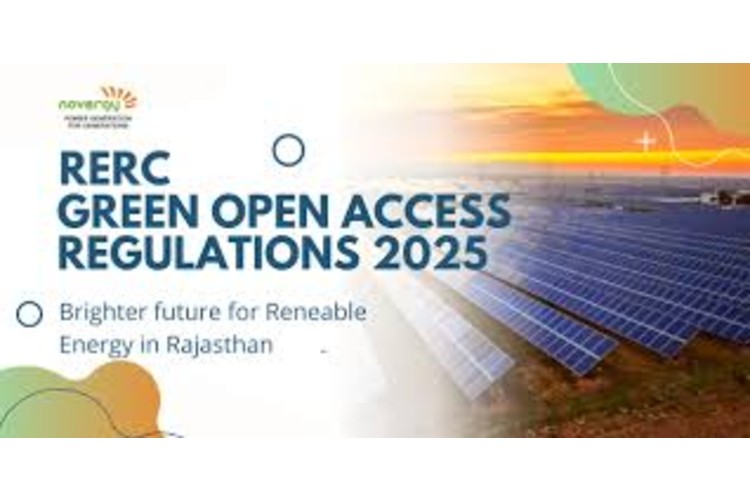
The Rajasthan Electricity Regulatory Commission (RERC)
Share on FacebookShare on TwitterShare on Linkedin

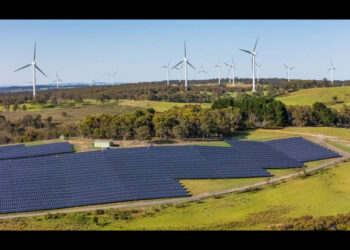
The Rajasthan Electricity Regulatory Commission (RERC) has issued the Rajasthan Electricity Regulatory Commission (Terms and Conditions for Green Energy Open Access) Regulations, 2025. These rules allow captive renewable energy projects, including behind-the-meter installations, to have capacities up to 200 per cent of the consumer’s contract demand. If the capacity exceeds 100 per cent, a battery energy storage system (BESS) storing at least 20 per cent of the energy generated beyond 100 per cent is mandatory. Consumers with a sanctioned load of 100 kW or more in the same electricity division of a discom can apply for green energy open access without a lower load limit. Renewable projects above 5 MW connected to the state transmission utility (STU), excluding hydro, must install BESS capable of two hours of storage or 5 per cent of the capacity. Open access is available in short-term (up to 1 month), medium-term (3 months to 3 years), and long-term (12 to 25 years) categories. Short-term access requires reapplication upon expiry on a first-come, first-served basis.

All applications must be submitted through the centralised portal of the central nodal agency and forwarded to the appropriate state nodal agency (SNA), which must dispose of them within 15 days. The Rajasthan STU will function as the SNA for long and medium-term access, while the Rajasthan state load dispatch centre is the SNA for short-term access. The STU must submit procedural documents to RERC within 30 days of the regulation’s notification. Discoms have the highest allotment priority, followed by long-term, medium-term, and short-term green energy open access consumers. The priority is subject to system capacity. Green open access consumers, however, will be prioritised over normal open access consumers. Interstate transmission charges are set by the Central Electricity Regulatory Commission, and intrastate charges by RERC. Wheeling charges will be determined by RERC through tariff orders. Both charges apply if extra high voltage and distribution networks are used. Co-located hybrid projects pay charges on the contracted capacity. Non-co-located hybrid projects must pay separately for wind and solar components. 

RELATED POSTS

LAPP celebrates three decades in India as the country emerges as its largest market after Germany

Solar Growth Accelerates: Utility-Scale Installations Rise 12% in August, Rooftop Reaches April Peak

Injection beyond contracted capacity is deemed inadvertent and not paid or settled by discom. Power supplied from BESS during peak or non-solar hours up to 2,000 MW, or until 2030, is exempted from the transmission and wheeling charges. Renewable energy projects with BESS of at least 5 per cent of renewable capacity will get 75 per cent charge exemption for seven years. For each additional 1 per cent of the capacity up to 30 per cent, further 1 per cent exemption shall be granted. Standalone BESS and those connected at 11 kV or 33 kV substations are also fully exempt for seven years. Green hydrogen or ammonia projects commissioned before 2030 get 50 per cent charge waivers. Cross subsidy surcharge (CSS) applies in addition to transmission and wheeling charges and is determined by RERC tariff orders. CSS will not exceed 20 per cent of the average cost of supply and may be capped at 50 per cent of the surcharge set in the year of commissioning surcharge for a period of 12 years. No additional surcharge applies if fixed charges are paid within the contract demand; otherwise, the surcharge applies to excess consumption. Banking is allowed for captive projects up to 100 per cent of the contract demand within the state, with a maximum limit of 25 per cent of injected energy or 30 per cent of monthly discom consumption.
Tags: BESSElectricitypowerRenewable EnergyRERCSNAStorage
ShareTweetShare
Palak

Palak

Related Posts

Matthias Lapp leads LAPP Group as third-generation CEO

LAPP celebrates three decades in India as the country emerges as its largest market after Germany

by Urja Daily
September 8, 2026
0

Bengaluru – LAPP has celebrated 30 years of operations in India recently. For the family-owned company headquartered in Germany, this marks...

Solar

Solar Growth Accelerates: Utility-Scale Installations Rise 12% in August, Rooftop Reaches April Peak

by Urja Daily
September 7, 2026
0

Australia’s National Electricity Market (NEM) recorded a combined 3,893GWh of solar generation in August 2026, comprising 1,628GWh from utility-scale assets...

ABB India

ABB India and ESSCI Launch Phase III of Smart Electrician Training Centre in Faridabad

by Palak
September 5, 2026
0

New Delhi/Faridabad: Electronics Sector Skills Council of India (ESSCI), in partnership with ABB India, has launched Phase III of the Smart...

MoU

ABB India and ESSCI Launch Phase III of Smart Electrician Training Centre in Faridabad

by Palak
September 1, 2026
0

New Delhi/Faridabad: Electronics Sector Skills Council of India (ESSCI), in partnership with ABB India, has launched Phase III of the Smart...

Plant inauguration by Shri Arjun Modhwadia, Cabinet Minister for Forest and Environment, Government of Gujarat, with Dr. Geetika Mandan, Medical Director & VP, Parul University

Parul University to Transform Campus Waste into Clean Energy and Carbon Resources in Partnership with Ankur Scientific

by Palak
August 31, 2026
0

Vadodara : Parul University has partnered with Ankur Scientific, a pioneer in waste-to-energy solutions, to convert suitable waste generated across its...

Next Post
NHPC

NHPC Concludes Auction for Major BESS Projects in Kerala

Maharashtra Electric Vehicle

Maharashtra Rolls Out New Electric Vehicle Policy for 2025

Leave a Reply Cancel reply

Your email address will not be published. Required fields are marked *

RECOMMENDED

Matthias Lapp leads LAPP Group as third-generation CEO

LAPP celebrates three decades in India as the country emerges as its largest market after Germany

September 8, 2026
Solar

Solar Growth Accelerates: Utility-Scale Installations Rise 12% in August, Rooftop Reaches April Peak

September 7, 2026

MOST VIEWED

  • Solar

    When the Sun Began Paying the Electricity Bills: The Story of PM Surya Ghar Muft Bijli Yojana

    0 shares
    Share 0 Tweet 0
  • India’s Emerging Polysilicon Manufacturing Ecosystem: Opportunities and Challenges

    0 shares
    Share 0 Tweet 0
  • KP Group’s Listed Renewable Businesses Post Strong Multi-Year Growth as Portfolio Expands Beyond 9.2 GW

    0 shares
    Share 0 Tweet 0
  • KP Group & PP Savani University Launches Urjanoor Scholarship

    0 shares
    Share 0 Tweet 0
  • StarlinePS Enterprises Invests ₹160 Crore in Celloraa Energy

    0 shares
    Share 0 Tweet 0

LAPP celebrates three decades in India as the country emerges as its largest market after Germany

Solar Growth Accelerates: Utility-Scale Installations Rise 12% in August, Rooftop Reaches April Peak

WeWork India to develop 10 MWp solar power plant in Karnataka, accelerating its goal to transition to 100% renewable electricity

Ten-Nine Technologies Moves to Commercial-Scale Production of TENIX – its ‘Anti-Aging’ Battery Additive

Karnataka Targets 66 GW Power Capacity by 2030: Energy Department Additional Chief Secretary Gaurav Gupta

GREW Solar Secures ₹430 Crore Order from Leading Independent Power Producer for High-Efficiency G12R Solar PV Modules

Latest Magazine

© 2016 – 2025 TechZone Print Media | All Rights Reserved

  • About Us
  • Contact Us
No Result
View All Result
  • News
  • Renewable
    • Solar
    • Rooftop
    • Floating Solar
    • Module
    • Wind
    • Hydrogen
    • Biomass
    • Tenders
    • Sustainibility
  • Storage
  • E-Mobility
  • Battery
  • Smart City
  • Power
    • Smart Grid
    • Microgrid
    • Off-Grid
  • Editor’s Pick
    • Articles
    • In Talks
    • E-MAG
    • Market Research
  • On-demand Webinars
  • More
    • Events
    • Contact Us
    • Subscribe

© 2016 - 2025 TechZone Print Media | All Rights Reserved