

Urja Daily
No Result
View All Result
  • News
  • Renewable
    • Solar
    • Rooftop
    • Floating Solar
    • Module
    • Wind
    • Hydrogen
    • Biomass
    • Tenders
    • Sustainibility
  • Storage
  • E-Mobility
  • Battery
  • Smart City
  • Power
    • Smart Grid
    • Microgrid
    • Off-Grid
  • Editor’s Pick
    • Articles
    • In Talks
    • E-MAG
    • Market Research
  • On-demand Webinars
  • More
    • Events
    • Contact Us
    • Subscribe
  • News
  • Renewable
    • Solar
    • Rooftop
    • Floating Solar
    • Module
    • Wind
    • Hydrogen
    • Biomass
    • Tenders
    • Sustainibility
  • Storage
  • E-Mobility
  • Battery
  • Smart City
  • Power
    • Smart Grid
    • Microgrid
    • Off-Grid
  • Editor’s Pick
    • Articles
    • In Talks
    • E-MAG
    • Market Research
  • On-demand Webinars
  • More
    • Events
    • Contact Us
    • Subscribe
No Result
View All Result
Urja Daily
No Result
View All Result
Home EV Batteries

Ministry of Power Releases Draft Revised Guidelines for Installation and Operation of EV Charging Infrastructure

editor by editor
July 5, 2024
in EV Batteries
Reading Time: 2 mins read
0
EV charging infrastructure
Share on FacebookShare on TwitterShare on Linkedin

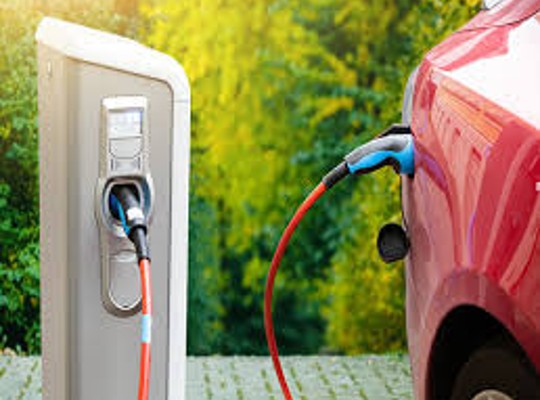
The Ministry of Power (MoP) has issued the draft “Guidelines for Installation and Operation of Electric Vehicle Charging Infrastructure-2024”. These guidelines, effective from July 1, 2024, supersede all earlier versions released between January 2018 and April 2023.

The guidelines are applicable to electric vehicle (EV) charging infrastructure situated in privately owned parking spaces, semi-restricted areas like office buildings, educational institutions, hospitals, group housing societies, e-bus depots, as well as public locations such as commercial complexes, railway stations, petrol pumps, airports, metro stations, shopping arcades, municipal parking, highways, and expressways. The main goals of the new guidelines are to accelerate the adoption of EVs by ensuring the availability of safe, reliable, and accessible charging infrastructure. Furthermore, the aim is to establish fair service charges for EV charging, to aid in the development of EV charging infrastructure, and to prepare the electrical distribution system for integrating EV charging facilities.

RELATED POSTS

Nuvoton Begins Production of 16-Cell Battery Monitoring ICs for AI Servers

Meine Electric to Pilot Iron-Air Battery at NTPC Simhadri

According to the general provisions, any individual or entity can establish EV charging stations as long as they adhere to the guidelines. Distribution licensees must supply electricity connections for these stations within specific timeframes which encompass three days in metropolitan areas, seven days in other municipal areas, and fifteen days in rural areas. In rural areas with hilly terrain, the period extends to thirty days, and up to ninety days if new distribution mains or substations are required. Additionally, distribution licensees should develop user-friendly online single-window clearance systems to speed up the process of granting electricity connections. Charging stations must adhere to specific safety and operational standards, such as using proper cabling, implementing fire protection measures, ensuring rain protection, providing sufficient space, employing trained personnel, clearly marking parking spaces, and having systems in place for tracking usage, billing, and payments. Public charging stations should offer both prepaid and postpaid options for service charges, with time-of-day rates and discounts during solar hours.

The electricity tariff for EV charging stations will be a single-part rate, not surpassing the average cost of supply (ACOS) until March 31, 2026. During solar hours (9:00 AM to 4:00 PM), the rate will be 0.7 times the ACOS, and 1.3 times the ACOS during non-solar hours. Government and public entities are incentivised to offer land for public charging stations at discounted rates, starting at Rs 1 per kWh on a revenue-sharing arrangement over a ten-year period. The Bureau of Energy Efficiency will serve as the central nodal agency for overseeing the implementation of these guidelines. State nodal agencies and city authorities are tasked with regularly mapping the geographical distribution of potential EV charging demand and supporting the deployment of public, community, workplace, and e-bus depot charging stations.


Tags: Bureau EfficiencyElectricity TariffEV chargingMoP
ShareTweetShare
editor

editor

Related Posts

Nuvoton

Nuvoton Begins Production of 16-Cell Battery Monitoring ICs for AI Servers

by Palak
August 20, 2026
0

Kyoto, Japan – Nuvoton Technology announced today it will begin mass production in September of battery monitoring ICs (BMICs), KA49703A...

battery technology

Meine Electric to Pilot Iron-Air Battery at NTPC Simhadri

by Palak
August 18, 2026
0

Meine Electric has announced that its iron-air battery technology will undergo a utility-scale pilot evaluation at NTPC Limited’s Simhadri thermal...

Battery

BW ESS Acquires 250 MW Australian Battery Project

by Palak
August 17, 2026
0

BW ESS has acquired the Yanco battery energy storage system (BESS) project in New South Wales, Australia. The project has...

HiNa Battery on WTF

Nikhil Kamath Explores the Battery Technologies That Could Power India’s Next Manufacturing Wave

by Palak
August 12, 2026
0

Bengaluru, Karnataka, India India's lithium-ion battery demand is expected to roughly quintuple to over 115 GWh by 2030, while the...

Adiabatic Technologies

Adiabatic Technologies Raises ₹83 Million for Advanced Battery Systems

by Palak
August 7, 2026
0

Adiabatic Technologies has raised Rs 83 million in a seed funding round led by Malpani Ventures and Avinya Ventures. The...

Next Post
Himachal Pradesh

Foundation Stone Laid for 10 MW Solar Project by Himachal Pradesh Government

ACME Solar

ACME Solar Submits Draft Red Herring Prospectus to SEBI

Leave a Reply Cancel reply

Your email address will not be published. Required fields are marked *

RECOMMENDED

Beyond Installation: What Defines a Successful Industrial Solar Project?

August 22, 2026
Shweta Solar

Shweta Solar pushes for stronger storage and grid readiness as rooftop solar expands

August 22, 2026

MOST VIEWED

  • Solar

    When the Sun Began Paying the Electricity Bills: The Story of PM Surya Ghar Muft Bijli Yojana

    0 shares
    Share 0 Tweet 0
  • India’s Emerging Polysilicon Manufacturing Ecosystem: Opportunities and Challenges

    0 shares
    Share 0 Tweet 0
  • KP Group & PP Savani University Launches Urjanoor Scholarship

    0 shares
    Share 0 Tweet 0
  • StarlinePS Enterprises Invests ₹160 Crore in Celloraa Energy

    0 shares
    Share 0 Tweet 0
  • Business Delegation Signs 66 MoUs During Central Asia Visit to Boost Multi-Sector Collaboration

    0 shares
    Share 0 Tweet 0

Beyond Installation: What Defines a Successful Industrial Solar Project?

Shweta Solar pushes for stronger storage and grid readiness as rooftop solar expands

VinFast India Partners with Federal Bank to Strengthen Dealer Financing Ecosystem

MC²+ Ignite Selects 30 Energy Deep-Tech Startups for Funding

Servotech Renewable Launches New TVC for Solar Lithium Batteries Featuring Sonu Sood

Nuvoton Begins Production of 16-Cell Battery Monitoring ICs for AI Servers

Latest Magazine

© 2016 – 2025 TechZone Print Media | All Rights Reserved

  • About Us
  • Contact Us
No Result
View All Result
  • News
  • Renewable
    • Solar
    • Rooftop
    • Floating Solar
    • Module
    • Wind
    • Hydrogen
    • Biomass
    • Tenders
    • Sustainibility
  • Storage
  • E-Mobility
  • Battery
  • Smart City
  • Power
    • Smart Grid
    • Microgrid
    • Off-Grid
  • Editor’s Pick
    • Articles
    • In Talks
    • E-MAG
    • Market Research
  • On-demand Webinars
  • More
    • Events
    • Contact Us
    • Subscribe

© 2016 - 2025 TechZone Print Media | All Rights Reserved