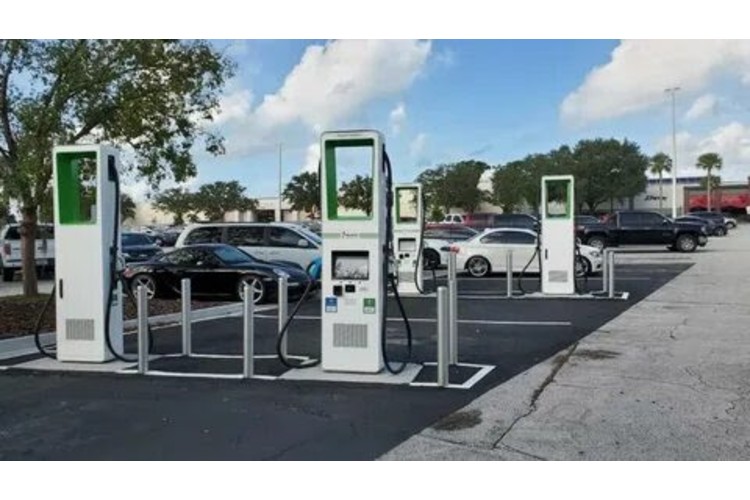
The rapid transition towards clean energy and sustainable mobility has placed electric vehicles (EVs) at the forefront of the transportation revolution. As this shift gains momentum across the United States, the U.S. Charging as a Service Market is emerging as a vital enabler of EV adoption. This model, commonly known as CaaS (Charging as a Service), offers scalable, flexible, and cost-effective charging infrastructure solutions to meet the needs of individuals, businesses, and government entities alike. With minimal upfront investment and the advantage of ongoing support, CaaS is changing the game for EV stakeholders nationwide.
1. Rising EV Adoption Accelerates Infrastructure Demand
One of the core drivers of the U.S. Charging as a Service Market is the exponential growth in electric vehicle adoption. Driven by federal incentives, increasing environmental awareness, and advancements in battery technology, more Americans are opting for electric cars over traditional combustion-engine vehicles. As a result, the demand for efficient, widespread, and accessible charging solutions is surging.
Charging as a Service meets this demand by enabling businesses, apartment complexes, retail centers, and municipalities to deploy EV charging stations without bearing the full brunt of installation and maintenance costs. With the EV population expected to reach over 26 million units in the U.S. by 2030, CaaS is poised to be a cornerstone of this growth.
2. Government Incentives and Clean Energy Policies
Federal and state-level support plays a crucial role in expanding the U.S. Charging as a Service Market. The Infrastructure Investment and Jobs Act (IIJA) earmarked billions of dollars for EV charging infrastructure, creating a fertile ground for CaaS providers. Programs like the National Electric Vehicle Infrastructure (NEVI) Formula Program provide funding for public EV charging stations, emphasizing accessibility and interoperability.
Additionally, several states offer rebates and tax credits for businesses that install EV chargers, further reducing the barrier to entry. These financial incentives make CaaS an attractive proposition for fleet operators, commercial property owners, and municipalities seeking to align with sustainability goals without overextending their budgets.
3. Cost-Effective Solutions for Fleet Electrification
Electrifying commercial and public fleets is a key strategy for reducing transportation emissions. However, the high capital investment needed to establish and operate large-scale charging infrastructure can deter fleet managers. This is where CaaS becomes a game-changer.
By offering a subscription-based or pay-per-use model, CaaS providers allow fleet operators to deploy charging stations on a flexible budget. This arrangement includes installation, maintenance, energy management, and software support. For businesses managing delivery vehicles, ride-share fleets, or public buses, Charging as a Service offers a predictable and scalable charging solution that supports operational efficiency.
4. Urbanization and Smart City Initiatives
As urban populations grow and cities pursue smart infrastructure agendas, demand for integrated EV charging solutions is rising. Persistence Market Research points out that urban centers are leading the charge in deploying smart, connected charging networks that align with mobility-as-a-service (MaaS) frameworks.
Charging as a Service plays a vital role in this transformation. With modular designs, remote monitoring, and data analytics, CaaS platforms enable city planners to implement EV charging seamlessly alongside other smart infrastructure. In densely populated areas where space and power constraints are real challenges, CaaS enables dynamic load management and multi-tenant support, making it an essential building block of future-ready cities.
5. Growing Real Estate Integration
Another critical growth driver for the U.S. Charging as a Service Market is the increasing integration of EV chargers into commercial and residential real estate. Developers and property managers now view EV charging as a value-added amenity. However, they often lack the expertise or resources to install and maintain this technology.
CaaS eliminates the complexity by offering turnkey solutions that cover equipment procurement, utility coordination, and backend software. For multifamily housing units, office parks, and shopping malls, this model enhances property appeal while fulfilling sustainability commitments—without incurring the high costs of ownership.
6. Technological Advancements and Interoperability
The U.S. Charging as a Service Market is being propelled forward by technological innovations in charging hardware and management software. Level 2 and DC fast chargers are becoming more efficient, compact, and user-friendly. Additionally, cloud-based platforms provide advanced features like energy usage tracking, charger scheduling, user authentication, and payment processing.
One of the critical aspects of CaaS solutions is interoperability—the ability of the system to work across different networks, vehicle types, and standards. Open Charge Point Protocol (OCPP) compliance is now a key feature, allowing businesses to future-proof their investment and switch providers if necessary. These advances make CaaS a more attractive and accessible solution for a wider range of customers.
7. Demand for Flexible and Scalable Solutions
Traditional EV charging deployment involves high CapEx, ongoing O&M (operations and maintenance), and complex permitting processes. By contrast, CaaS offers a more agile model that allows clients to scale up or down based on their current needs.
This flexibility is particularly valuable in uncertain economic environments where companies are hesitant to commit large capital expenditures. Whether it’s a pilot project with just two charging stations or a full-scale rollout across multiple locations, CaaS adapts to business requirements with minimal risk and maximum support.
8. Enhanced User Experience and Data Analytics
Customer experience has emerged as a top priority in EV charging services. CaaS providers deliver a seamless and tech-enabled experience through features such as real-time charger availability, usage reports, mobile app integration, and 24/7 support.
Furthermore, the data collected through CaaS platforms can be leveraged for energy optimization, predictive maintenance, and strategic expansion. For corporate clients, this intelligence adds value by supporting ESG reporting and reducing operational downtime.
9. Collaborations and Strategic Partnerships
The expansion of the U.S. Charging as a Service Market is also supported by partnerships between automakers, utility companies, charging networks, and software firms. These collaborations foster innovation, reduce costs, and enhance market reach. For instance, leading EV manufacturers are partnering with CaaS providers to bundle charging solutions with vehicle purchases, creating a complete and convenient experience for consumers.
Such strategic alliances are essential in accelerating the deployment of charging stations nationwide and ensuring that service quality remains high as demand scales.
10. Sustainability Goals and Corporate Responsibility
Finally, the increasing emphasis on environmental sustainability and corporate responsibility is encouraging businesses to invest in green infrastructure like EV charging. CaaS offers an easy and effective way to contribute to carbon reduction targets without bearing the operational burden.
Many corporations are including EV charging in their ESG strategies, and CaaS makes it simple to deploy, monitor, and report on emissions savings. This alignment with broader sustainability trends further supports market growth.
The growth of the U.S. Charging as a Service Market is driven by a confluence of factors—rising EV adoption, favorable policies, urbanization, and technological evolution. As the country races toward a carbon-neutral transportation future, CaaS offers a pragmatic, scalable, and customer-centric solution that bridges the gap between infrastructure needs and financial constraints.
With a foundation built on flexibility, smart technology, and strategic partnerships, Charging as a Service is well-positioned to become a permanent fixture in America’s EV ecosystem. As highlighted by industry leaders such as Persistence Market Research, the future of charging is not only electric—it’s service-based.