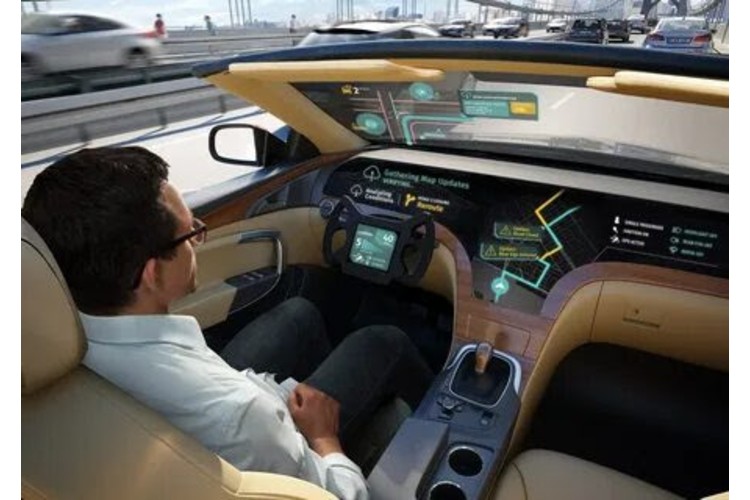
The concept of self-driving cars has long fascinated the world, and in the last decade, this once-futuristic vision has begun taking tangible form on real-world roads. Backed by artificial intelligence, advanced sensor systems, and increasingly robust regulatory frameworks, autonomous vehicles are moving from prototypes to potential mainstream adoption. However, the question remains: Is the world truly ready for driverless cars?
As consumer sentiment evolves and the Self-driving Cars Market matures, industry leaders and policymakers must align innovation with public trust. In this blog, we’ll explore the current state of market potential, public readiness, technological advancements, and the barriers still standing in the way.
Consumer Perception: Trust Is Still Evolving
One of the biggest hurdles facing the Self-driving Cars Market isn’t technological—it’s psychological. Despite increasing awareness and media coverage, consumer trust in autonomous driving systems remains mixed.
According to various global mobility surveys, while many people express curiosity and even excitement about autonomous vehicles (AVs), a significant portion remains skeptical. Safety concerns, such as fear of accidents due to software glitches or hacking, rank among the top reasons for hesitation.
This sentiment is supported by recent studies, including those cited in Fairfield Market Research reports, which show that over 60% of consumers still prefer to be in control behind the wheel. Interestingly, younger demographics and tech-savvy consumers are more open to embracing driverless technology, signaling a gradual generational shift in acceptance.
Market Potential: A Multibillion-Dollar Industry in the Making
Despite consumer hesitations, the Self-driving Cars Market is poised for remarkable growth. According to Fairfield Market Research, the market is projected to grow exponentially over the next decade, driven by advancements in AI, LiDAR, radar, and 5G connectivity. From autonomous taxis and delivery vehicles to personal self-driving cars, this sector is brimming with transformative potential.
Forecasts indicate that the market could reach several hundred billion dollars in value by 2032, thanks to increasing investment by both automakers and tech giants. Companies like Tesla, Waymo, NVIDIA, Baidu, and General Motors are pouring billions into R&D, strategic partnerships, and road testing to get ahead of the curve.
What sets this market apart is its ability to serve a wide range of applications—from mobility-as-a-service (MaaS) to long-haul trucking, ride-sharing platforms, and even emergency services. The convergence of self-driving capabilities with electrification is further fueling this trajectory, positioning autonomous EVs as the future of smart mobility.
Technology Advancements That Make Autonomous Driving Possible
The backbone of autonomous vehicles lies in a suite of intelligent technologies designed to mimic human perception and decision-making. These include:
- Advanced Driver-Assistance Systems (ADAS): Core to self-driving features like lane-keeping, adaptive cruise control, and emergency braking.
- LiDAR and Radar: Crucial for depth perception, obstacle detection, and maintaining 360-degree awareness.
- Machine Learning and AI: These enable real-time learning and predictive decision-making based on road conditions, traffic, and behavior of other drivers.
- 5G Connectivity: Enables ultra-fast communication between vehicles (V2V) and infrastructure (V2X), essential for safe navigation and traffic management.
Tech innovations continue to improve the reliability and scalability of autonomous driving systems. What was once limited to controlled environments is now being tested—and increasingly trusted—on busy city streets and highways.
Regulatory Landscape: Countries Taking the Lead
While technology marches forward, regulation remains a critical piece of the puzzle. Governments around the world are experimenting with frameworks to ensure the safe integration of AVs into public infrastructure.
The United States, through the National Highway Traffic Safety Administration (NHTSA), has issued federal guidance and pilot programs to promote innovation while safeguarding public welfare. Similarly, countries like Germany, Japan, and China are crafting regulatory sandboxes to foster autonomous mobility.
The European Union’s push for standardized vehicle safety norms and China’s rapid AV testing initiatives further demonstrate that the regulatory environment is evolving, albeit at different speeds across regions.
The harmonization of safety standards, liability protocols, and cybersecurity norms will play a major role in determining how quickly driverless vehicles move from limited trials to widespread adoption.
Urban Infrastructure and the Readiness Gap
Beyond consumer acceptance and regulatory progress, physical infrastructure plays a pivotal role in enabling the adoption of driverless vehicles. Smart traffic signals, connected roadways, digital mapping, and real-time traffic data are prerequisites for safe AV deployment.
However, most cities are still in the early stages of integrating such infrastructure. While some smart cities like Singapore, San Francisco, and Dubai are leading with AV-friendly road networks and IoT integration, the majority of the world still lags behind.
The readiness gap between developed and developing economies could pose a major challenge for the global adoption of autonomous vehicles. Investments in digital infrastructure, maintenance of road quality, and real-time data exchange capabilities will be crucial in bridging this divide.
Ethical Considerations and Data Privacy
With the rise of autonomous mobility comes a wave of ethical dilemmas. From decision-making in crash scenarios to potential bias in AI algorithms, the question of who is accountable when things go wrong is still murky.
Moreover, self-driving cars collect vast amounts of data—from location tracking and biometric identifiers to driving behavior. Ensuring data privacy and cybersecurity will be a top priority as the Self-driving Cars Market scales.
Consumer concerns about surveillance, hacking, and misuse of personal data must be addressed through transparent policies, encryption technologies, and government oversight.
Economic Impact and Job Disruption
As the market evolves, the ripple effects on employment and industry structures are inevitable. While autonomous vehicles will generate new job roles in software development, data science, and fleet management, they are also expected to disrupt traditional roles—especially in trucking, taxi services, and delivery.
Balancing automation with human employment is an area that governments, labor unions, and corporations must address proactively. Reskilling and upskilling the workforce will be essential to ensure a smooth transition to a more autonomous transportation ecosystem.
A Road Paved with Caution and Opportunity
So, is the world ready for driverless cars? The answer is complex. Technologically, we are closer than ever. From AI to vehicle connectivity, innovation has created a solid foundation. Yet public perception, regulatory clarity, infrastructure readiness, and ethical concerns still need time and effort to align.
The Self-driving Cars Market holds extraordinary promise, offering a future with safer roads, efficient traffic systems, and more accessible mobility options. But realizing this vision will require global collaboration between automakers, tech firms, regulators, and consumers.
As reported by Fairfield Market Research, the journey toward widespread adoption of autonomous vehicles is not a sprint but a marathon. The path ahead is filled with both promise and pitfalls—but with the right strategies in place, a driverless future is no longer just a dream.