


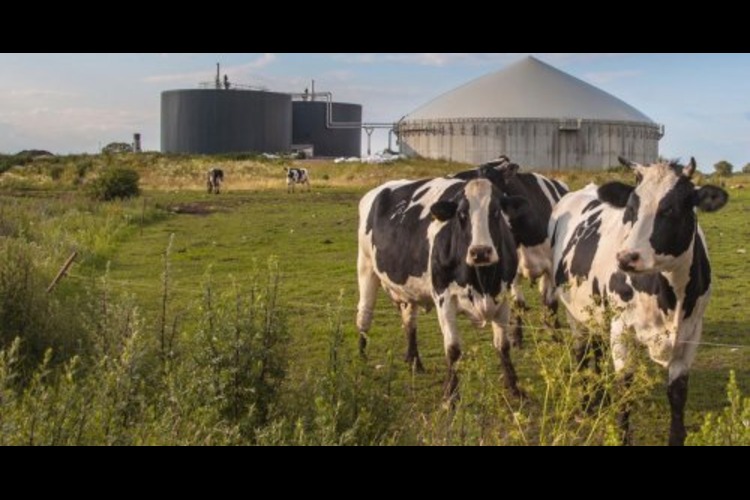
In communities across the globe, daily life creates waste that can be challenging to manage, including agriculture byproducts, livestock manure, and even leftover or discarded food all generate organic waste that produce methane during decomposition.
Left alone, this decomposing matter poses an environmental risk. But when managed properly, waste can be transformed into biogas a form of renewable energy.
Biogas is produced when organic materials such as plant and animal waste are broken down using an anaerobic digestion process. Bacteria break down the byproducts to create energy in the form of gas and digestate materials such as fertilizer.
Biogas can be additionally refined to produce renewable natural gas (RNG), or biomethane, and be used in a variety of forms that include heat and electricity, fuel for vehicles, bioplastics and even conventional gas that is added to the pipeline to supplement the natural gas grid.