

Urja Daily
No Result
View All Result
  • News
  • Renewable
    • Solar
    • Rooftop
    • Floating Solar
    • Module
    • Wind
    • Hydrogen
    • Biomass
    • Tenders
    • Sustainibility
  • Storage
  • E-Mobility
  • Battery
  • Smart City
  • Power
    • Smart Grid
    • Microgrid
    • Off-Grid
  • Editor’s Pick
    • Articles
    • In Talks
    • E-MAG
    • Market Research
  • On-demand Webinars
  • More
    • Events
    • Contact Us
    • Subscribe
  • News
  • Renewable
    • Solar
    • Rooftop
    • Floating Solar
    • Module
    • Wind
    • Hydrogen
    • Biomass
    • Tenders
    • Sustainibility
  • Storage
  • E-Mobility
  • Battery
  • Smart City
  • Power
    • Smart Grid
    • Microgrid
    • Off-Grid
  • Editor’s Pick
    • Articles
    • In Talks
    • E-MAG
    • Market Research
  • On-demand Webinars
  • More
    • Events
    • Contact Us
    • Subscribe
No Result
View All Result
Urja Daily
No Result
View All Result
Home News

Highlights of Union Budget 2024: Rooftop Solar, Offshore Wind, EV Ecosystem, and CBG Blending

editor by editor
February 2, 2024
in News
Reading Time: 2 mins read
0
Union Budget 2024
Share on FacebookShare on TwitterShare on Linkedin

RELATED POSTS

VinFast India Partners with Federal Bank to Strengthen Dealer Financing Ecosystem

MC²+ Ignite Selects 30 Energy Deep-Tech Startups for Funding

During the 2024 interim budget presentation, the Union Finance Minister (FM) announced important initiatives, indicating a notable emphasis on promoting sustainable energy and electric mobility. A noteworthy revelation includes the provision of free electricity, up to 300 units per month, to 10 million households through the implementation of rooftop solarisation. This initiative not only seeks to make clean energy readily available to a substantial portion of the population but also intends to promote the widespread uptake of solar power. The announcement comes in the wake of the recent Pradhan Mantri Suryodaya Yojana initiative, which seeks to decrease the electricity costs for impoverished and middle-class households, concurrently fostering India’s self-sufficiency in the energy sector. The FM also mentioned that the initiative would result in various advantages, such as households saving between Rs 15,000 to Rs 18,000 per year through the provision of free electricity and the opportunity to sell excess power to distribution companies.

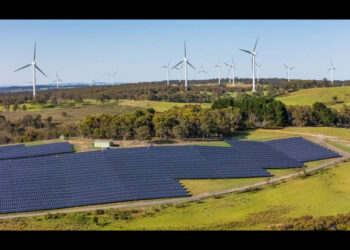
The FM approved viability gap funding (VGF) for offshore wind projects with a combined capacity of 1,000 MW in an effort to maximise the potential of offshore wind energy. It is anticipated that this financial assistance will accelerate the construction of offshore wind projects, supporting India’s objectives for renewable energy.

Furthermore, the government is poised to strengthen and broaden the electric vehicle ecosystem by offering assistance for manufacturing and charging infrastructure. The emphasis will be on encouraging increased adoption of electric buses in public transportation networks by implementing a reliable payment security mechanism. This initiative is anticipated to improve public transportation systems, fostering a more sustainable and environmentally friendly urban mobility environment.

Moreover, a significant step toward sustainable fuel sources involves making it obligatory to blend compressed biogas with compressed natural gas and piped natural gas for transportation. This measure is in line with the government’s dedication to encouraging cleaner and more environmentally friendly alternatives in the transportation industry. The government is gearing up to introduce a Biomanufacturing and Bio Foundry programme, an initiative focused on offering eco-friendly alternatives for the production of biodegradable materials. This programme highlights the dedication to promoting sustainable practices and mitigating the environmental footprint of industrial processes.

The budget also witnessed revisions in the costs for several pogrammes, including an increase in the allocation for on-grid solar power from Rs 49.7 billion to Rs 85 billion, the National Green Hydrogen Mission from Rs 2.97 billion to Rs 6 billion, and the green energy corridor from Rs 5 billion to Rs 6 billion. However, the adjustments resulted in a decrease in the budget estimate allocation for on-grid wind power from Rs 12.14 billion to Rs 8 billion and the programme for Faster Adoption and Manufacturing of Hybrid and Electric Vehicle in India from Rs 51.72 billion to Rs 26.71 billion.

Tags: CBG BlendingElectric MobilityEV ecosystemFMOffshore WindRooftop SolarUnion BudgetVGF
ShareTweetShare
editor

editor

Related Posts

VinFast India

VinFast India Partners with Federal Bank to Strengthen Dealer Financing Ecosystem

by Palak
August 22, 2026
0

Gurugram, Haryana, India - VinFast India has signed a Memorandum of Understanding (MOU) with Federal Bank, one of India’s leading...

IGNITE

MC²+ Ignite Selects 30 Energy Deep-Tech Startups for Funding

by Palak
August 22, 2026
0

National : MC²+, an energy innovation platform led by the Ministry of Petroleum & Natural Gas (MoPNG) and backed by...

Palo Alto Networks

Palo Alto Networks Introduces Frontier AI Critical Defense Program

by Palak
August 20, 2026
0

Mumbai, India — Palo Alto Networks announced the Frontier AI Critical Defense Program, a first-of-its-kind initiative to protect critical infrastructure from...

FLIR

FLIR: End-to-End Reliability Partner for Data Centers

by Palak
August 19, 2026
0

For a data center operator, risk rarely comes down to a single system or department. For a data center operator,...

Kalpataru

Kalpataru Projects Wins ₹3,526 Crore Orders Across Businesses

by Palak
August 19, 2026
0

Kalpataru Projects International Limited has secured new orders worth approximately Rs 35.26 billion across multiple business segments. The orders include...

Next Post
Delhi Solar Power

Delhi Unveils 'Delhi Solar Power Policy 2024'

Inox Wind

Inox Wind's 3 MW Turbines Integrated into MNRE's RLMM Initiative

Leave a Reply Cancel reply

Your email address will not be published. Required fields are marked *

RECOMMENDED

Beyond Installation: What Defines a Successful Industrial Solar Project?

August 22, 2026
Shweta Solar

Shweta Solar pushes for stronger storage and grid readiness as rooftop solar expands

August 22, 2026

MOST VIEWED

  • Solar

    When the Sun Began Paying the Electricity Bills: The Story of PM Surya Ghar Muft Bijli Yojana

    0 shares
    Share 0 Tweet 0
  • India’s Emerging Polysilicon Manufacturing Ecosystem: Opportunities and Challenges

    0 shares
    Share 0 Tweet 0
  • KP Group & PP Savani University Launches Urjanoor Scholarship

    0 shares
    Share 0 Tweet 0
  • StarlinePS Enterprises Invests ₹160 Crore in Celloraa Energy

    0 shares
    Share 0 Tweet 0
  • Business Delegation Signs 66 MoUs During Central Asia Visit to Boost Multi-Sector Collaboration

    0 shares
    Share 0 Tweet 0

Beyond Installation: What Defines a Successful Industrial Solar Project?

Shweta Solar pushes for stronger storage and grid readiness as rooftop solar expands

VinFast India Partners with Federal Bank to Strengthen Dealer Financing Ecosystem

MC²+ Ignite Selects 30 Energy Deep-Tech Startups for Funding

Servotech Renewable Launches New TVC for Solar Lithium Batteries Featuring Sonu Sood

Nuvoton Begins Production of 16-Cell Battery Monitoring ICs for AI Servers

Latest Magazine

© 2016 – 2025 TechZone Print Media | All Rights Reserved

  • About Us
  • Contact Us
No Result
View All Result
  • News
  • Renewable
    • Solar
    • Rooftop
    • Floating Solar
    • Module
    • Wind
    • Hydrogen
    • Biomass
    • Tenders
    • Sustainibility
  • Storage
  • E-Mobility
  • Battery
  • Smart City
  • Power
    • Smart Grid
    • Microgrid
    • Off-Grid
  • Editor’s Pick
    • Articles
    • In Talks
    • E-MAG
    • Market Research
  • On-demand Webinars
  • More
    • Events
    • Contact Us
    • Subscribe

© 2016 - 2025 TechZone Print Media | All Rights Reserved