


Commercial EV (Electric Vehicle) and Personal EV (Electric Vehicle) have gained significant attention in India as the country aims to transition to cleaner and more sustainable modes of transportation. The introduction of these electric vehicles is part of the government’s efforts to reduce carbon emissions, combat pollution, and achieve its ambitious goals under the National Electric Mobility Mission Plan (NEMMP).
To encourage the adoption of EVs, the Indian government has implemented various measures. It has introduced financial incentives and subsidies, such as the Faster Adoption and Manufacturing of (Hybrid &) Electric Vehicles in India (FAME India) scheme, which provides financial support to manufacturers, buyers, and infrastructure development. Additionally, the government has lowered the goods and services tax (GST) on electric vehicles to make them more affordable for consumers.
While the adoption of commercial and personal EVs in India is still in its early stages, there is a growing momentum towards embracing electric mobility. The government’s push for cleaner transportation, coupled with technological advancements and increasing consumer awareness, is expected to drive the growth of EVs in the country, making them a prominent part of India’s future mobility landscape.
In the Indian conditions, electric two-wheelers and three-wheelers are setting the pace when we talk about sales. While this has affected the private use of electric vehicles in a positive manner, when it comes to commercial electric vehicles, India is mostly untapped market. This can be imputed to the higher challenges for this segment to embrace the electric route.
Reports by Techsci research state that India’s electric commercial vehicle market is expected to grow at a CAGR of around 70% during 2020-2025 owing to the growing need for controlling GHG (Greenhouse gases) emissions pour out by vehicles. The government has launched various incentives and schemes for the assumption of electric vehicles in India.
On the fight between commercial and private vehicles in the EV market, the commercial vehicles have a very high utilization rate which makes it faster for the Commercial EV user to make the cost back and earn more profits compared to a private user who tends to park his vehicle 95% of the life of the vehicle. Indian Commercial EV market is highly untapped considering the potential it has.
India’s NITI Aayog reports that the generality of small vehicles such as two-wheelers, three-wheelers, small goods vehicles, and economy four-wheelers in India is unique among large countries and as such these are anticipated to drive the next generation of mobility advancement as well as regulated industrial capabilities. The small vehicles focus not only helps meet domestic demand, the government body said, but can also place India in a position of global leadership in the Electric Vehicle market.
Predicting the outcome of a competition between commercial electric vehicles (EVs) and personal EVs in India is challenging as it depends on various factors and market dynamics including market demand, infrastructure development, technological advancements, and government policies. Here are some considerations:
Market Demand: Both commercial and personal EVs have been gaining popularity in India due to the government’s focus on promoting electric mobility and reducing pollution. The demand for commercial EVs is primarily driven by fleet operators and logistics companies looking to lower operational costs and comply with environmental regulations. On the other hand, personal EVs are chosen by individuals for their daily commuting needs. The market potential for both segments is significant, but it may vary depending on factors such as infrastructure, affordability, and availability of charging stations.
Infrastructure: The availability and accessibility of charging infrastructure are crucial for the widespread adoption of EVs. Currently, India is working on expanding its charging infrastructure network, including public charging stations and home charging solutions. The success of commercial and personal EVs depends on how well the charging infrastructure is developed to support the charging needs of both segments.
Government Policies and Incentives: The Indian government has been actively promoting electric mobility through various policies and incentives. This includes subsidies, tax benefits, and financial incentives for manufacturers, fleet operators, and individual buyers of EVs. The effectiveness of these policies and their alignment with the specific needs of commercial and personal EVs will influence their growth.
Total Cost of Ownership: The total cost of ownership, including the initial purchase price, maintenance, and operational costs, plays a significant role in determining the success of EVs. Commercial EVs, being used for business purposes and often covering longer distances, have the advantage of higher utilization and potential cost savings in terms of fuel and maintenance. However, personal EVs offer advantages such as reduced running costs and lower dependence on fluctuating fuel prices.
Technology and Range: The range and charging capabilities of EVs are critical factors for both commercial and personal segments. Commercial EVs often require higher ranges and fast-charging capabilities to cater to longer routes and minimize downtime. Personal EVs, on the other hand, are typically used for shorter daily commutes and can benefit from more affordable options with moderate range capabilities.
Given these factors, it is challenging to predict a clear winner between commercial and personal EVs in India. Both segments have significant growth potential, and their success will depend on factors such as infrastructure development, government policies, market demand, and the overall cost-effectiveness of EVs compared to conventional vehicles. The Indian market is dynamic and evolving rapidly, making it an exciting space to watch for the growth of electric mobility as a whole.
About The Author :

Kaustubh Dhonde
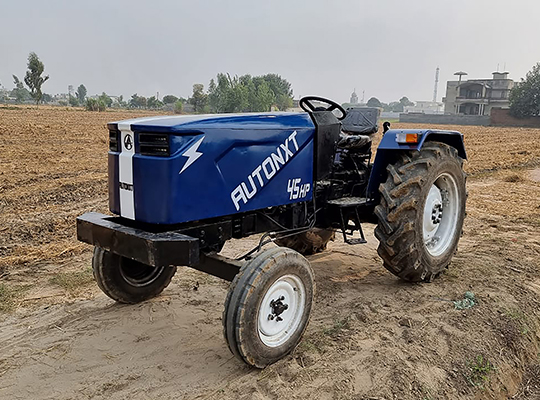
The author is the Founder & CEO of AutoNxt Automation (www.autonxt.in ), India’s First electric tractor venture which has built high torque electric powertrain and off-road automation technology.