



Mumbai – According to a new report released today by Zurich Kotak General Insurance and Zurich Resilience Solutions, the risk advisory division of Zurich Insurance, a targeted upfront investment of just 2% of capital expenditure (CapEx) in climate resilience measures across India’s planned renewable energy pipeline could cut potential climate-related losses by half, from USD 55 billion to USD 27 billion, an estimated saving of USD 28 billion, equating to a 6x return on investment.
The findings point to a significant opportunity for policymakers, investors, developers, lenders and insurers to protect the renewable energy build-out as climate hazards intensify. India became the world’s third-largest renewable energy capacity holder in 2026, with installed non-fossil capacity reaching 283.5 GW by March. Renewable generation is expanding at around 11% annually, keeping India on track towards its national 2030 target of 500 GW from non-fossil sources.
The study draws on data from 871 planned renewable energy generation sites, accounting for 90% of India’s renewable energy capacity. These are spread across 10 states and union territories – Andhra Pradesh, Arunachal Pradesh, Gujarat, Karnataka, Ladakh, Madhya Pradesh, Maharashtra, Rajasthan, Uttar Pradesh and Uttarakhand.
The commercial case for early action is compelling. By embedding resilience into planning, financing, design and construction, asset owners can reduce avoidable losses, improve insurability and bankability, and strengthen the long-term reliability of clean power generation that will be critical to economic growth, industrial development and energy security. The report finds that nearly 90% of the planned renewable energy generation capacity across India is likely to face high or critical risk exposure, i.e. a ~15% to 30% chance of experiencing a major climate event, by 2030. This underscores both the scale of exposure and urgency of resilience focused investment.
Ajey Hegde, Head – Commercial Insurance, Zurich Kotak General Insurance said, “The renewable energy transition will require climate finance at significant scale, and that capital must be directed towards infrastructure that can withstand climate risks. Building resilience in from the start can help protect investment value, improve insurability and reduce future losses, while giving public and private capital greater confidence to invest.”
The report sets out five practical actions to help governments, investors, developers and operators move from risk identification to resilience investment:
- Make climate risk screening mandatory at planning and permitting: Forward-looking climate screening should become a standard requirement for site selection, project approval and permitting. Historical baselines are no longer sufficient for assets expected to operate into the 2050s and beyond. Early screening also allows resilience measures to be introduced when costs are lower and design flexibility is greatest.
- Stress-test the highest-risk assets first: With 66% of assessed renewable energy capacity projected to sit in Categories 4 and 5 by 2030, Zurich recommends prioritising the most exposed projects for multi-hazard stress-testing. This can help quantify potential losses, identify the main risk factors and create a roadmap for stronger protection.
- Build hazard-specific resilience into procurement: Long-term resilience is often determined before an asset is built. Zurich recommends embedding requirements such as wind loading, hail resistance, flood elevation, drainage, fire protection, corrosion resistance and redundancy into design and procurement standards, rather than treating them as optional upgrades.
- Treat system resilience as part of asset resilience: Renewable energy assets depend on the wider network around them, including grid infrastructure, interconnection, access roads, water systems, communications and emergency response. Zurich recommends extending resilience planning beyond the project boundary to support faster recovery after severe climate events.
- Use resilience quantification to unlock capital: Resilience can be translated into financial terms. By showing how upfront design investment can reduce value at risk, improve insurability and strengthen bankability, asset owners and developers can create a stronger basis for engagement with lenders, insurers and investors.
The scale of exposure underlines the need for action
Zurich’s analysis shows that while resilience investment can materially reduce future losses, the scale of exposure across the renewable energy pipeline is significant.
- USD 55 billion in renewable assets is exposed: Zurich’s analysis estimates that approximately USD 55 billion in renewable energy infrastructure across India could be at risk without effective resilience measures.
- Exposure is widespread and intensifying: By 2030, 66% of the county’s pipeline generation capacity is projected to sit in the top two risk bands, Category 4 and 5.
- Four hazards that pose greatest material risk: Tornado, wildfire, flood and hail rank among the most material hazards across the assessed portfolio, each linked directly to loss drivers such as civil works damage, substation failure, module degradation, mounting system damage and prolonged operational disruption.
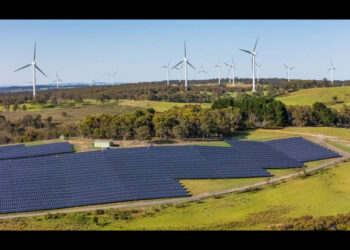
- Solar carries the most pronounced near-term exposure: Solar accounts for 593 of the 871 assessed sites and 182,286 MW of planned capacity, representing nearly 70% of total assessed capacity.
- Hydropower carries disproportionate financial exposure: Although hydropower accounts for only 48 assessed sites, it contributes 40,188 MW of planned capacity. However, due to the significant costs involved in constructing the necessary civil infrastructure, it poses a high financial risk.
Resilience must be built in from the start
Zurich’s analysis shows that resilience measures are most effective when embedded during the design and construction phase, when engineering flexibility is greatest and costs are lower. Beyond reducing physical damage, resilient assets are also easier to insure, easier to finance and better positioned to deliver reliable long-term performance.
Mark Fletcher, Head of Zurich Resilience Solutions, Asia Pacific, Zurich Insurance said: “India’s renewable energy pipeline is expanding at a pace and scale that few markets can match. Through our work with clients throughout the region on climate resilience and adaptation, we see that when climate resilience is built into projects early, while site selection, engineering and planning decisions are still flexible, there is the opportunity to materially reduce potential losses for a relatively modest upfront investment. This in-turn drives insurability and bankability, improving confidence for insurers, lenders and investors.”
As the clean energy build-out accelerates, resilience must become a core part of how renewable energy projects are planned, financed, insured and operated. The quality of project development will matter as much as the quantity of capacity installed. Embedding resilience from the start will be critical to protecting asset values, maintaining insurability and ensuring the energy transition delivers reliable power and durable long-term returns.