

For more than three decades, lithium-ion batteries have been at the centre of the modern energy revolution. They power smartphones and laptops, electric vehicles, data centres and increasingly, the storage systems that help balance renewable electricity grids.
Sodium-ion batteries are emerging as one of the most closely watched alternatives to lithium-ion technology. Their proposition is relatively simple: replace lithium ions with sodium ions while retaining the basic architecture and rechargeable nature of a conventional battery. Sodium is abundant, widely distributed and available from common sources such as salt deposits and seawater. This gives sodium-ion technology the potential to reduce exposure to lithium supply chains and provide another pathway for scaling energy storage.
The technology is not expected to replace lithium-ion batteries across the board. Instead, the emerging opportunity is more nuanced: sodium-ion batteries could become an important second pillar of the battery economy, particularly in stationary storage, renewable-energy integration, selected electric vehicles and applications where cost, safety, supply security and low-temperature performance matter more than maximum energy density.
Why Look Beyond Lithium?
Lithium-ion batteries became dominant because they offer an unusually strong combination of energy density, efficiency, cycle life and declining manufacturing costs. However, their rapid expansion has also exposed vulnerabilities in the supply chain.
Lithium resources are not evenly distributed geographically, while battery manufacturing and processing capacity is heavily concentrated in a relatively small number of countries. Battery demand is simultaneously rising as electric vehicles, renewable energy and grid storage expand.
The International Energy Agency has identified sodium-ion technology as an emerging alternative. In its analysis, sodium-ion batteries could become particularly relevant to stationary storage because they use less expensive materials and do not require lithium. Under the IEA’s net-zero scenario, sodium-ion batteries could account for less than 10% of EV batteries by 2030 but a growing share of batteries used for energy storage.
The attraction is therefore not simply about replacing one mineral with another. It is about creating a more diversified battery ecosystem.
Sodium Is Abundant But That Does Not Mean Batteries Are Automatically Cheap
Sodium is the sixth most abundant element in Earth’s crust and is readily available through salt deposits and other widely distributed sources. Unlike lithium, it does not depend on a comparatively narrow group of mining and refining supply chains.
That abundance creates a potentially important cost advantage.
However, the economics of a battery are determined by much more than the price of its primary element. Cathode materials, anodes, electrolytes, separators, manufacturing equipment, energy consumption, quality control and supply-chain maturity all influence the final cost.
Sodium-ion batteries therefore should not be described as automatically cheaper than lithium-ion batteries in every market. The IEA notes that their cost advantage depends partly on lithium prices and manufacturing scale. It also identifies supply-chain bottlenecks for specialised sodium-ion cathode and anode materials as a potential constraint on near-term expansion.
The economic case becomes stronger when sodium-ion manufacturing reaches sufficient scale and when the system-level advantages of the chemistry are included.
How Sodium-Ion Batteries Work
At a fundamental level, sodium-ion batteries operate on principles similar to lithium-ion batteries.
During charging and discharging, ions move between the cathode and anode through an electrolyte, while electrons travel through the external circuit. The major difference is that sodium ions, rather than lithium ions, carry the charge.
Researchers are exploring several cathode families, including layered transition-metal oxides, polyanionic compounds and Prussian blue analogues. Hard carbon is among the leading candidates for sodium-ion anodes.
This similarity with lithium-ion technology is important because it means existing battery-manufacturing knowledge can, in some cases, be adapted rather than building an entirely new industrial ecosystem from scratch.
At the same time, sodium ions are larger than lithium ions. That difference creates materials and engineering challenges, particularly around energy density, electrode stability and cycle performance. Recent research has made substantial progress, but scientists continue to work on improving the chemistry’s overall performance.
The Energy-Density Challenge
The biggest limitation of sodium-ion batteries remains energy density.
Energy density determines how much energy can be stored for a given weight or volume. It is particularly important in electric vehicles, aviation and portable electronics, where every kilogram and cubic centimetre matters.
The IEA reported in 2026 that the latest sodium-ion cells can reach around 175 Wh/kg, compared with up to approximately 205 Wh/kg for LFP batteries and 255 Wh/kg for lithium nickel-manganese-cobalt oxide batteries.
That gap is significant.
For an electric car, lower energy density can mean either a heavier battery for the same range or a shorter driving range for a battery of similar weight. Consequently, lithium-ion technologies are likely to retain an important role in applications where maximum range and compactness are priorities.
A grid-scale battery does not need to move. It can occupy a dedicated site, where land, containerisation, cooling and system integration can be optimised around cost and safety. This makes energy density less critical and opens a much larger opportunity for sodium-ion technology.
A Strong Case for Renewable Energy Storage
The growth of solar and wind power creates an inherent challenge: electricity generation does not always coincide with electricity demand.
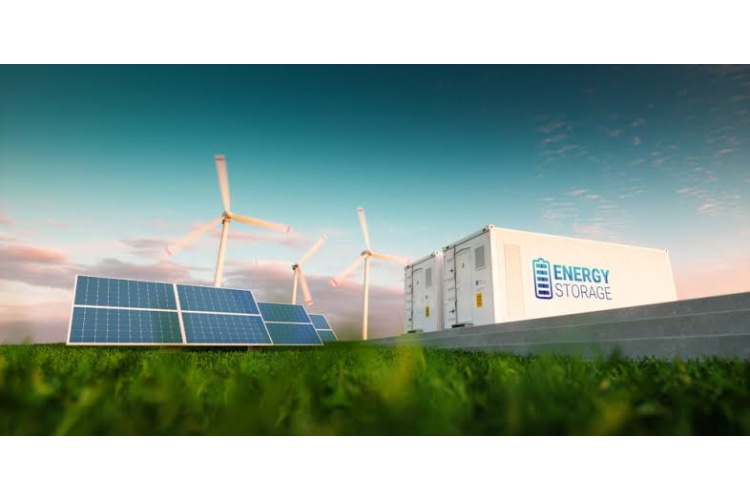
Solar generation peaks during daylight hours, while electricity demand can remain high after sunset. Wind generation can fluctuate according to weather conditions. Energy storage provides a bridge between generation and consumption.
A lower-cost, resource-diversified battery chemistry could support large-scale storage systems that absorb surplus renewable electricity and release it when demand rises.
The IEA expects sodium-ion batteries to gain a growing role in energy storage even while lithium-ion remains dominant in electric vehicles.
In June 2026, CATL unveiled its TENER Sodium Energy Storage System, describing it as a field-validated sodium-ion battery energy-storage solution. The company said it expected cumulative shipments of the system to reach 1 GWh by the end of 2026, with international deliveries scheduled to begin in June 2027. CATL also announced a 60 GWh sodium-ion commercial contract with HyperStrong earlier in 2026.
These developments are significant because they move sodium-ion technology beyond the laboratory and pilot-project stage toward industrial-scale deployment.
Cold Weather Could Become a Major Advantage
One of sodium-ion technology’s most interesting advantages is performance at low temperatures.
Conventional lithium-ion batteries can experience substantial performance losses in very cold conditions. Sodium-ion chemistry has demonstrated stronger low-temperature performance.
The IEA reports that the latest sodium-ion batteries can retain around 90% of nominal capacity at temperatures as low as -40°C and can operate at temperatures as high as 70°C.
This could be particularly useful for electric mobility and energy storage in colder regions.
CATL has also stated that its Naxtra sodium-ion battery can retain 90% usable power at -40°C.
For markets where winter temperatures significantly affect vehicle range and battery performance, this characteristic could provide sodium-ion technology with a distinctive advantage.
Safety and Supply-Chain Resilience
Safety is another important consideration.
Battery safety depends on the complete cell chemistry, pack design, thermal-management system, battery-management software and operating conditions. It would therefore be misleading to treat sodium-ion batteries as inherently risk-free.
Nevertheless, researchers have identified safety and thermal-performance advantages associated with several sodium-ion chemistries. Recent reviews describe abundance, cost, safety and potentially improved low-temperature operation among the technology’s important advantages.
The supply-chain argument may ultimately be even more important.
Sodium-ion batteries eliminate lithium from the cell, and some sodium-ion designs can also avoid graphite. But sodium-ion does not eliminate dependence on every critical mineral. The IEA notes that some commercial sodium-ion chemistries still use materials such as nickel and manganese, whose processing remains geographically concentrated.
The lesson is important: sodium-ion can diversify battery supply chains, but it is not a magic solution to mineral dependence.
From Laboratory Science to Commercial Manufacturing
One of the biggest developments in sodium-ion technology is the transition from research to mass production.
CATL announced in April 2025 that its Naxtra product had entered mass production, calling it the world’s first mass-produced sodium-ion battery. The company has positioned the technology for electric vehicles as well as heavy-duty applications.
By 2026, the focus had expanded to large-scale energy storage.
CATL said it was adding 40 GWh of annual sodium-ion production capacity at its Fuding base and had planned 160 GWh of sodium-ion production capacity at its Jining base.
Such announcements matter because battery economics are heavily influenced by manufacturing scale. A promising chemistry can remain commercially irrelevant if it cannot be produced consistently and economically at very large volumes.
The next phase of the sodium-ion story will therefore depend not only on better cells but also on factories, suppliers, recycling systems, quality standards and bankable projects.
What It Could Mean for India
For India, sodium-ion technology has strategic relevance.
India is rapidly expanding renewable energy, electric mobility and grid infrastructure. At the same time, it remains dependent on imported battery materials and components.
A battery chemistry based on more abundant raw materials could potentially support greater diversification of the domestic energy-storage ecosystem.
Stationary storage may be one of the most relevant early markets. India’s growing solar capacity creates a need for affordable storage that can shift electricity from periods of high renewable generation to periods of peak demand.
Sodium-ion could also find applications in electric two-wheelers, three-wheelers, commercial vehicles and other mobility segments where cost and operating conditions may matter more than maximum range.
But India will need more than imported sodium-ion cells. The larger opportunity lies in developing domestic capabilities across materials, cell manufacturing, battery-management systems, pack assembly, testing and recycling.
That could create a new industrial value chain rather than simply another battery-import category.
The Recycling Question
Every successful battery chemistry eventually creates another challenge: what happens when the batteries reach the end of their useful lives?
Sodium-ion batteries could have environmental and resource advantages because they reduce dependence on lithium and, depending on the chemistry, other costly materials. However, recycling economics are still developing.
A 2024 review in the Chemical Engineering Journal highlighted recycling as one of the areas requiring further development, noting that the economic and environmental assessment of spent sodium-ion batteries remains less mature than for lithium-ion systems.
This creates an opportunity for policymakers and industry to design recycling systems alongside manufacturing capacity rather than treating recycling as an afterthought.
The long-term goal should be a circular battery economy in which valuable materials are recovered, reused and returned to manufacturing.
Lithium and Sodium: Competitors or Partners?
The future may not be a simple contest between lithium and sodium.
Lithium-ion batteries have decades of commercial experience, a massive global manufacturing base and strong energy-density advantages. They are likely to remain central to electric vehicles and many other applications.
Sodium-ion, meanwhile, can occupy areas where its specific strengths matter more: stationary storage, cold climates, cost-sensitive mobility and applications where supply-chain diversification is strategically important.
This suggests a future in which multiple battery chemistries coexist.
Just as the energy system itself is becoming more diversified—with solar, wind, nuclear, gas and other sources serving different roles—the battery industry may also become multi-chemistry.
The question is no longer whether sodium-ion batteries can completely replace lithium-ion technology. The more relevant question is where sodium-ion delivers the greatest system-level value.
Conclusion: The Beginning of a Multi-Chemistry Battery Era
The battery industry’s next chapter will not necessarily be defined by a single winning chemistry.
Lithium-ion has established the foundation of the modern electrification economy, but growing demand for electric mobility, renewable power and grid storage is creating room for alternatives. Sodium-ion batteries offer an attractive combination of abundant raw materials, potential cost advantages, supply-chain diversification, safety characteristics and strong low-temperature performance.
They also face real limitations, particularly lower energy density, an evolving supply chain, manufacturing scale-up challenges and the need to establish economically viable recycling systems.
The technology should therefore be viewed neither as a miracle replacement for lithium nor as a laboratory curiosity. It is becoming a credible component of the global energy-storage landscape.
The most important development may ultimately be the move toward a multi-chemistry battery economy – one where lithium-ion, sodium-ion and other emerging technologies are matched to the applications they serve most efficiently.
As the world moves toward an increasingly electrified energy system, the winning strategy may not be finding one battery to power everything. It may be building a portfolio of technologies capable of making energy more affordable, resilient, scalable and accessible.