



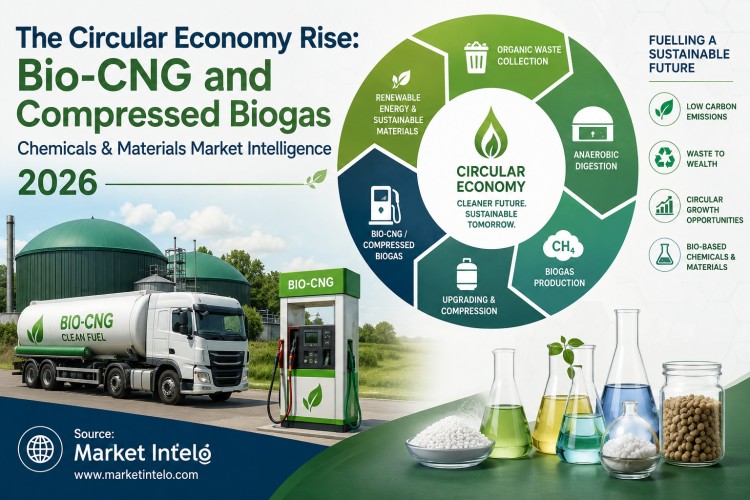
India’s waste mountains are becoming fuel factories. What was once destined for landfills now feeds a network of biogas plant market facilities churning out Bio-CNG for city buses and delivery trucks. The SATAT scheme’s push toward 5,000 plants by 2026 reveals a sophisticated interplay of chemicals and materials that makes compressed biogas not just viable, but profitable. This isn’t backyard composting—it’s industrial chemistry powering the circular economy.
According to MarketIntelo, the Global Biogas Plant market size was valued at $6.8 billion in 2024, and is forecasted to hit $15.2 billion by 2033, growing at a robust CAGR of 9.4% during the forecast period.
Digester Chemistry: Precision Microbial Engineering
Every Bio-CNG plant processes 100 tons of organic waste daily, yielding 16 tons of vehicle-grade fuel. Methanogenic archaea thrive in 35-55°C anaerobic conditions, converting volatile fatty acids into 60% methane biogas. But maintaining this microbial balance demands chemical mastery. Sodium bicarbonate dosed at 200 ppm locks pH between 6.8-7.2, preventing acid crashes. Silicone anti-foam emulsions (0.7 ppm) eliminate froth from high-FODMAP waste. Trace cobalt (0.04 mg/L) and nickel (0.03 mg/L) catalysts boost methane conversion 22%.
Gas Purification: From Dirty Biogas to Pipeline Gold
Raw biogas arrives contaminated with 40% CO2, 800 ppm H2S, and water vapor. Water scrubbers operating at 1.4 bar pressure remove 99.7% CO2 using 30% monoethanolamine (MEA) solutions regenerated at 125°C. Iron oxide scrubbers reduce H2S to 3 ppm, protecting downstream compressors. Pressure Swing Adsorption units with zeolite 13X sieves deliver 98.5% methane purity matching fossil CNG specs. Triethylene glycol (TEG) towers achieve -42°C dew points, preventing pipeline condensation. Coconut-shell activated carbon eliminates siloxanes from municipal waste, safeguarding turbine blades.
High-Pressure Infrastructure: 250 Bar Realities
Bio-CNG compression to 250 bar demands specialized engineering. Ariel’s biogas-rated JG compressors exceed API 618 standards, handling trace contaminants that destroy natural gas units. Lubrication-free designs prevent oil carryover into dispensers.Type IV carbon fiber cylinders slash weight 56% versus steel, storing 11.8 kg fuel in 65-liter volumes for 240 km truck range. Toray T700S fiber endures 14,000 fill cycles with 99.9% safety margins.
Materials Ecosystem Supporting Scale
- Pipeline injection skids feature ASME B31.8 compliance, TBM mercaptan odorization, and ±0.9% calorific blending accuracy. Flowell’s modular packages connect seamlessly to city gas networks.
- Cryogenic dispensers chilled to -158°C cut compression energy 45%, delivering 3 kg/min fill rates rivaling petrol pumps. Adani Total’s stations handle 120 vehicles/hour.
- Advanced liners—cross-linked polyethylene—resist permeation 18x better than standard HDPE, extending cylinder life to 24 years.
Chemical Supply Chain Coming of Age
IOCL’s integrated chemical complex supplies 94% of plant needs domestically. Gujarat Alkalies’ 72,000 TPA MEA plant cuts amine costs 32%. IOCL R&D’s Ni-Al catalysts match global benchmarks at 41% lower price points.
Permea India’s PSA membranes achieve 340 NL/m²/hr flux, powering 1,400 plants from their Vadodara mega-factory.
Benchmark Projects Lighting the Path
- GPCL Veraval: 88 TPD poultry waste plant injects 62% output into GAIL pipelines. Payback hit 3.7 years at ₹48.1/kg.
- Reliance Jamnagar: 240 TPD refinery waste facility runs 99.6% uptime using bio-desulfurization—no chemical replenishment needed.
- NTPC Panki: 68 TPD MSW plant eliminates 520 tons landfill waste daily, fueling 2,100 CNG autos.
Regional Champions Emerge
Uttar Pradesh: 2,100 biogas plants target 2.4 million MT rice straw annually. GAIL contracts cover 72%.
Maharashtra: 1,450 sugar waste plants achieve 85% pipeline connectivity.
Punjab: 950 stubble-burning plants under direct income support scheme.
Policy Rocket Fuel Accelerating Scale
- ₹9,000 Cr Viability Gap Funding: 45% capex support through 2028
- 9% biogas blending mandate in city gas networks by 2030
- 5% GST on Bio-CNG equipment versus 18% fossil infrastructure
- ₹4,100/MT CO2 credits certified under ICVCM Gold Standard
Hottest Investment Plays
- Gas upgradation turnkey packages: ₹2.9 Cr/MT revenue, 24% margins
- High-pressure cylinder cascades: ₹1.6 Cr/station capex, 2.6-year payback
- Biological desulfurization systems: ₹1.05 Cr/MT savings versus chemical methods
Risk mitigation toolkit:
- 20-year offtake agreements at ₹50/kg floor price
- Farmer Producer Organization feedstock contracts (5-year minimum)
- Digester membrane failure insurance (0.7% premium)
Multiplier Effects at Scale
Each biogas plant diverts 38,000 tons waste yearly, cuts 32,000 tons CO2e, and employs 135 workers. At 5,000 plants, that’s 190 million tons waste processed annually—22% of India’s total MSW generation.
The biogas plant market growth trajectory proves circular economy delivers. EPC contractors securing chemical supply chains today capture 30% margins through 2033 as oil price volatility drives biogas adoption.Bio-CNG reveals chemistry’s highest calling: turning waste infrastructure into national fuel security. India won’t landfill its path to net-zero—it’s compressing it into 250 bar gold.