



India’s solar revolution is no longer confined to sun-lit rooftops. With innovative metering policies like Virtual Net Metering (VNM) and Group Net Metering (GNM), solar energy is being made accessible to a broader array of consumers, tenants, apartment dwellers, rural households, small businesses, and industries who traditionally lacked suitable rooftop space. By pairing policy reform with technology and community-centric models, India is reshaping how citizens can benefit from clean energy and participate in the country’s renewable energy transition.
The Solar Opportunity — and Its Limits
India has made remarkable progress in solar deployment. The nation crossed 100 GW of cumulative solar capacity in early 2025, marking a key milestone toward its target of 500 GW of non-fossil energy by 2030. However, rooftop solar historically driven by net metering incentives accounts for a modest share of this total, largely confined to households and commercial consumers with available roof space.
Traditional net metering allows rooftop solar owners to export excess generation to the grid and receive credits against their electricity bills, significantly reducing energy costs. Yet nearly half of Indian consumers especially renters, society members, and rural households lack viable rooftops, limiting the reach of rooftop solar solutions. New metering policies are now changing that.
Virtual & Group Net Metering: Solar for All
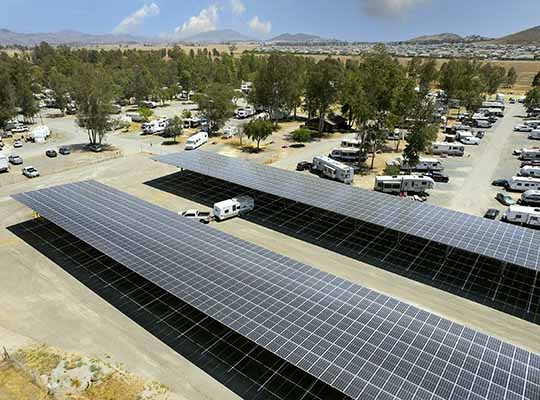
States like Rajasthan and Telangana have pioneered new guidelines for VNM and GNM to extend solar benefits beyond individual rooftops. Under Virtual Net Metering, the solar power generated at one location for example, a community solar installation can be credited to multiple consumers within the same distribution company area. Group Net Metering, on the other hand, allows different consumers to share the benefits of a centrally installed solar system and distribute energy credits based on agreed proportions. These models enable a single solar array to serve tenants, housing societies, offices, SMEs, and industries who lack direct rooftop access.
Rajasthan’s Electricity Regulatory Commission, for instance, has streamlined approvals for solar installations up to 10 kW for domestic users and mandated clear timelines for larger systems. Under these rules, solar systems can be installed on roofs, balconies, vacant land, public land, or even water bodies, and domestic consumers are exempt from wheeling, banking, and cross-subsidy charges, improving the economics of shared solar projects.
Telangana’s 2025 rooftop solar reforms also introduced four distinct metering models net, gross, virtual, and group allowing residential and government customers to install systems equal to 100 % of their sanctioned load and offering detailed credit allocation procedures for shared installations.
Democratizing Access Across Communities
These reforms are crucial for accelerating solar adoption in urban and semi-urban areas. For example, VNM makes it feasible for apartment buildings or office parks to host a shared solar array and distribute credits to individual units, effectively enabling “community solar.” This not only democratizes access but also encourages collective investment in renewable energy infrastructure.
Early results reflect growing interest: in Delhi alone, rooftop and shared metering initiatives contributed over 228 MW of solar to the grid by late 2025, supported by additional subsidies and increasing consumer participation.
Policy and Technology Working Together
Beyond metering reforms, policy and technology are converging to improve consumer experience and grid integration. The Ministry of New and Renewable Energy (MNRE) is advocating for Machine-to-Machine (M2M) SIM-based remote monitoring systems to streamline solar generation reporting and reduce bureaucratic hurdles associated with separate generation meters. This harmonization between regulatory frameworks and IoT-enabled tools can simplify participation for solar prosumers and empower grid operators with better generation visibility.
Overcoming Barriers to Widespread Adoption
Despite progress, challenges remain. Some states and utilities are still adapting regulations for shared metering, and long-term financing or credit structures for community solar projects need scaling. Moreover, policy notifications continue to evolve such as recent clarifications that ground-mounted solar under certain incentive schemes may require rooftop installation compliance under specific models underscoring the need for ongoing policy alignment.
The Broader Impact
By democratizing solar access, metering reforms are amplifying India’s drive toward energy decentralization. They empower consumers to become prosumers not merely energy consumers but active contributors to clean energy generation. This can improve energy equity, reduce dependence on fossil fuels, and accelerate India’s progress toward net-zero emissions.
As VNM, GNM, and other innovative metering frameworks scale up, the benefits of India’s solar revolution will extend far beyond those with traditional rooftop access. This not only opens the door for more households and businesses to participate in the clean energy economy but also fosters inclusive, community-driven energy solutions lighting the way for a more resilient and sustainable energy future.