

Urja Daily
No Result
View All Result
  • News
  • Renewable
    • Solar
    • Rooftop
    • Floating Solar
    • Module
    • Wind
    • Hydrogen
    • Biomass
    • Tenders
    • Sustainibility
  • Storage
  • E-Mobility
  • Battery
  • Smart City
  • Power
    • Smart Grid
    • Microgrid
    • Off-Grid
  • Editor’s Pick
    • Articles
    • In Talks
    • E-MAG
    • Market Research
  • On-demand Webinars
  • More
    • Events
    • Contact Us
    • Subscribe
  • News
  • Renewable
    • Solar
    • Rooftop
    • Floating Solar
    • Module
    • Wind
    • Hydrogen
    • Biomass
    • Tenders
    • Sustainibility
  • Storage
  • E-Mobility
  • Battery
  • Smart City
  • Power
    • Smart Grid
    • Microgrid
    • Off-Grid
  • Editor’s Pick
    • Articles
    • In Talks
    • E-MAG
    • Market Research
  • On-demand Webinars
  • More
    • Events
    • Contact Us
    • Subscribe
No Result
View All Result
Urja Daily
No Result
View All Result
Home Editor's Pick Articles

What is Green Hydrogen and How It Can Help in Cost Reduction?

Urja Daily by Urja Daily
October 13, 2022
in Articles
Reading Time: 4 mins read
0
Green Hydrogen
Share on FacebookShare on TwitterShare on Linkedin

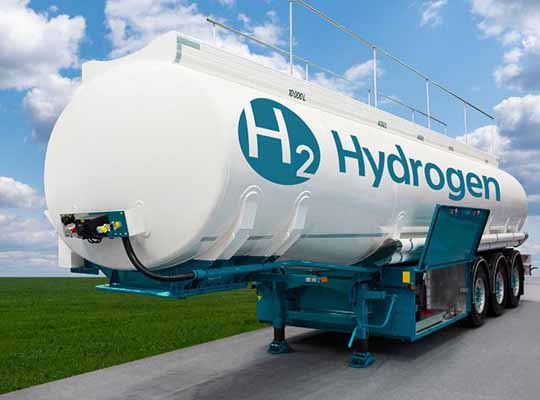
Green hydrogen is a form of hydrogen created using electrolysis to generate energy from renewable sources. This technique uses electrical current to remove hydrogen from oxygen in the water.

It is by far the most significant chemical element found in the world. As reported by the IEA, the global demand for hydrogen to fuel has trebled since 1975 and reached 70 million tonnes in 2018. Additionally, green hydrogen is a renewable energy source that releases only water vapor and leaves no trace in the air, unlike oil and coal.

RELATED POSTS

Comau HyperFlex: Robotics Accelerates the Energy Transition

New Career Engine of Electronics: Robotics, Automation and Mechatronics

The Advantages of Using Green Hydrogen as a Fuel

  • It’s a clean energy source: its only waste is water.
  • It is a renewable source of energy. It is made up of natural resources that aren’t over-exploited.
  • It can be stored: Green hydrogen can be stored and compressed in tanks that are ad-hoc for an extended period.
  • It can be transported: Since it’s a lightweight element, hydrogen tanks that are compressed permit easier handling than lithium batteries since they weigh less and, therefore, are easier to transport. 

But the question is, why is green hydrogen so expensive?

The production price is excessive because the scaling-up process of electrolysis cells can be costly. Other options are gasification, which is a process that involves the combustion of coal, or the operation of steam methane reformation (SMR). However, carbon and other greenhouse gases are released by the methods of hydrogen extraction. These are referred to as brown, grey and blue hydrogen. This makes these methods unsustainable.

Green hydrogen is about three times more expensive than fossil-based hydrogen using carbon storage and capture (CCS). The main cost driver is the electricity used to break the water into hydrogen and oxygen. However, the low cost of electricity is not enough to ensure competitive green hydrogen production. Reduced investment costs of the electrolysis plant are also required for green hydrogen to compete with fossil fuel-based alternative sources of carbon-free energy.

What can we do to reduce the price of green hydrogen?

Green hydrogen is a great way to attain net-zero CO2 (CO 2) emissions in energy-intensive, hard-to-decarbonize industries like chemicals, long-haul steel transport, and aviation. However, the production cost needs to be reduced to be affordable for all countries. Green hydrogen is currently priced about two to three times the price of “blue” hydrogen, which is made using fossil fuels and carbon storage and capture (CCS).

Methods to cut down on the cost of Green Hydrogen

  • Electronically-powered design and building: The increased size of the module and the development of new technologies with the increase in stack production have significant effects on the cost. The expansion of the plant from 1MW (typical for 2020) to 20MW could lower costs by nearly three-quarters. Designing optimal systems can increase effectiveness and flexibility.
  • Economies of scale: increasing production of stacks using automated processes at gigawatt-scale manufacturing facilities will result in a significant cost reduction.
  • Flexibility and efficiency in operation: The power supply is subject to substantial losses when operating at low loads, which limits the system’s flexibility from an economic standpoint.
  • Applications for industrial use: The operation and design of electrolysis machines could be optimized for specific services in various industries.
  • Climate mitigation that is ambitious A bold energy transition, in line with international climate goals, could result in a rapid reduction in the cost of green hydrogen.

The Big Question: How It Can Help In Cost Reduction?

Hydrogen can decarbonize 25% of energy consumption around the globe, and it will be the most cost-effective method of energy source.

The most critical factors in how green hydrogen can help:

Green hydrogen is predicted to reduce the price of existing grey hydrogen sources by 2026. Numerous innovations have been anticipated in the market over the years, driven by a surge in investment from investors and the government’s policies.

Furthermore, as per the study, green hydrogen could substitute gas and oil and create a new environment for geopolitics and clean commodity trading. The green hydrogen industry will create new opportunities for emerging economies to leverage to ensure their energy supply and boost economic growth.

In conjunction with low-cost renewable PPAs (power purchase agreements) and an efficient use of renewable energy across a variety of markets, the possibility of green electrolysis-based, competitive hydrogen begins to increase.

Conclusion

In total, by 2030, the total cost of green hydrogen is expected to sit at $1.54 per kilogram. Within two years, the green hydrogen generated by electrolyzers could take on the costs of current grey hydrogen sources, slowly cutting down the cost of hydrogen, which will also be cleaner than other types.


Tags: ElectrolysisEnergyGreen Hydrogen
ShareTweetShare
Urja Daily

Urja Daily

Related Posts

Comau HyperFlex

Comau HyperFlex: Robotics Accelerates the Energy Transition

by Palak
July 20, 2026
0

Comau's robotic automation is accelerating the energy transition, as highlighted by the selection of its HyperFlex solution as a case...

Mr. Madhvendra Singh, CEO, ESSCI

New Career Engine of Electronics: Robotics, Automation and Mechatronics

by Palak
July 20, 2026
0

India stands at a pivotal crossroads in its industrial journey. As the global supply chain seeks resilience and diversification, the...

Pankaj Goyal, Co-Founder & COO of AutoNxt Automation

The Economics of Electrification: Are EV Tractors a Better Long-Term Investment Than Diesel Machines?

by Palak
July 18, 2026
0

India's agricultural sector is entering a new phase of mechanization, where sustainability is becoming as important as productivity. For decades,...

Tarun-Jami

Building the Net-Zero Future: Why Low-Carbon Materials Are Redefining Construction

by Palak
July 18, 2026
0

The construction industry is undergoing one of the biggest transformations in its history. As countries race to meet climate commitments...

Nagesh Basvanhalli

The next phase of EV evolution in India

by Palak
June 29, 2026
0

India has largely answered one important question: can electric vehicles scale in a price-sensitive and highly competitive mobility market? The...

Next Post
UL Solutions BAE USA Battery

UL Announced First Certification of Lead-Acid Battery Energy Storage System

Ascend Performance Materials 2023

New materials create safer, quieter EVs

Leave a Reply Cancel reply

Your email address will not be published. Required fields are marked *

RECOMMENDED

Crealights

Crealights Locks In Forward Supply of 10 Million DSP Chips, Fortifying AI Optical Interconnect Leadership

August 3, 2026
278 MW solar PV module supply order

Bluebird Solar Wins 278 MW PV Module Supply Contract from Bridge & Roof Company Ltd. for SJVN Renewable Energy Projects

August 3, 2026

MOST VIEWED

  • Solar

    When the Sun Began Paying the Electricity Bills: The Story of PM Surya Ghar Muft Bijli Yojana

    0 shares
    Share 0 Tweet 0
  • India’s Emerging Polysilicon Manufacturing Ecosystem: Opportunities and Challenges

    0 shares
    Share 0 Tweet 0
  • KP Group & PP Savani University Launches Urjanoor Scholarship

    0 shares
    Share 0 Tweet 0
  • StarlinePS Enterprises Invests ₹160 Crore in Celloraa Energy

    0 shares
    Share 0 Tweet 0
  • Business Delegation Signs 66 MoUs During Central Asia Visit to Boost Multi-Sector Collaboration

    0 shares
    Share 0 Tweet 0

Crealights Locks In Forward Supply of 10 Million DSP Chips, Fortifying AI Optical Interconnect Leadership

Bluebird Solar Wins 278 MW PV Module Supply Contract from Bridge & Roof Company Ltd. for SJVN Renewable Energy Projects

ASDC Announces Leadership Transition; Prasanna Pahade Appointed New CEO

Ather Energy Reports 87.2% Revenue Growth, Strong EBITDA Improvement

PVV Infra secures land mark sites from NHLML for developing wayside amenities

Pace Digitek Signs EPC Contract for 250 MW BESS Project with NLC India

Latest Magazine

© 2016 – 2025 TechZone Print Media | All Rights Reserved

  • About Us
  • Contact Us
No Result
View All Result
  • News
  • Renewable
    • Solar
    • Rooftop
    • Floating Solar
    • Module
    • Wind
    • Hydrogen
    • Biomass
    • Tenders
    • Sustainibility
  • Storage
  • E-Mobility
  • Battery
  • Smart City
  • Power
    • Smart Grid
    • Microgrid
    • Off-Grid
  • Editor’s Pick
    • Articles
    • In Talks
    • E-MAG
    • Market Research
  • On-demand Webinars
  • More
    • Events
    • Contact Us
    • Subscribe

© 2016 - 2025 TechZone Print Media | All Rights Reserved