

Urja Daily
No Result
View All Result
  • News
  • Renewable
    • Solar
    • Rooftop
    • Floating Solar
    • Module
    • Wind
    • Hydrogen
    • Biomass
    • Tenders
    • Sustainibility
  • Storage
  • E-Mobility
  • Battery
  • Smart City
  • Power
    • Smart Grid
    • Microgrid
    • Off-Grid
  • Editor’s Pick
    • Articles
    • In Talks
    • E-MAG
    • Market Research
  • On-demand Webinars
  • More
    • Events
    • Contact Us
    • Subscribe
  • News
  • Renewable
    • Solar
    • Rooftop
    • Floating Solar
    • Module
    • Wind
    • Hydrogen
    • Biomass
    • Tenders
    • Sustainibility
  • Storage
  • E-Mobility
  • Battery
  • Smart City
  • Power
    • Smart Grid
    • Microgrid
    • Off-Grid
  • Editor’s Pick
    • Articles
    • In Talks
    • E-MAG
    • Market Research
  • On-demand Webinars
  • More
    • Events
    • Contact Us
    • Subscribe
No Result
View All Result
Urja Daily
No Result
View All Result
Home News

Fight Corrosion from the Inside Out: Steel Floats and Offshore Caissons

Urja Daily by Urja Daily
October 24, 2024
in News
Reading Time: 2 mins read
0
Fight Corrosion
Share on FacebookShare on TwitterShare on Linkedin

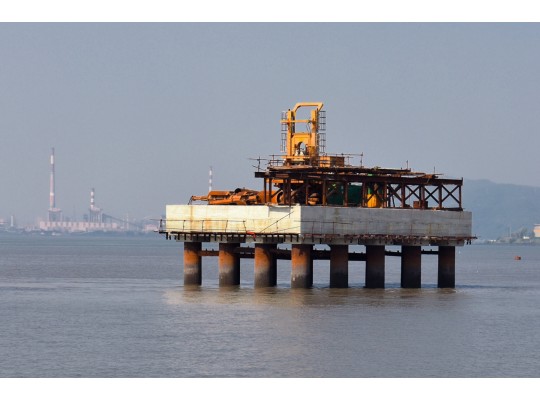
Floating docks, pontoon structures, pilings, and offshore platform caisson legs are a normal part of the marine environment. Corrosion inside these tubular voids or steel floats is a natural, yet insidious, response to these often damp, sometimes high-chloride conditions. As such, floating structures and caisson legs are at high risk for rusting from the inside out, while at the same time being difficult to protect. Fortunately, Cortec’s Vapor phase Corrosion Inhibitors are an excellent match for these interiors, offering effective protection that is easy to apply.

‘Self-Applying’ Corrosion Inhibitors
While it is difficult to apply coatings or other traditional rust preventatives inside dock floats or caisson legs, Vapor phase Corrosion Inhibitors solve the problem by helping to apply themselves. Similarly to an air freshener or diffuser whose scent gradually spreads out and pervades the whole room, Vapor phase Corrosion Inhibitor molecules condition an enclosed space by vapor diffusion. They are attracted to metal surfaces where they adsorb and form a hydrophobic molecular layer that inhibits corrosion reactions in the presence of moisture and chlorides. Being water-soluble, Vapor phase Corrosion Inhibitors can protect metal surfaces above and below residual water that might have collected at the bottom of the float. Workers can apply Vapor phase Corrosion Inhibitors by fogging them into the void in liquid or powder form, or by suspending breathable pouches containing Vapor phase Corrosion Inhibitor powder.

RELATED POSTS

Field Test Case of a Southwest China Photovoltaic Base

Crealights Locks In Forward Supply of 10 Million DSP Chips, Fortifying AI Optical Interconnect Leadership

Examples of Floating Structure / Marine Void Protection
Vapor phase Corrosion Inhibitors have been satisfactorily used in a variety of floating and structural marine voids. In one case, cylinder dock floats as wide as 2 feet (0.6 m) and as long as 40 feet (12 m) were painted on the outside but rusting on the inside. VpCI®-609 Powder was fogged into each void before final welding, and special access points were added during final production to allow reapplication every two years. After nine months, the test cylinders were inspected and found to be corrosion-free, confirming effective protection without additional labor.

In another application, an offshore platform caisson leg was treated with VpCI®-337 BD, a waterborne fogging fluid, and VpCI®-609 S, a powder fogging material intended to counter water at the bottom of the leg. Custom strips of EcoPouch® (breathable pouches containing VpCI®-609 Powder) were also suspended inside the caisson. Workers installed corrosion coupons and two years later found a dramatically lower corrosion rate compared to corrosion in the control caisson.

Stop Corrosion From the Inside Out!
While it is relatively easy to paint the outside of caisson legs or floating docks, it is much more difficult to provide comprehensive protection inside these voids, which have a tendency to rust unseen in a corrosive marine environment. Vapor phase Corrosion Inhibitors lighten the load by protecting efficiently and effectively without heroic application measures. Contact Cortec® for specific recommendations on protecting your marine void or floating structure against corrosion from the inside out.

Tags: Fight Corrosion
ShareTweetShare
Urja Daily

Urja Daily

Related Posts

Flir T540

Field Test Case of a Southwest China Photovoltaic Base

by Palak
August 5, 2026
0

China is investing in photovoltaic (PV) installations at a rapid pace and becoming a core market, holding more than 40%...

Crealights

Crealights Locks In Forward Supply of 10 Million DSP Chips, Fortifying AI Optical Interconnect Leadership

by Palak
August 3, 2026
0

HONG KONG - Driven by the rapid iteration of global artificial intelligence (AI) large models, the continuous surge in computing demand...

ASDC CEO Prasanna Pahade

ASDC Announces Leadership Transition; Prasanna Pahade Appointed New CEO

by Palak
August 3, 2026
0

New Delhi: The Automotive Skills Development Council (ASDC), India's apex skill development body for the automotive sector, today announced the appointment...

Ather Energy

Ather Energy Reports 87.2% Revenue Growth, Strong EBITDA Improvement

by Palak
August 3, 2026
0

National : Ather Energy reported a strong EBITDA improvement of 1,650 basis points (bps) year-on-year (YoY).The company delivered 83,173 units...

PVV Infra

PVV Infra secures land mark sites from NHLML for developing wayside amenities

by Palak
August 3, 2026
0

Hyderabad : PVV Infra Limited has received two prestigious Letters of Award (LOAs) from National Highways Logistics Management Limited (NHLML), a...

Next Post
Orb Energy

Orb Energy Commissions 800 Kilowatt Rooftop Solar System at Esteem Industries Private Limited

Ocean Winds and Eletrobras

Ocean Winds and Eletrobras Collaborate on Offshore Wind Development in Brazil

Leave a Reply Cancel reply

Your email address will not be published. Required fields are marked *

RECOMMENDED

EQONIC

EQONIC Group Confirms Aluminium as the Chemistry Behind Its Breakthrough Battery Technology

August 5, 2026
Flir T540

Field Test Case of a Southwest China Photovoltaic Base

August 5, 2026

MOST VIEWED

  • Solar

    When the Sun Began Paying the Electricity Bills: The Story of PM Surya Ghar Muft Bijli Yojana

    0 shares
    Share 0 Tweet 0
  • India’s Emerging Polysilicon Manufacturing Ecosystem: Opportunities and Challenges

    0 shares
    Share 0 Tweet 0
  • KP Group & PP Savani University Launches Urjanoor Scholarship

    0 shares
    Share 0 Tweet 0
  • StarlinePS Enterprises Invests ₹160 Crore in Celloraa Energy

    0 shares
    Share 0 Tweet 0
  • Business Delegation Signs 66 MoUs During Central Asia Visit to Boost Multi-Sector Collaboration

    0 shares
    Share 0 Tweet 0

EQONIC Group Confirms Aluminium as the Chemistry Behind Its Breakthrough Battery Technology

Field Test Case of a Southwest China Photovoltaic Base

Simple Energy expands Siemens Xcelerator adoption to scale electric vehicle engineering

Tata Power begins construction of 800 MW renewable energy project in Andhra Pradesh

Avaada secures $1.3 billion financing for 2.15 GW renewable energy portfolio

Vikran Engineering secures Rs 1.21 billion POWERGRID substation order

Latest Magazine

© 2016 – 2025 TechZone Print Media | All Rights Reserved

  • About Us
  • Contact Us
No Result
View All Result
  • News
  • Renewable
    • Solar
    • Rooftop
    • Floating Solar
    • Module
    • Wind
    • Hydrogen
    • Biomass
    • Tenders
    • Sustainibility
  • Storage
  • E-Mobility
  • Battery
  • Smart City
  • Power
    • Smart Grid
    • Microgrid
    • Off-Grid
  • Editor’s Pick
    • Articles
    • In Talks
    • E-MAG
    • Market Research
  • On-demand Webinars
  • More
    • Events
    • Contact Us
    • Subscribe

© 2016 - 2025 TechZone Print Media | All Rights Reserved