

Urja Daily
No Result
View All Result
  • News
  • Renewable
    • Solar
    • Rooftop
    • Floating Solar
    • Module
    • Wind
    • Hydrogen
    • Biomass
    • Tenders
    • Sustainibility
  • Storage
  • E-Mobility
  • Battery
  • Smart City
  • Power
    • Smart Grid
    • Microgrid
    • Off-Grid
  • Editor’s Pick
    • Articles
    • In Talks
    • E-MAG
    • Market Research
  • On-demand Webinars
  • More
    • Events
    • Contact Us
    • Subscribe
  • News
  • Renewable
    • Solar
    • Rooftop
    • Floating Solar
    • Module
    • Wind
    • Hydrogen
    • Biomass
    • Tenders
    • Sustainibility
  • Storage
  • E-Mobility
  • Battery
  • Smart City
  • Power
    • Smart Grid
    • Microgrid
    • Off-Grid
  • Editor’s Pick
    • Articles
    • In Talks
    • E-MAG
    • Market Research
  • On-demand Webinars
  • More
    • Events
    • Contact Us
    • Subscribe
No Result
View All Result
Urja Daily
No Result
View All Result
Home Renewable Hydrogen

Leveraging Artificial Intelligence for Green Hydrogen Revolution in India

by Mr. Sandeep Agarwal, Founder and Managing Director of Greenzo Energy India Limited

Urja Daily by Urja Daily
January 6, 2025
in Hydrogen
Reading Time: 4 mins read
0
Leveraging Artificial Intelligence
Share on FacebookShare on TwitterShare on Linkedin

In a world where new technology is emerging at a dizzying speed Artificial Intelligence (AI), has turned into a light bulb for this century. It is no longer an afterthought or a buzzword; rather it has become the foundation upon which sectors are being built and scaled. And the flag-bearer for the net zero mission, green hydrogen, is no exception to this journey.

AI is a fulcrum around which the growth path for the sector can be structured. From diagnosing faults and optimizing processes to enhancing decision-making, it can become an essential tool for companies to address the complexities of the green hydrogen economy.

RELATED POSTS

H2 Core Systems builds scalable hydrogen energy solutions with Siemens Xcelerator

NHPC Set to Operationalise Fourth Unit of Subansiri Hydro Project

Fault Diagnosis and Detection

One of the most frequent use case scenarios for AI is identifying the deafults within the production process of green hydrogen. It can analyze a wide spectrum of operational data to pinpoint the root cause of issues by using algorithms, and then suggest swift corrective action that significantly reduce the downtime. This function called predictive maintenance can anticipate machine failures and ensure that they are dealt with it before they derail the entire chain of operations.

For instance, many companies have implemented an AI-based predictive maintenance system for electrolyzers at their hydrogen production facilities. A multinational German company reported a 25% reduction in maintenance costs and a 30% increase in equipment uptime as a result of these systems. 

Process Optimization

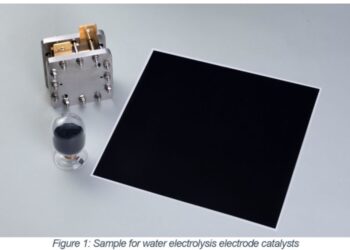
The production of green hydrogen is a complex process with variables such as electricity input, water quality,  temperature, and pressure that can analyzed by AI algorithms to determine the right working parameters. It not only enhances the yield but also the scale of green hydrogen production. 

The simulations can help stakeholders visulaize the outcome of their options in the early stage of decision making which can then help in assessing the return of  investments in the green hydrogen projects.  The integration of the AI algorithms with software-centric universal automation framework which is based on the  IEC61499 concept enhances the production process. 

AI is already being used in incorporating renewable energy sources into the green hydrogen ecosystem. Smart grids, enhanced by AI, aid the interactions among energy producers, consumers, and storage systems, in deciding how energy is distributed and stored. For instance, AI-powered real-time planning systems can determine whether excess energy in a micro-grid should be stored in a battery energy storage system (BESS) or utilized for green hydrogen production through alkaline water electrolysis. 

Overcoming Challenges in AI Integration

Despite its promise, the integration of AI into the green hydrogen is far from developed and will still have to go a long way to realize its full potential. For this some bottlenecks will have to be dealt with. These include optimizing complex systems to manage the intricacies involved in hydrogen production and distribution chain, creating AI models that rely on thorough data collection and management, especially in decentralized systems and protecting these systems from cyber threats, given the significance of the entire infrastructure. 

Real-World Applications and Innovations

In Australia, a trade body known as Commonwealth Scientific and Industrial Research Organisation (CSIRO) partnered with industry stakeholders to create a control system driven by AI for a renewable hydrogen production facility. This system optimized electrolysis operations based on real-time renewable energy availability, achieving a 15% increase in efficiency.

Machine learning (ML) models are another key innovation. These models analyze datasets generated during electrolysis to identify patterns and relationships. AI is transforming the green hydrogen sector by offering smarter ways which can increase efficiency and reduce costs for routine and traditional tasks. Techniques like regression analysis, neural networks, and reinforcement learning enable real-time adjustments that maximize hydrogen output while minimizing energy consumption. Studies indicate that AI-driven optimization can reduce energy use by up to 20%, a material cost savings to producers which can be a turning point in combating the cost parity between green and grey hydrogen. 

What Lies Ahead

The integration of AI with renewable energy and green hydrogen technology holds exciting prospects that are only now beginning to be explored. Picture machine learning systems adjusting electrolysis processes in real time to make best use of solar or wind energy on hand, with little to no waste. While this approach is still in its infancy, the pace of innovation is picking up rapidly. Ongoing efforts in research and development will be essential to making these solutions practical, adaptable, and widely embraced. By refining machine learning tools and using data insights, we can push production efficiency to new heights and take meaningful steps toward a cleaner and more sustainable energy future.
Tags: artificial intelligenceElectricityHydrogenStorage SystemTechnology
ShareTweetShare
Urja Daily

Urja Daily

Related Posts

H2 Core

H2 Core Systems builds scalable hydrogen energy solutions with Siemens Xcelerator

by Palak
May 19, 2026
0

Siemens’ software and automation portfolio enables modular hydrogen energy system manufacturer to accelerate design, eliminate production errors and respond to...

NHPC

NHPC Set to Operationalise Fourth Unit of Subansiri Hydro Project

by Palak
May 7, 2026
0

NHPC Limited has declared the commercial operation date (CoD) of the fourth 250 MW unit of the Subansiri Lower Hydroelectric...

Advait Greenergy

Advait Greenergy inaugurates 30 MW alkaline electrolyser assembly facility in Gujarat

by Palak
March 16, 2026
0

Advait Greenergy Private Limited, a subsidiary of Advait Energy Transitions Limited, has inaugurated a 30 MW alkaline electrolyser assembly facility...

Hyundai

Hyundai to Build Integrated Hydrogen, AI and Solar Hub with USD 6 Billion Investment

by Palak
March 9, 2026
0

Hyundai Motor Group is set to invest USD 6 billion to develop a high-tech innovation hub in Saemangeum, Gunsan, focused...

TANAKA

TANAKA Unveils Palladium Membrane for High-Efficiency Hydrogen Purification

by Palak
March 9, 2026
0

TOKYO - TANAKA PRECIOUS METAL TECHNOLOGIES Co., announced the successful development of “HPM-L111”, the world’s first metal* palladium (Pd) hydrogen permeable membrane capable...

Next Post
India-EU

India-EU Collaboration: Driving the Green Hydrogen Agenda

Carbon Credit

Rapid Growth of the Carbon Credit Market: Projected 39.71% CAGR by 2033

Leave a Reply Cancel reply

Your email address will not be published. Required fields are marked *

RECOMMENDED

Joint solar

Joint Solar sharpens focus on TOPCon and higher-efficiency solar modules

June 3, 2026
Shri V. Packirisamy

V. Packirisamy Appointed Director (Commercial) at Power Finance Corporation Limited

June 3, 2026

MOST VIEWED

  • Solar

    When the Sun Began Paying the Electricity Bills: The Story of PM Surya Ghar Muft Bijli Yojana

    0 shares
    Share 0 Tweet 0
  • India’s Emerging Polysilicon Manufacturing Ecosystem: Opportunities and Challenges

    0 shares
    Share 0 Tweet 0
  • KP Group & PP Savani University Launches Urjanoor Scholarship

    0 shares
    Share 0 Tweet 0
  • How proper refurbishment can extend life of pre-owned bikes in India?

    0 shares
    Share 0 Tweet 0
  • ACWA Power Signs Landmark $10 Billion Clean Energy Agreements

    0 shares
    Share 0 Tweet 0

Joint Solar sharpens focus on TOPCon and higher-efficiency solar modules

V. Packirisamy Appointed Director (Commercial) at Power Finance Corporation Limited

Sharika Enterprises Limited Enters SCADA-ADMS Market with Uttarakhand Grid Modernization Project

Cargill Launches Two-Year Livestock Development Initiative to Strengthen Maharashtra’s Dairy Sector

Flip Chip Technology Market Witnesses Rising Demand from Consumer Electronics Sector

Servotech Signs ₹400 Crore MoU for Haryana Manufacturing Expansion

Latest Magazine

© 2016 – 2025 TechZone Print Media | All Rights Reserved

  • About Us
  • Contact Us
No Result
View All Result
  • News
  • Renewable
    • Solar
    • Rooftop
    • Floating Solar
    • Module
    • Wind
    • Hydrogen
    • Biomass
    • Tenders
    • Sustainibility
  • Storage
  • E-Mobility
  • Battery
  • Smart City
  • Power
    • Smart Grid
    • Microgrid
    • Off-Grid
  • Editor’s Pick
    • Articles
    • In Talks
    • E-MAG
    • Market Research
  • On-demand Webinars
  • More
    • Events
    • Contact Us
    • Subscribe

© 2016 - 2025 TechZone Print Media | All Rights Reserved